
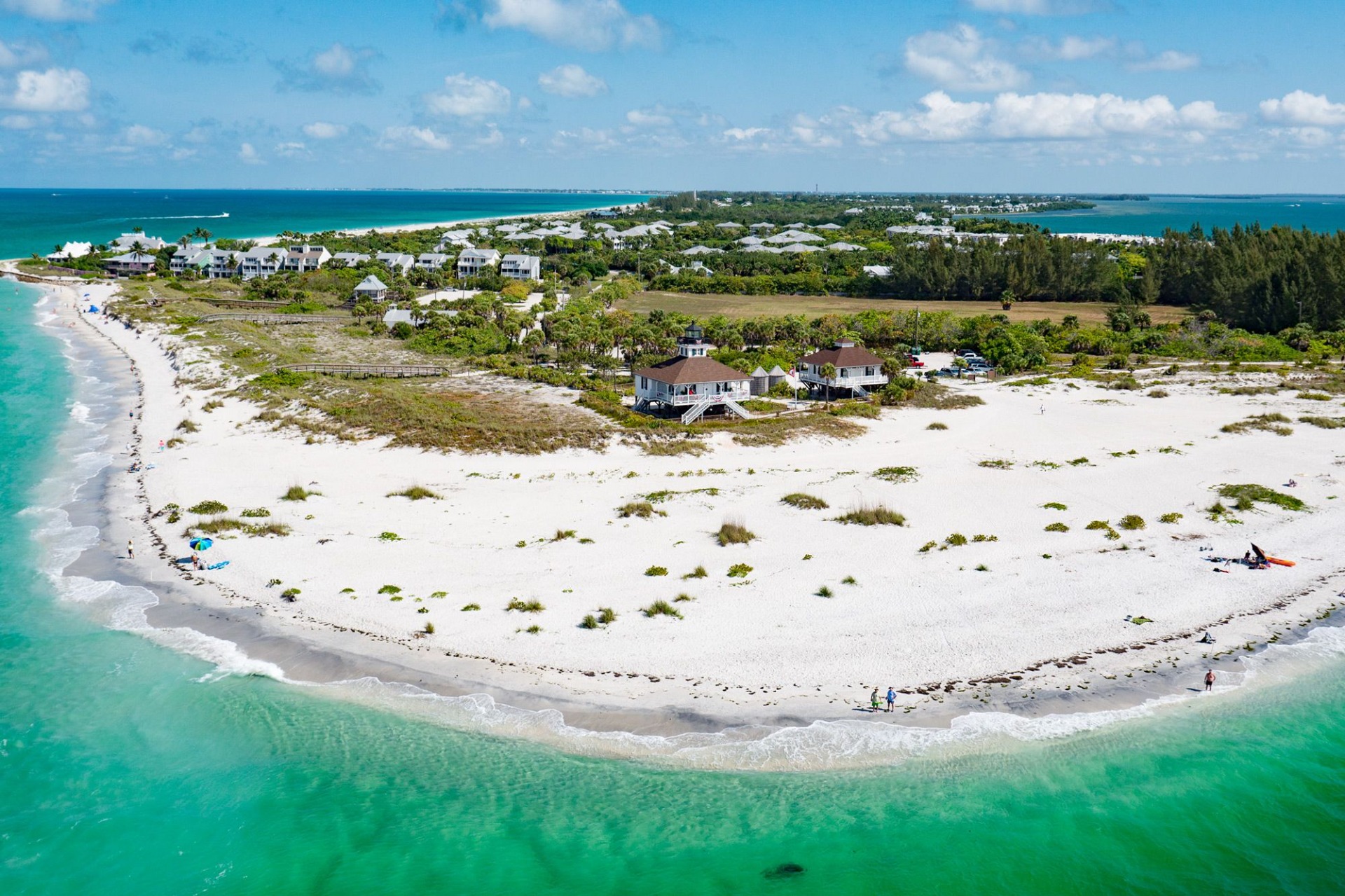
Florida beaches use a uniform warning-flag system: green for calm conditions, yellow for moderate surf or current, red for high hazard, double red for water closed to the public, and purple for dangerous marine life. If a rip current pulls you out, do not swim straight back toward shore — float, signal for help, and swim parallel to the beach until you are out of the pull, then angle in. Shuffle your feet in shallow Gulf water to avoid stepping on a resting stingray, and check the flag before anyone gets in, every single day, because conditions change hour to hour.
After eighteen years of handing beach towels to arriving families, we've noticed the same pattern: everybody researches where to go, and almost nobody researches what the water is doing when they get there. The Gulf side looks so gentle — shallow, warm, barely a wave some mornings — that people assume it can't surprise them. The Atlantic side at Vero Beach looks more obviously energetic, so people are more careful there, which is often exactly backwards from where the real risk sits on any given day.
This is the talk we'd give you on the porch before you load the cooler. None of it is scary. All of it is the kind of thing that turns a bad ten minutes into a non-event.
What do the beach warning flags actually mean?
Florida uses a uniform flag system up and down both coasts, so what you learn at Boca Grande works at Vero Beach and everywhere between. Look for the flag pole near the lifeguard stand or the main beach access before anyone's feet hit the water.
- Green — low hazard, generally calm conditions. Still not a promise; it means conditions are as good as they get, not that supervision is optional.
- Yellow — moderate surf or currents. Reasonable for confident swimmers, worth reconsidering for small children and anyone who's shaky in water.
- Red — high hazard, strong surf or currents. This is a stay-out day for most families, full stop.
- Double red — the water is closed to the public. Not a suggestion. Entering can carry a penalty.
- Purple — dangerous marine life present. Purple flies alongside a condition flag, not instead of one, so read both.
The single most useful habit: check the flag every day, and check it again after lunch. A green morning can become a yellow afternoon when the wind swings. Some beaches also post conditions online or by phone, but the pole on the sand is the current truth.
The flag is not a formality. It's the only free forecast that's already come true.
How do you spot a rip current — and what do you do in one?
A rip current is a narrow channel of water flowing away from the beach. It doesn't pull you under; it pulls you out. That distinction matters, because the danger isn't the current itself — it's the exhaustion and panic that come from fighting it.
From the sand, look for a gap in the line of breaking waves, a streak of choppier or discolored water pushing seaward, or a channel of foam and sand moving steadily away from shore. Rips are more common near piers, jetties, and structures, which makes the Atlantic side at Vero worth an extra minute of standing and watching before you commit.
- Don't fight it. Swimming straight back at the beach is swimming directly into a treadmill you cannot outpace.
- Float or tread water and get your breathing under control. Rips weaken as they move past the breakers.
- Signal — one arm up, wave, and yell. Getting a lifeguard's attention is a legitimate first move, not a last resort.
- Swim parallel to the shoreline until you're out of the moving channel, then angle back in with the waves helping you.
- If you're on the beach and someone else is caught, send for a lifeguard and throw something that floats. Untrained rescuers becoming victims themselves is a depressingly common story.
Teach this to kids on dry sand, in the living room, before the beach — not while standing in knee-deep water with everyone excited. We build it into the same pre-trip routine we describe in our family beach day packing guide, right alongside loading the wagon.
What is the stingray shuffle, and does it really work?
Gulf stingrays are not aggressive. They rest half-buried in warm shallow sand, and the injuries that happen almost always come from someone stepping directly onto one. The animal's response is defensive — a barb at the base of the tail, driven upward into a foot or ankle.
The shuffle is simple: keep your feet in contact with the sand and slide them forward instead of stepping. The vibration gives the ray warning and it moves off. Make it a family game — everyone shuffles from the moment their ankles are wet until they're past waist deep. Warm shallow water on a calm, low-energy day is prime stingray habitat, which is exactly the water most families love.
If someone is stung, get out of the water, control bleeding, and soak the wound in water as hot as the person can comfortably tolerate — hot water helps break down the venom protein and is the standard first response. Then get medical care, because barb fragments can remain in the wound. Do not assume a small puncture is a small problem.
Jellyfish, sea lice, and other seasonal itches
"Sea lice" isn't lice at all — it's the common name for tiny jellyfish larvae that get trapped under swimsuits and rash guards and sting where fabric holds them against skin. The telltale sign is a rash confined to the area covered by a suit, showing up hours after swimming, usually in warmer months when onshore winds push larvae toward the beach. Purple flag days often mean exactly this.
- Rinse in salt water before you get out, then shower and change out of the suit promptly — don't sit around in it.
- Wash swimsuits in hot water and dry them fully; larvae can survive a rinse in the sink.
- For most jellyfish stings, rinse with salt water or vinegar rather than fresh water, remove tentacles carefully without bare hands, and treat pain with hot water immersion. Skip the folk remedies.
- Portuguese man-of-war wash up on both coasts, especially after east winds. They sting on the sand and after they're dead. Point them out to kids and give them a wide berth.
None of this is a reason to skip the water. It's a reason to know what you're looking at when a kid starts scratching at bedtime instead of assuming it's a mystery allergy.
How should families time a Florida beach day around sun and heat?
Florida sun is not a stronger version of northern sun; it's a different math problem. The reliable move is to treat midday as indoor time and split your beach day into two shifts — early morning and late afternoon. Mornings on the Gulf are typically calmer and glassier, and the light is better for photos anyway. Late afternoon brings the breeze back and, on the Gulf side, the sunset everyone came for.
Reapply sunscreen on a timer, not on a feeling — every couple of hours, and after every swim, regardless of what the bottle claims about water resistance. Rash guards and wide-brim hats do more work than any product. Watch for the early heat signals in kids: unusual crankiness, a headache, going quiet, refusing water. Those show up before anything dramatic does.
Bring more water than you think, and make drinking a scheduled group event rather than an individual choice. Children who are having a great time will not stop to hydrate on their own.
Afternoon thunderstorms are a normal part of the warm season on both coasts, and they build fast. When you hear thunder, leave the water and get to a real structure — a beach umbrella is not shelter. A house within a short drive of the sand makes that retreat painless instead of miserable, which is a genuine reason we like putting families at Vero Oaks when they're doing the Atlantic side. Regroup, wait it out, and go back for the evening shift.
Is the Gulf side safer than the Atlantic side?
Different, not safer. Southwest Florida's Gulf beaches are typically lower-energy, with a gradual shelf and small waves — which is wonderful for young kids, and which is why stingray shuffling and sun exposure are the front-line concerns there. Vero Beach's Atlantic shore has more consistent surf and more visible wave energy, which means rip currents and shore break deserve more of your attention and a lifeguarded stretch is worth driving to.
The mistake we see most often is people carrying Gulf-side habits east. A family who spent three days in calm knee-deep water arrives at an open Atlantic beach and lets the same kids wander out the same distance. Reset your rules at each coast, and reset them again on a windy day.
If you're still deciding where to base your beach days, our comparison of Englewood Beach and Boca Grande Beach gets into how each one actually feels with kids in tow, and the broader Gasparilla Island family guide covers what's nearby when the water isn't cooperating.
What belongs in a beach first-aid kit?
Ours lives in a hard-sided box in the cart, not a soft pouch that gets soaked. The goal isn't to handle emergencies — it's to handle the twenty small things that would otherwise end the day early.
- Adhesive bandages in several sizes, plus waterproof ones that actually stay on wet skin
- Gauze pads, medical tape, and an elastic wrap
- Antiseptic wipes and antibiotic ointment
- Tweezers with a fine point — for splinters, shell fragments, and stinger removal
- A small bottle of vinegar for jellyfish stings
- An instant cold pack, and a thermos of hot water or a plan to get some (hot water is the go-to for stingray and jellyfish pain)
- Aloe or after-sun gel, and a second bottle of sunscreen because the first one is always in the other bag
- Any personal medications, plus an antihistamine if your family uses one
- Electrolyte packets and extra drinking water
- A charged phone in a dry bag, and a written note of the nearest urgent care and the beach access name — GPS coordinates are useless to a dispatcher compared to "the third access south of the pier"
Add a whistle. It costs almost nothing and carries much further than a parent's voice over surf noise.
The three rules we ask every family to set before they go
Rules made in the car are followed. Rules made on the sand are argued with.
- Assign a water watcher — one adult whose only job, for a set stretch of time, is watching the swimmers. Not reading, not scrolling, not chatting. Then hand it off explicitly, out loud, so there's never an ambiguous moment when everyone assumes someone else has it.
- Set a depth line and a landmark. "No deeper than your belly button" and "stay between our umbrella and that lifeguard stand" are rules a seven-year-old can actually follow.
- Never swim alone, and never swim at a beach with no one else on it. Empty beaches are beautiful and they are also the ones where no one sees you go under.
Drowning in young children is usually quiet and fast — no splashing, no shouting. That's why the water watcher rule exists, and it applies just as much to a pool as to the Gulf. If you're staying somewhere with a private pool, like Seaside Boca, keep the same watcher discipline at home that you'd keep on the sand, and do a headcount every time the group moves.
Beach safety questions families ask us most
What does a purple flag mean at a Florida beach?
Purple indicates dangerous marine life is present — commonly jellyfish, Portuguese man-of-war, or the jellyfish larvae known as sea lice. It flies alongside a condition flag rather than replacing it, so a beach can be purple and yellow at the same time. Purple is not a shark warning; check with a lifeguard if you want specifics on what's in the water that day.
What should I do if my child gets caught in a rip current?
Send someone for a lifeguard immediately and throw a flotation device if one is within reach. Call to your child to float and not to fight the current, then swim parallel to the beach until clear of the pull. Untrained bystanders entering the water to rescue someone is one of the most common ways a single emergency becomes two, so get a trained responder first.
Does the stingray shuffle really prevent stings?
It substantially reduces the risk, because stingray injuries almost always happen when someone steps directly down onto a resting ray. Sliding your feet along the bottom gives the animal advance warning and it swims off. It's most important in the warm, calm, shallow Gulf water where rays like to rest.
When is sea lice season in Florida?
Sea lice — jellyfish larvae — are most commonly reported during the warmer months, and outbreaks tend to follow onshore winds that push the larvae toward the beach. The rash appears where a swimsuit or rash guard held the larvae against skin, often hours after swimming. Watch for purple flags and local advisories, which are the most reliable signal for any given week.
What time of day is best for a family beach day in Florida?
Early morning and late afternoon. Midday brings the strongest sun and the highest heat, and on the Gulf coast the water is usually calmest and clearest in the morning. Splitting the day into two shifts with a break indoors gets you more good beach time and far less sunburn.
Are Gulf beaches safer than Atlantic beaches for young kids?
Southwest Florida's Gulf beaches are generally lower-energy with a gentle shelf, which suits young children well, but that calm shallow water is also prime stingray habitat and offers no protection from sun or heat. Vero Beach's Atlantic shore has more wave energy and more rip current potential, so a lifeguarded stretch matters more there. Reset your family's water rules at each coast rather than carrying habits from one to the other.

Travel DRD - Free Land Vacations — IATA certified, IATAN and ASTA members, hosting families since 2007. We manage every home in this collection ourselves.
Last updated: August 8, 2026