
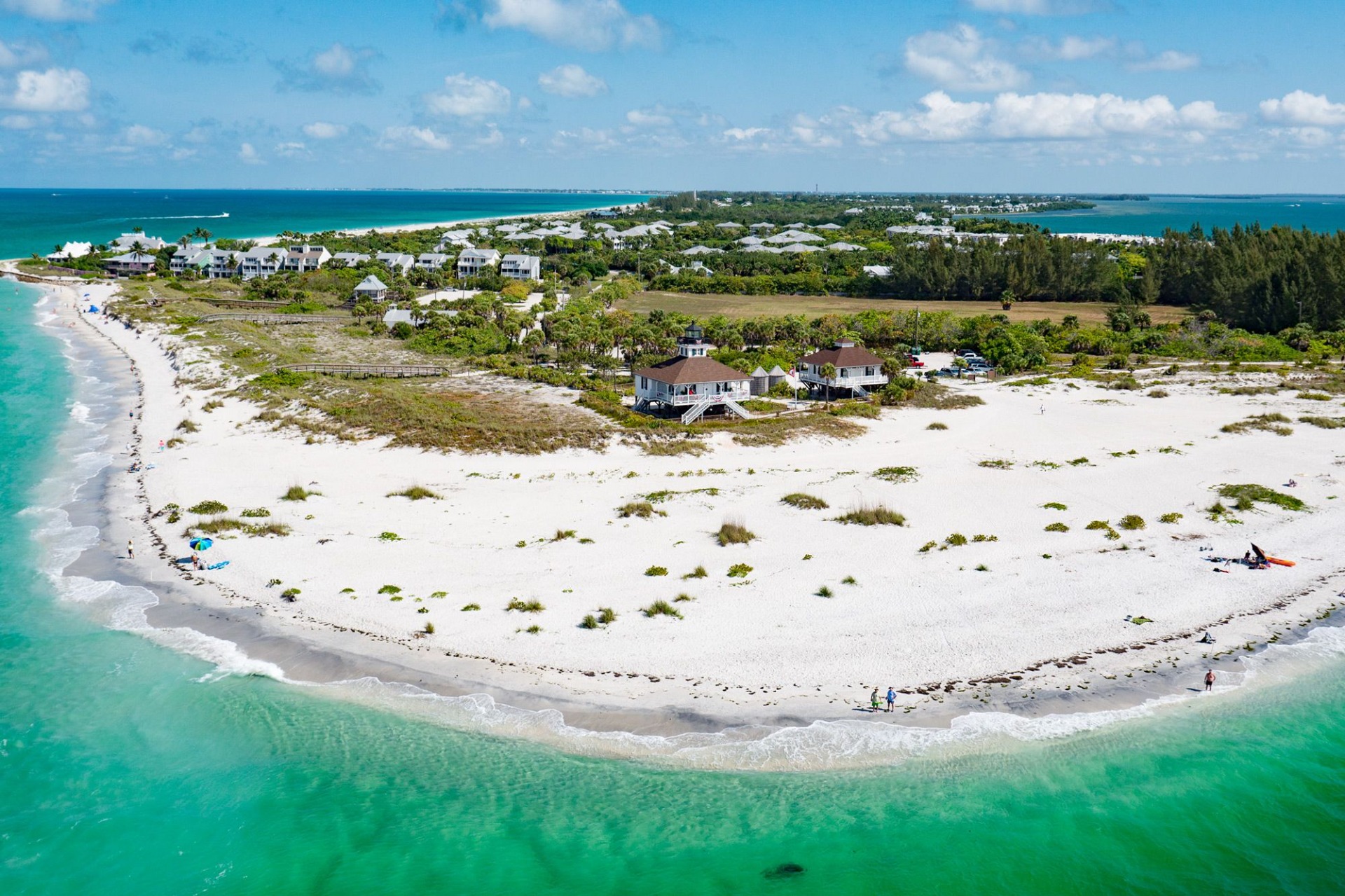
Boca Grande, on Gasparilla Island in Southwest Florida, has a distinct dry season from roughly November through April, when temperatures are mild, humidity is low, rain is infrequent, and the island is at its busiest and most expensive. Late spring brings the well-known tarpon fishing season in Boca Grande Pass. Summer and early fall are hot and humid with frequent afternoon thunderstorms, the fewest visitors, and the lowest rates — and they overlap with the Atlantic hurricane season, which runs June 1 through November 30. Families balancing comfort against crowds and cost often do best in the shoulder weeks of late April, May, or November.
Almost every family who asks us about Boca Grande asks the same question in the first two minutes: when should we come? It's a fair question, because Gasparilla Island genuinely is two different places depending on the month. The same seven-mile barrier island that hums with golf carts and full restaurant tables in February can feel nearly emptied out in September.
We've been hosting guests along this coast for eighteen years, and we've learned that there is no single best time — only a best time for a particular family. What follows is an honest breakdown of what each season actually feels like on the ground, so you can pick dates that match what you're after rather than what a brochure says.
Southwest Florida Really Only Has Two Seasons
Forget the four-season calendar you grew up with. This part of Florida runs on a dry season and a wet season. The dry season stretches roughly from November into April: lower humidity, comfortable days, cool evenings, and long stretches without rain. The wet season runs roughly May through October: hot, humid, and marked by near-daily afternoon thunderstorms that build inland and roll toward the coast.
That single pattern explains almost everything else — why rates climb in winter, why the island empties in late summer, why restaurants shorten hours in the slow months, and why a July afternoon plan needs a rain option built in. Once you understand the wet/dry split, the rest of the calendar makes sense.
Pick your season first, then your dates — the month you choose shapes the trip more than anything you book inside it.
Winter: The Best Weather and the Biggest Crowds
Winter is why people fall in love with Boca Grande. Days are warm without being oppressive, evenings are genuinely pleasant, and rain is the exception rather than the rule. Cold fronts push through periodically and can drop temperatures noticeably for a day or two — bring a light layer and don't assume every afternoon is a swimming afternoon — but the overall pattern is about as agreeable as Florida gets.
It is also the island's peak. Seasonal residents return, the village is busy, sit-down dinner tables get harder to come by without a reservation, and nightly rates are at their highest of the year. Beach parking near the popular access points fills earlier in the day. If your priority is weather and you're comfortable with company, this is the window — and it happens to coincide with the island's best beachcombing, which we covered in our guide to shelling season and the quiet months.
One practical note: winter is also when the calendar tightens fastest. Families who travel around school breaks are competing for the same handful of weeks, and those dates tend to be spoken for far earlier than the rest of the year.
Spring: Tarpon Season and the Turn Toward Summer
Boca Grande Pass — the deep cut of water at the island's south end — is one of the most famous tarpon fisheries anywhere, and late spring into early summer is when that reputation is on full display. Boats gather in the Pass, charter captains are booked well ahead, and there's an annual tournament tradition on the island tied to the run.
For a fishing family, this is the reason to come. For everyone else, spring is still a strong window: the weather hasn't turned fully humid yet, the winter crush thins out as seasonal residents head north, and the water is warming into comfortable swimming range. Just know that boat ramps, marinas, and charter availability are all under pressure during the peak of the run, so book that side of the trip early if it matters to you.
Summer: Hot, Wet, Quiet, and Cheaper
Summer on Gasparilla Island is hot and humid, full stop. The honest version: mornings are lovely, midday is genuinely draining, and most afternoons carry a real chance of thunderstorms. Storms here tend to be intense and relatively brief rather than all-day gray — which means you plan around them rather than cancel because of them.
- Front-load the day: beach and outdoor time before roughly midday, then retreat indoors or to the pool.
- Treat afternoon storms as a scheduled event, not a surprise — leave the water at the first thunder.
- Budget more time for shade, water, and sunscreen than you think you need; the humidity does the damage, not just the sun.
- Confirm restaurant hours before driving over — some island businesses trim schedules or close for a stretch in the slowest weeks.
- Take advantage of the trade-off: uncrowded beaches, easy parking, and the lowest rates of the year.
Summer and early fall also fall inside hurricane season, which is a real planning factor rather than a reason to stay away. The practical answer is to understand cancellation terms and travel-protection options before you book — we walk through exactly how to do that in our guide to booking a Florida trip during hurricane season.
The Shoulder Months Most Families Overlook
If you asked us to name the sweet spots, we'd point at late April into May, and then again at November. In those weeks you get most of the good weather without most of the crowd. Late spring gives you warm water, thinning traffic, and rates that have started to come down from their winter peak. November gives you the return of dry-season comfort before the seasonal population fully arrives.
Early December is worth a look too, particularly for families with flexible school schedules. The island is settling into its winter rhythm but hasn't reached full capacity, and it's an easy time to actually enjoy the village on foot. If you want a broader picture of what there is to do once you've picked your window, our complete family guide to Gasparilla Island covers the beaches, the bike path, the lighthouse, and how the island works day to day.
How to Weigh Crowds, Rates, and Heat
Here's the trade-off in plain terms: you can generally have two of the three — good weather, low rates, or few people — but rarely all three. Winter buys comfort and pays in cost and company. Summer buys space and savings and pays in heat and rain. The shoulder months split the difference, which is why they're our standing recommendation for families who have any flexibility at all.
| Season | Weather | Crowds & rates |
|---|---|---|
| Winter (Nov–Apr) | Mild, dry, low humidity; occasional cool fronts | Busiest; highest rates; book earliest |
| Spring (Apr–Jun) | Warming, water comfortable, humidity building | Thinning crowds; tarpon charters in high demand |
| Summer (Jun–Sep) | Hot, humid, frequent afternoon storms | Quietest; lowest rates; hurricane season |
| Fall (Oct–Nov) | Cooling and drying through the period | Very quiet early, filling up by late November |
One more factor that's easy to miss: your kids' ages. Families with toddlers or grandparents along generally do better avoiding peak summer heat entirely, because midday simply isn't usable outdoors. Families with teenagers who'll be in the water from morning to dusk care far less, and can often trade heat for a considerably cheaper week.
How Far Ahead Should You Book?
Winter weeks — especially the ones that line up with school breaks — get claimed the furthest in advance, often close to a year out for the most in-demand homes. Shoulder-season dates hold up longer, and summer weeks are the most forgiving if you're a late planner. If you're weighing a specific week, it's worth reaching out early rather than watching a calendar; we'd rather tell you honestly that a date is gone than have you wait on it. Our Seaside Boca home sits in the Boca Grande area and is the one we most often recommend to families building a trip around Gasparilla Island.
And whichever season you land on, plan the trip around it rather than in spite of it. A July week designed for early mornings and afternoon pool time is a wonderful week. A July week planned as though it were February is a hard one. The island rewards visitors who show up knowing what they've signed up for.
Timing a Boca Grande Trip: Common Questions
What is the overall best month to visit Boca Grande with kids?
There's no single answer, but late April, May, and November are the most balanced choices for families. You get warm, largely comfortable weather without the peak-winter crowds or the peak-winter rates. If weather is your only priority and cost isn't a concern, the heart of the dry season from January through March is hard to beat.
Is it too hot to visit Boca Grande in the summer?
It's hot and humid, but it's very manageable if you plan around it. Mornings are pleasant, and most families front-load beach time before midday and move to a pool, shade, or indoor activity in the afternoon. Expect thunderstorms most afternoons and leave the water at the first sound of thunder.
When is tarpon season in Boca Grande Pass?
The tarpon run centers on late spring into early summer, and Boca Grande Pass is one of the best-known tarpon fisheries in the world. Charter captains book up well in advance during the peak weeks, so arrange fishing before you finalize the rest of the trip. Check with individual captains for current timing and availability.
Should I avoid booking during hurricane season?
Not necessarily — hurricane season spans June 1 through November 30, which covers a large share of the year, and most of those weeks pass without any disruption. What matters is booking with clear cancellation terms and understanding your travel-protection options before you pay. The lower rates during those months are real, and so is the trade-off.
How far in advance do winter dates fill up?
Peak winter weeks, particularly those aligned with school breaks, are the first to go and are often reserved many months ahead. Shoulder-season and summer dates stay available considerably longer. If you have a specific winter week in mind, ask early rather than waiting to see what's left.
Do restaurants and businesses close during the slow season?
Some do reduce hours or close for a stretch during the quietest late-summer and early-fall weeks. This is a normal seasonal rhythm on a small island, not a sign anything has gone wrong. Always confirm hours before driving over the causeway, and keep your rental kitchen stocked as a backup.

Travel DRD - Free Land Vacations — IATA certified, IATAN and ASTA members, hosting families since 2007. We manage every home in this collection ourselves.
Last updated: August 2, 2026