
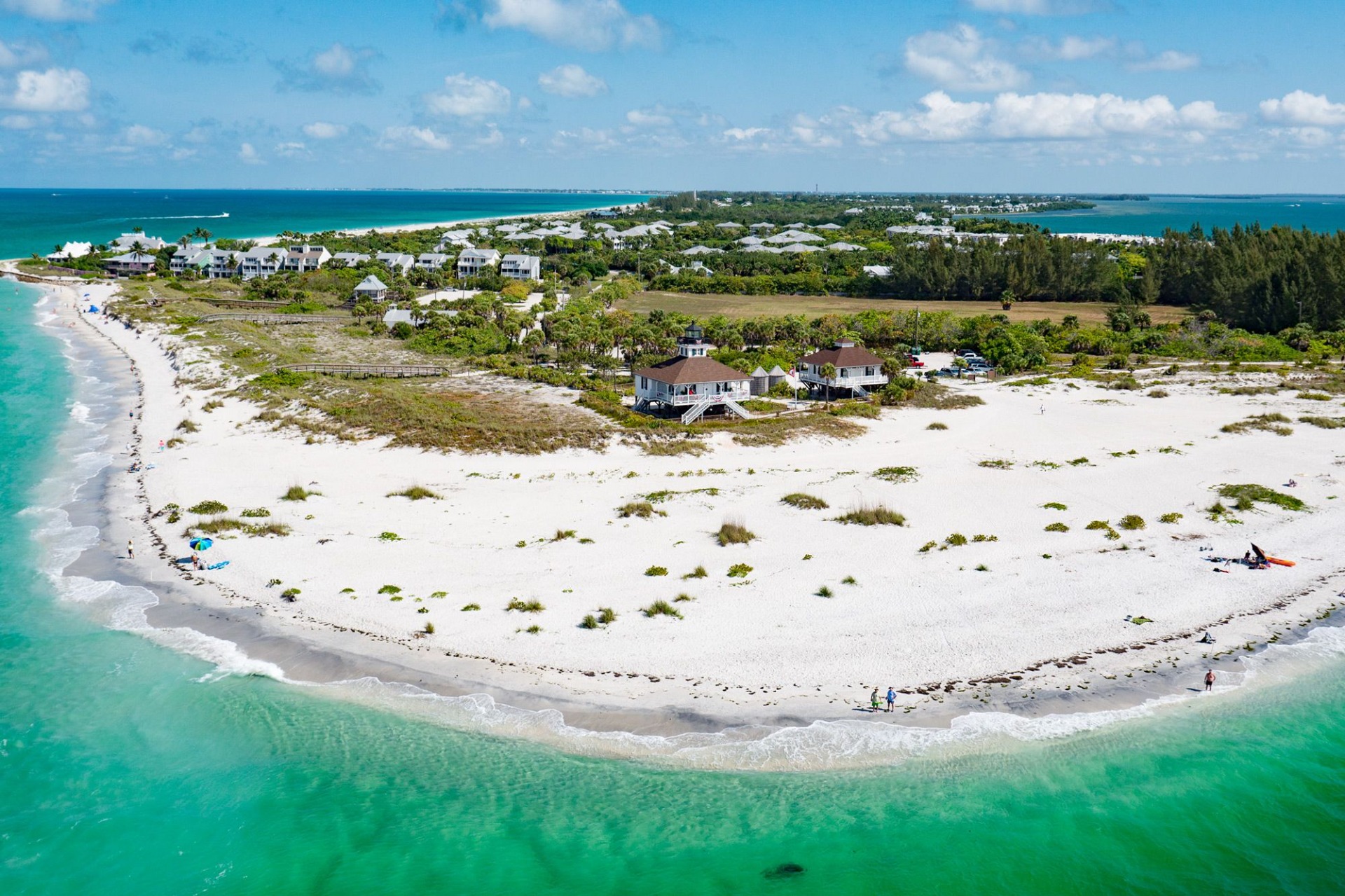
A Boca Grande beach day with children under five works best when you pick an access with a short, direct walk from parking, arrive early in the morning or after mid-afternoon to avoid peak heat, and bring your own shade. Gasparilla Island's Gulf-side accesses vary a lot in walking distance and facilities — some have restrooms and boardwalks, others are just a stretch of sand past a small parking area. A wide-wheeled beach wagon handles soft sand far better than a standard stroller. Plan for roughly a two-hour window on the sand, then head back for lunch and naps.
A beach day with a two-year-old is not a beach day. It's a logistics exercise with a beach in the middle of it. We've watched families arrive on Gasparilla Island at eleven in the morning, park at the first access they see, walk a quarter mile through soft sand with a folding stroller and a cooler, and be back in the car by noon with everyone crying — including one adult.
It doesn't have to go that way. After eighteen years of hosting families here, the pattern that works is boringly simple: short walk, early hour, your own shade, and a plan for the ride home. Here's how to set that up on Boca Grande specifically.
Which beach access has the shortest walk from the car?
This is the single decision that makes or breaks the day, and it's the one most families make last. On Gasparilla Island, the Gulf-side accesses fall into roughly two categories. The state park accesses at the south end have designated parking lots, boardwalk or ramp approaches, and marked dune crossovers — the walk from car to sand is short and mostly on a hard surface. The smaller neighborhood accesses scattered along Gulf Boulevard have a handful of parking spaces and a sand path over the dune, which is faster in theory but often means less parking and no facilities at all.
With a child under five, prioritize a hard-surface approach over raw distance. Eighty feet of loose sand while carrying a toddler is harder than two hundred feet of boardwalk. Scout it the day before if you can — drive the island, look at the accesses, and pick your spot while nobody is hungry.
If you want the full lay of the land before you go, our Gasparilla Island State Park guide walks through the park accesses in detail, including which ones have facilities and how the parking works.
- Arrive with a first choice and a second choice. Small accesses fill early in season.
- Drop the gear and one adult at the access, then park. This alone saves a meltdown.
- Count the walk in seconds, not feet. Under ninety seconds carrying a kid is the target.
- Note where you parked relative to the crossover — every dune walkover looks the same on the way back.
What's the truth about shade and restrooms?
Be honest with yourself: the Gulf-side beach on Gasparilla Island is open sand. There is no natural shade out on the beach. Sea grape and other vegetation grows behind the dune line, not on it, and you cannot count on a shady spot existing where you want to sit. If you didn't bring shade, you don't have shade.
That means a pop-up sun shelter or beach umbrella isn't optional gear with a toddler — it's the thing that determines whether you last forty minutes or two hours. A shelter with three closed sides also gives you a diaper-change spot and a place a small child will actually nap for twenty minutes.
Restrooms are the other honest conversation. Facilities exist at the state park accesses; many of the small neighborhood accesses have nothing at all. If you have a newly potty-trained three-year-old, that difference decides your entire beach location. Confirm what's open at your chosen access before you commit — facilities can be closed for maintenance or after storm damage, and that's exactly the kind of detail worth a phone call or a check of the park's official page the morning you go.
With little kids, the beach you can leave quickly is better than the beach you'd rather be on.
How do you time the day around heat, tides, and naps?
Southwest Florida sun is strongest in the middle of the day, and small children overheat faster than adults do — they have more skin surface relative to their body mass and they don't regulate temperature as efficiently. That's not a scare tactic, it's the reason the schedule matters.
The two windows that work: out the door by around 8:30 for a morning session that ends before the heat builds, or a late-afternoon session starting after naps and running toward sunset. The morning window is better for babies and early nappers. The late-afternoon window is better for families who are already off-schedule from travel, and it hands you a Gulf sunset as the reward for staying.
Tides matter more than people expect at this age. A low or falling tide exposes firmer, flatter wet sand — better footing for new walkers, better for wagons, and it opens up the shallow scalloped edge where a two-year-old can sit and dig without ever being in water over their knees. Check a tide chart for Boca Grande before you pick your window. A high tide with a short beach and a shore break is a much less relaxing morning with a toddler.
- Check the tide chart the night before and pick the session that lands near low or falling tide.
- Feed everyone before you leave. Beach snacks are for maintenance, not for meals.
- Plan a hard stop at roughly two hours regardless of how well it's going.
- Build in a rinse stop and a lunch before the nap, not after.
Stroller or wagon on soft sand?
Wagon, almost always — but only the right kind. A standard folding beach wagon with narrow plastic wheels will bury itself in dry sand within a few steps and you will end up dragging it sideways. What works is a wagon with wide, balloon-style tires, which spread the load and roll over soft sand instead of cutting into it. It carries the cooler, the shelter, the towels, and a tired kid on the way back.
Standard strollers are a poor fit on beach sand at any access. Jogging strollers with large air-filled tires can manage packed wet sand near the waterline but still struggle in the dry stuff above the tide line. If a stroller is what you have, use it for the walk from the car to the dune crossover, park it at the top, and carry from there.
For a full gear list built around a single trip from the car — including what to skip — see our Gasparilla Island beach day packing list. The one-trip rule matters twice as much when one adult's hands are already full of a three-year-old.
What should the rental home already have on hand?
This is where staying somewhere set up for families earns its keep. The gear that makes a toddler beach day work is bulky, and flying with it is miserable. A well-stocked home saves you a shopping run on day one, which is the day you least want one.
- An outdoor rinse point and a stack of dedicated beach towels — sand belongs outside the house
- A wide-tire beach wagon, or at minimum a cooler that one adult can carry
- Beach chairs and a sun shelter or umbrella already on site
- Sand toys that don't need to be bought and thrown away
- A pack-and-play and a high chair, so nap and lunch don't require improvising
- A washer and dryer, because a beach week with small kids generates a startling amount of laundry
When guests ask us where to base a first Boca Grande trip with little ones, proximity is the whole answer — a shorter drive to the sand means you can actually do the two-session-a-day rhythm instead of committing to one long outing. Our Seaside Boca home is set up with families in mind for exactly that reason.
How do you handle the ride home and the nap?
Plan the exit before you're in it. Sunscreen, sand, and salt on a hot, hungry toddler in a car seat is the worst ten minutes of the day if you haven't prepared for it.
Bring a gallon jug of tap water in the car for a quick rinse of feet and hands before anyone gets in. Keep a dry change of clothes and one dry towel sealed in a bag that never goes onto the sand. And accept that a child who falls asleep on a fifteen-minute drive home may not nap again — some families deliberately keep the drive short and the stimulation low, others just let the car be the nap and adjust the evening. Neither is wrong; what's wrong is not deciding until it's happening.
If this is your first trip to the island and you're still building the wider itinerary — where to eat, how families get around, what a realistic week looks like — start with our complete Boca Grande family guide.
What should you let go of?
The photo you have in your head — everyone in matching linen, the water calm, the kids delighted for three straight hours — is not the trip. The trip is forty-five good minutes, a shell your daughter will carry in her pocket for the rest of the week, and one adult sitting in the shade holding a sleeping toddler while the older one digs. That's the actual thing, and it's better than the photo.
Go short, go early, bring shade, and come back tomorrow. On a week-long stay, five easy mornings beat one heroic afternoon every time.
Boca Grande With Little Kids: Common Questions
Which Boca Grande beach access is easiest with a stroller or wagon?
The state park accesses on the south end of Gasparilla Island generally offer the most manageable approach, with designated parking and boardwalk or ramp crossovers rather than a loose-sand path. Smaller neighborhood accesses along the Gulf side can be closer to the water but usually mean a sand walk and no facilities. Scout your access the day before if your schedule allows.
Are there restrooms at Boca Grande beach accesses?
Some accesses have restroom facilities and some have nothing at all — it varies significantly by location. The state park accesses are your best bet for facilities. If you're traveling with a recently potty-trained child, choose your access based on this first and everything else second, and confirm what's currently open before you go.
What time of day is best for a beach day with a toddler in Southwest Florida?
Early morning, roughly 8:30 to 10:30, or late afternoon from about 4:00 onward. Both windows sidestep the strongest sun and heat of the middle of the day, which small children tolerate poorly. Morning suits babies and early nappers; late afternoon suits families still adjusting to travel and gives you a Gulf sunset.
Is there any natural shade on Boca Grande's Gulf beaches?
No — plan on bringing your own. The Gulf-side beach is open sand, and vegetation grows behind the dune line rather than on the beach itself. A pop-up sun shelter or a sturdy umbrella is essential gear with children under five, and it doubles as a diaper-change spot and a short nap space.
Do tides matter for a beach day with little kids?
More than most families expect. A low or falling tide exposes wide, firm wet sand that's easier for new walkers and much easier for a wagon, and it creates shallow edges where a toddler can play without deep water. Check a Boca Grande tide chart the night before and aim your session near low tide when you can.
What beach gear should a family rental already provide?
Beach chairs, a sun shelter or umbrella, a wide-tire beach wagon, sand toys, and dedicated beach towels with an outdoor rinse point are the practical essentials. For families with children under five, a pack-and-play, a high chair, and in-unit laundry matter just as much. Ask before booking rather than assuming — it changes what you need to pack or buy on arrival.

Travel DRD - Free Land Vacations — IATA certified, IATAN and ASTA members, hosting families since 2007. We manage every home in this collection ourselves.
Last updated: August 18, 2026