
Small beach weddings and vow renewals are common on Gasparilla Island, but the beach you choose determines the paperwork. Public beach accesses in the Boca Grande area fall under Lee County, which requires a permit application for organized beach events, while the beaches inside Gasparilla Island State Park are managed by Florida State Parks and require a separate special-use permit. Plan the ceremony around late-afternoon light and a falling or low tide for the widest, firmest sand, and book one large vacation rental on the island so the wedding party avoids repeat trips across the causeway. Confirm all permit rules, capacity limits, and fees directly with the managing agency before you set a date.
Most of the beach ceremonies we see on Gasparilla Island are small on purpose. Twelve people, twenty-five people, sometimes just two adult children standing beside parents renewing vows after decades. The island rewards that scale. It has no high-rises, no boardwalk, no wall of resorts — just a long, quiet stretch of Gulf sand and a village that still closes early.
That same quiet is why the planning has to be a little more deliberate than it would be at a resort with a wedding coordinator on staff. There's one road onto the island, a handful of public beach accesses, and two different agencies that manage the sand depending on where you stand. Here's how families we host actually work through it.
Where on the island can you actually hold a ceremony?
The single most useful thing to understand early: Gasparilla Island's beaches are not all managed by the same authority, and the rules differ.
- Lee County public beach accesses — The Boca Grande village area and its public Gulf-side accesses sit in Lee County. Lee County requires an application and approval for organized beach events, including weddings and vow renewals, rather than treating them as ordinary beach use.
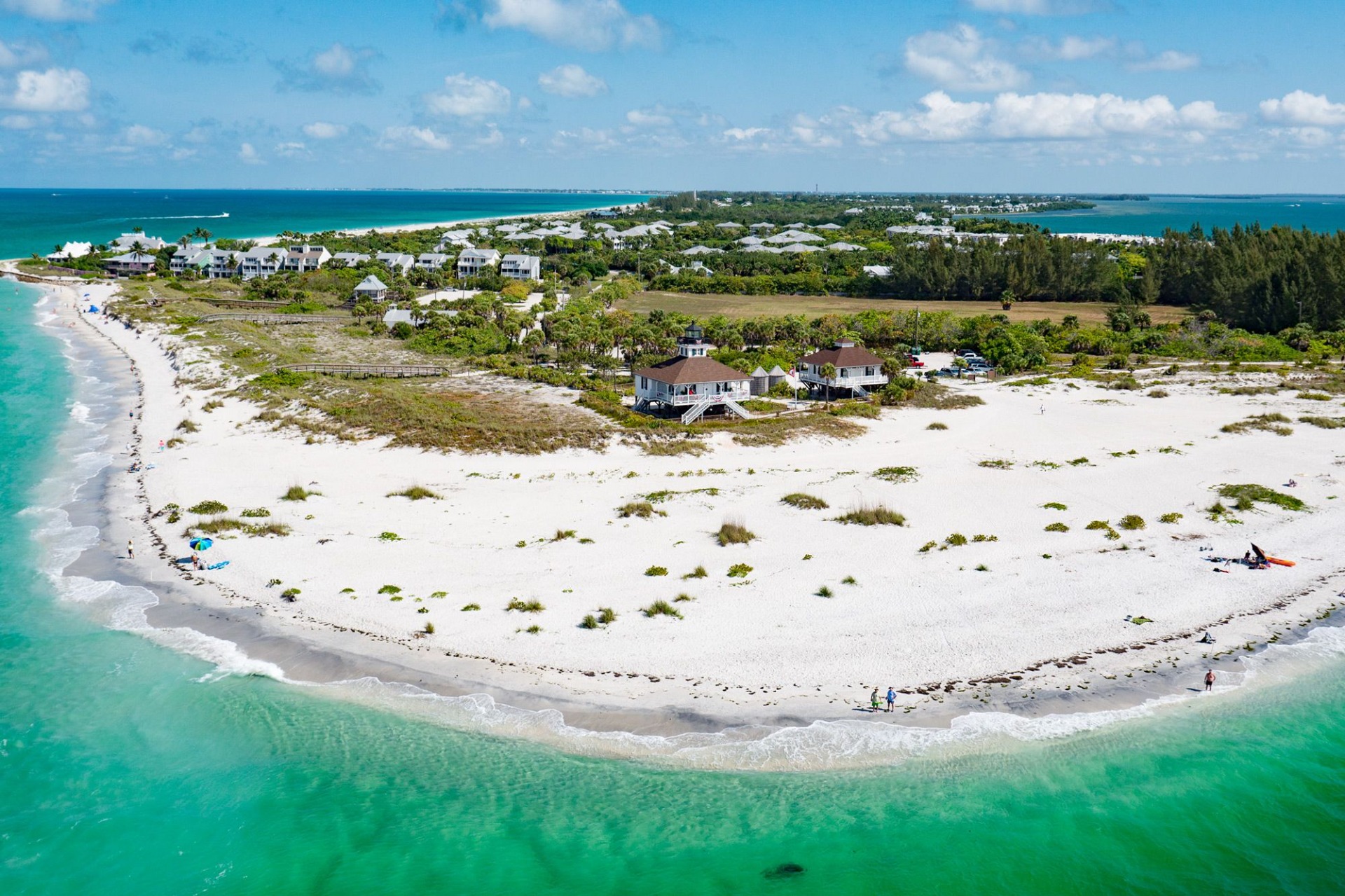
- Gasparilla Island State Park — The park runs along the southern end of the island, including the beach near the Port Boca Grande Lighthouse. Because it's a Florida State Park, ceremonies there go through the state's special-use permit process, which is separate from the county's. Park entry fees and posted hours also apply to your guests.
- Private club and resort property — Some beachfront on the island is private. Standing on it without arrangement is trespassing, no matter how empty it looks.
- Beach in front of a private home — Florida beach access rules near private property are genuinely complicated. Don't assume the sand behind a rental is fair game for a set-up ceremony.
Pick the jurisdiction first, then the date. Doing it the other way around is how couples end up moving a ceremony three weeks out.
What do the permit basics actually involve?
Both the county and state processes ask roughly the same questions, so you can gather the answers once: your exact location and access point, date and time window, expected guest count, whether you're bringing chairs, an arch, an arbor, amplified sound, or anything staked into the sand, and proof of insurance if a vendor is involved.
Two rules come up over and over on Florida Gulf beaches and are worth designing around rather than fighting: no stakes or holes that disturb nesting habitat, and no releases of anything into the air or water. Sea turtle nesting season runs across the warm months here, which affects lighting, equipment, and where you can set up. That's not a formality — it's federally and state-protected habitat, and the island takes it seriously.
Fees, application lead times, and guest-count thresholds change. Apply earlier than you think you need to, and treat the permitting office as your first call, not your last.
Which months give you the best weather and the best light?
Late fall through early spring is the reliable window. Humidity drops, afternoon thunderstorms mostly stop, and the light in the last hour before sunset goes soft and warm instead of blazing. The trade-off is that this is also the island's busy season, so rentals and vendors book out furthest ahead.
Late spring is the quiet compromise: still-warm water, thinner crowds, longer days. Summer is beautiful in the morning and unpredictable by mid-afternoon — storms build inland and roll west. If you must do summer, put the ceremony early or accept a real backup plan.
| Season | Ceremony weather | Trade-off |
|---|---|---|
| Late fall–early spring | Driest, mildest, best evening light | Peak demand for rentals and vendors |
| Late spring | Warm, still fairly dry, fewer crowds | Heat builds through the afternoon |
| Summer | Calm mornings, dramatic skies | Afternoon storms; nesting-season restrictions |
| Early fall | Warm water, very quiet island | Peak of hurricane season — insure and stay flexible |
How do you time the ceremony around tide and sunset?
This is the part almost everyone underestimates, and it's the cheapest thing to get right. Gasparilla Island faces west into the Gulf, so the sun sets over open water — that's the whole visual argument for an evening ceremony.
- Look up the sunset time for your exact date, then set the ceremony start roughly 60 to 75 minutes before it. You want vows in the warm light and portraits as the sun drops.
- Check a tide chart for Boca Grande for that same date. A falling tide toward low gives you the widest, firmest, most photogenic band of sand; a high tide can shrink your usable beach to a narrow strip.
- Add a buffer. Beach ceremonies start late more often than not, and the sun does not wait.
- Walk the exact spot at the same hour a day or two before, if you can. Shadows, glare, and standing water are all obvious in person and invisible on a map.
If you want a longer read on how the evening light actually behaves here — and how to keep small children happy through it — we wrote a whole guide on catching a great Boca Grande sunset without the meltdown. The same timing logic applies to a ceremony, just with better clothes.
Plan the vows around the tide chart and the sunset, and the photographs take care of themselves.
How do you handle guest logistics without a bridge-heavy commute?
Gasparilla Island is reached by a causeway, and it's the only way on by car. That's fine when you cross it once. It stops being fine when half your guests are staying on the mainland and crossing it three times a day for a rehearsal, a ceremony, and a brunch.
A few practical moves that consistently reduce friction:
- Put the wedding party — the people with a call time — on the island. Put more flexible guests on the mainland if you must.
- Tell every guest that the causeway is a toll crossing and that a card or transponder is the smoothest way through. It sounds minor; it isn't when six cars are arriving at once.
- Golf carts are a real form of transportation in Boca Grande, and they're often faster and easier than cars for short village hops. Know the rules before you rent one.
- Have a designated meeting point and a printed time, not a group text. Cell service is reliable but attention on a wedding day is not.
- Build in a full extra hour on the day of arrival for anyone flying in. Traffic on the mainland approach is the variable you can't control.
How big a vacation rental do you actually need?
After eighteen years of hosting, the pattern is consistent: families book by headcount and then discover the house doesn't work, because a wedding weekend needs different space than a beach week.
Count sleeping capacity, yes — but also count these: somewhere a person can get ready with a mirror and good light and a closed door; a table everyone can actually sit at together for the rehearsal dinner; enough bathrooms that morning-of doesn't become a queue; outdoor space for a toast; and parking for more cars than the household normally has. A house that sleeps your number but has one usable bathroom will make the weekend feel cramped in a way no one anticipated.
For most small ceremonies, one larger island home beats two smaller scattered ones — you get a single base, one address for vendors, and the family actually together. Our Seaside Boca home is on Gasparilla Island itself, which removes the causeway from the day-of equation entirely. If you're weighing how to fit three or four generations under one roof without anyone feeling squeezed out, our guide to booking a rental for a multigenerational family reunion covers the same sizing math in more detail.
And if you're building the rest of the weekend around the ceremony — a morning at the lighthouse, a walk on the quieter southern beaches — the Gasparilla Island State Park guide is where we'd start.
What should you lock in first?
In order: the jurisdiction and permit path, the date and its sunset and tide, the house, then vendors. Couples who reverse that order — booking a photographer before knowing whether the beach will approve the setup — do the most re-planning.
Keep the ceremony itself simple. The island supplies the setting. What you add to it should be light enough to carry down a beach access path in one trip, because that is exactly what someone will be doing.
Common questions about Boca Grande beach ceremonies
Do I need a permit for a small vow renewal with only a few people?
Possibly — it depends on the location and the guest count, and thresholds differ between Lee County beaches and Gasparilla Island State Park. An informal exchange of vows with no setup is treated differently than an organized event with chairs, an arch, or a vendor. Call the managing agency for your specific beach and describe exactly what you plan to bring; it's a short conversation that prevents a long problem.
Can we hold a ceremony on the beach at Gasparilla Island State Park?
The park does accommodate ceremonies, but through Florida State Parks' special-use permit process rather than the county's. Regular park entry fees and posted operating hours apply to your guests as well, which matters if you're planning around sunset. Apply well in advance and ask specifically about capacity limits and what setup is allowed.
What time should we start a sunset ceremony?
Look up the actual sunset time for your date and start roughly 60 to 75 minutes before it. That puts the vows in warm, low light and leaves room for portraits as the sun drops over the Gulf. Build in a buffer, because beach ceremonies rarely start exactly on time.
Does the tide really affect a beach wedding?
Yes, more than most couples expect. A falling tide toward low gives you a wide, firm strip of sand that's comfortable to stand and walk on, while a high tide can leave you with a narrow, soft band and guests crowded near the dune line. Check a Boca Grande tide chart alongside the sunset time before you finalize the hour.
Is it better to stay on the island or on the mainland?
Stay on the island if you can, especially for the wedding party. The causeway is the only road on, and repeated crossings for a rehearsal, ceremony, and next-morning gathering add up quickly in time and stress. One island house as a shared base removes most of the day-of coordination problems.
How far ahead should we book everything?
For a late-fall through early-spring date, treat the rental and the permit as your first two moves and start well over a year out if the date is fixed. That season is the island's busiest, and the inventory of homes large enough for a wedding party is genuinely limited. Vendors can usually be arranged later, once the location and permit path are confirmed.

Travel DRD - Free Land Vacations — IATA certified, IATAN and ASTA members, hosting families since 2007. We manage every home in this collection ourselves.
Last updated: August 16, 2026