
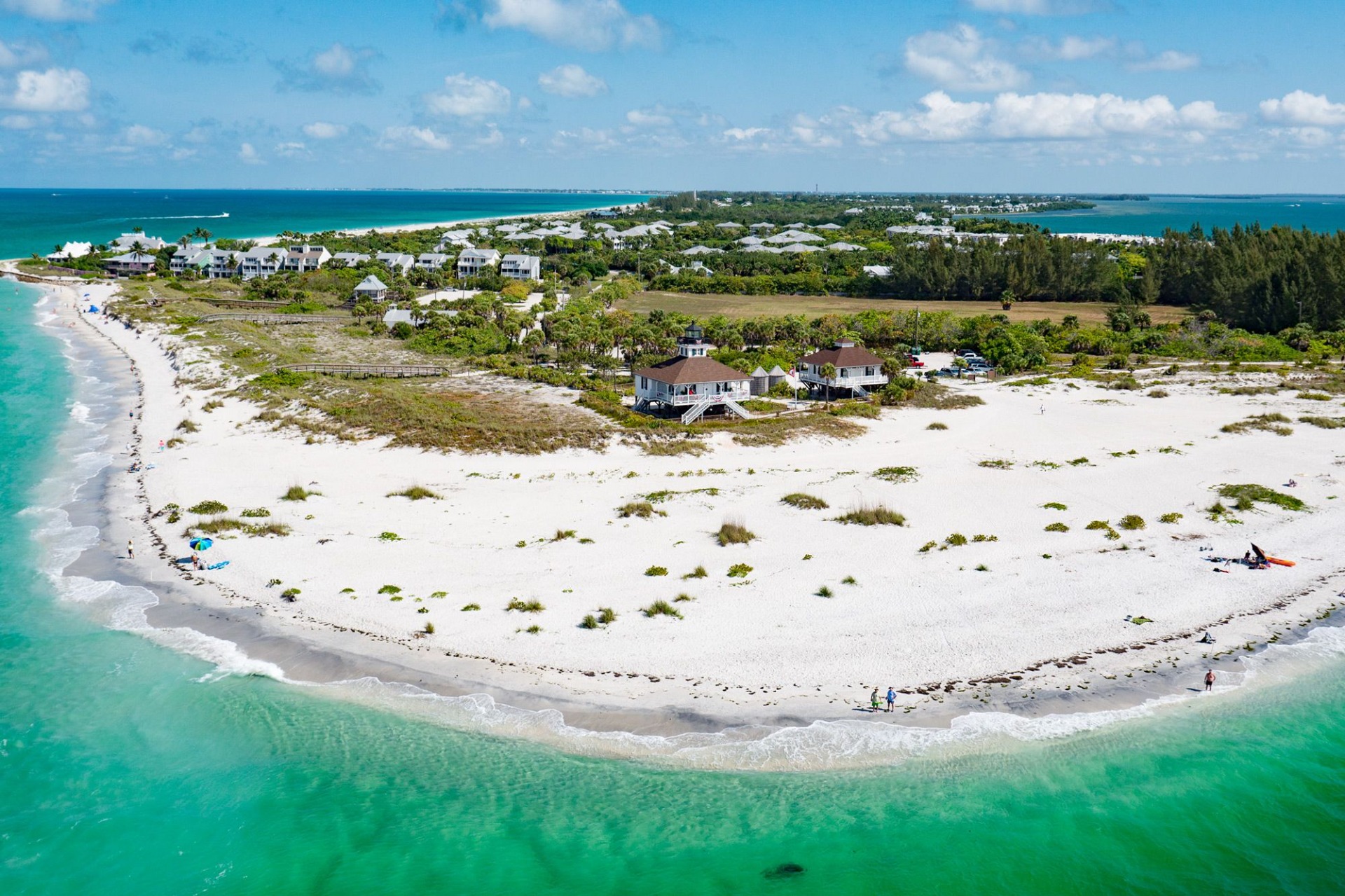
Families can reach Boca Grande and the surrounding barrier islands by water taxi or small passenger ferry instead of driving the Boca Grande Causeway. Most services depart from marinas in the Placida and Charlotte Harbor area on the mainland, and many also serve boat-only destinations such as Cayo Costa and Don Pedro Island. Boating over makes the most sense when your plan is a beach or island day rather than a driving day, since you arrive without a car and carry only what you can hand-load. Schedules, routes and fares vary by operator and season, so book ahead and confirm directly with the company.
Almost every guest who books a Boca Grande week asks the same question at some point: do we have to drive over the causeway every single time? The honest answer is no — not if your day is really about the water. There's a whole small fleet of water taxis and passenger ferries working the Placida and Charlotte Harbor side of the county, and for certain kinds of family days they beat the car outright.
We've been hosting families in Southwest Florida for eighteen years, and we've watched a lot of them figure this out the hard way — on their third afternoon, stuck behind a line of cars at the drawbridge with two overheating kids in the back seat. Here's what we tell people before that happens.
Why Would You Boat Over Instead of Just Driving?
Driving to Gasparilla Island is straightforward — you take the causeway, you pay the toll, you park. It works. But the causeway includes a swing bridge over the Intracoastal Waterway, and when it opens for a tall vessel, traffic simply stops until it closes again. On a busy season weekend that pause stacks up in both directions.
Going by water sidesteps that entirely, and it changes the shape of the day. You're not driving to a beach, you're already on the water the moment you leave the dock. Kids who would be squirming in a back seat are watching for dolphins in the Intracoastal instead. And a boat can drop you at places no road reaches at all.
If you haven't been to the island before, read our companion piece on what first-timers should know before crossing the causeway first — the two approaches solve different problems, and most families end up using both during a week's stay.
Drive when you need the car. Boat when you need the day.
Where Do the Boats Actually Leave From?
The main jumping-off points are on the mainland side of the Intracoastal, clustered around Placida and the Cape Haze peninsula, plus marinas up in the Charlotte Harbor and Punta Gorda area. Placida is the shortest hop — it sits almost directly across the water from Gasparilla Island, which is why the causeway lands there and why so many water services base there too.
- Placida-area marinas — closest launch point to Boca Grande and to Don Pedro and Little Gasparilla islands. Shortest crossings, most frequent departures.
- Charlotte Harbor and Punta Gorda marinas — longer runs down the harbor, often packaged as half-day or full-day island trips rather than shuttle service.
- Pine Island and Bokeelia, to the south — the usual approach for Cabbage Key, Useppa and the southern end of Cayo Costa.
- Gasparilla Island itself — several operators run island-hopping charters out of Boca Grande if you drive over once and boat from there.
Operators change, seasons change, and some services run charter-only in the slower months. Look up who is currently running the route you want before you plan a day around it, and call rather than relying on a third-party listing.
What's the Difference Between a Water Taxi and a Ferry?
The words get used loosely around here, but the practical difference matters for families.
A scheduled ferry runs a set route at set times, sells seats per person, and expects you to be at the dock on time. It's the better choice when you want a predictable island day and don't mind building your schedule around someone else's clock.
A water taxi is closer to a small private charter. You call, you agree on a pickup point and time, and the captain runs your group. It costs more, but with a family it can work out better than you'd expect once you're splitting one boat instead of buying six seats — and it lets you set your own return time, which is worth a great deal when someone is going to fall asleep by three in the afternoon.
What Should We Expect With Kids and Beach Gear Aboard?
This is the part families underestimate. When you drive, the car is your storage closet — you overpack because you can. On a boat, everything you bring has to be hand-carried down a dock, lifted aboard, and then hand-carried again across sand at the other end, usually with no shade and no cart waiting for you.
- Pack in soft bags, not hard coolers. They stow better, they're lighter, and they don't slide around underway.
- One small soft cooler per family is plenty. Freeze water bottles the night before — they double as ice and then as drinking water.
- Sun cover matters more on a boat than on a beach. Hats with chin straps, long-sleeve sun shirts, and sunscreen applied before you board, not after.
- Life jackets: vessels carry them, but properly fitted infant and toddler sizes are not guaranteed. Bring your own for the little ones.
- Shoes you can get wet. Some island stops involve a wet landing or a sandy dock rather than a tidy concrete pier.
- Cash, a paper backup of your return time, and a charged phone in a dry bag. Cell service on the outer islands is inconsistent.
- No wheeled beach cart unless the operator says yes — many boats simply don't have room.
One more thing worth saying plainly: talk to your kids about the ride before you're on it. A twenty-minute crossing in a light chop is fun for a seven-year-old who was told to expect bumps and miserable for one who wasn't.
Where Can You Get to That a Car Can't?
This is the real argument for going by water. A handful of the best beaches in this part of Florida have no bridge at all — not a toll bridge, not a long causeway, no road whatsoever. If you want to see them, a boat is the only way.
Cayo Costa State Park is the headline: a long, undeveloped Gulf beach reachable only by boat, with some of the most productive shelling on this coast. We wrote a full guide to getting to Cayo Costa and why it's worth the boat ride. Closer in, Don Pedro Island State Park is a shorter crossing from the Placida side and a gentler first island trip for younger kids.
When Is Driving Still the Better Call?
We're not going to pretend the boat is always right. Drive when:
- You're going for dinner, shopping on Park Avenue, or anything that runs into the evening — you don't want to be watching the clock for a last departure.
- You have a stroller, a pack-and-play, a wagon, or anything else bulky.
- The forecast is unsettled. Operators cancel for weather, and a strong afternoon storm line in summer can end a boating plan with little notice.
- Someone in the group gets seasick, or you have a family member for whom stepping down onto a moving deck is genuinely difficult.
- You want the freedom to leave when you feel like leaving.
The pattern we see work best over a week's stay: drive over once early in the trip to get oriented, walk the village, find the lighthouse, and let everyone see the island the easy way. Then pick one clear-weather morning and do a proper boat day out to a beach the car can't reach. Those two days do different jobs, and families who plan both come home happier than families who fight the bridge five times.
How Do We Plan a Boat Day That Actually Works?
Book ahead — especially in the winter and spring high season, when the popular runs fill. Ask the operator three specific questions when you call: what time is the last return, what happens if weather cancels, and is there shade on the boat. Those three answers tell you most of what you need to know about the day.
Go early. Mornings on this coast are calmer, the light is better, and you're on the beach before the afternoon builds. Watch the tide too — low tide is when the shelling is best and when sandbars appear for wading, and it's also when some shallow approaches get tricky. A good captain will already have planned around it.
And give yourself a base close to the water. Guests who stay at Seaside Boca are already on the right side of the trip — short drive to the Placida launch points, and close enough to the island that a spontaneous boat morning is realistic instead of a two-hour production.
Questions Families Ask Us About Boating to the Islands
Can we get to Boca Grande without paying the causeway toll?
Yes. Water taxis and passenger boats operating from the Placida and Charlotte Harbor area can carry you to Gasparilla Island by water, bypassing the causeway entirely. You'll pay the operator instead of the toll, and you'll arrive on foot rather than with a car, so plan for how you'll get around the island once you land.
Is a boat trip to the islands safe for small children?
Licensed operators carry required safety equipment and run these routes daily, but properly fitted infant and toddler life jackets are not guaranteed to be aboard — bring your own for the youngest members of your group. Choose a shorter crossing for a first trip, go on a calm morning, and prepare kids for the motion beforehand.
What happens if the weather turns after we've already been dropped off?
Ask this before you book, because policies differ by operator. Most will bring you back early rather than leave you on an island in bad weather, and most will cancel or reschedule when conditions look poor at departure time. Summer afternoons in Southwest Florida build storms quickly, which is one more reason morning trips work better.
Can we bring a cooler, chairs and beach gear on a water taxi?
Usually yes, within reason, but space is limited and everything has to be hand-carried. Soft-sided coolers and bags travel far better than hard coolers, and wheeled beach carts often don't fit at all. Confirm what your operator allows when you book rather than at the dock.
Which boat-only island is best for a first trip with kids?
Don Pedro Island State Park is a good starter — the crossing from the Placida side is short and the beach is quiet. Cayo Costa is the bigger day out, with a longer ride and better shelling, and it suits families whose kids have already done a boat ride and enjoyed it.
Do we still need a rental car if we plan to travel by boat?
Almost certainly yes. Boat services cover island days, not groceries, restaurants off-island, or getting to and from the airport. Think of the water taxi as a way to make one or two days better, not as a replacement for having a vehicle during your stay.

Travel DRD - Free Land Vacations — IATA certified, IATAN and ASTA members, hosting families since 2007. We manage every home in this collection ourselves.
Last updated: August 29, 2026