
On Gasparilla Island, no-see-ums (biting midges) and mosquitoes are most active around dawn and dusk, especially on calm, humid evenings during the summer wet season and in the days after heavy rain or unusually high tides. Bayside areas, mangrove edges, and shaded inland trails are typically worse than the open, breezy Gulf beach. Families do best by shifting outdoor time to windier midday and mid-evening hours, wearing long lightweight layers at dusk, and using an EPA-registered repellent appropriate for their children's ages.
Nobody books a barrier island vacation hoping to talk about bugs. But we've hosted families here for a long time, and the single most common surprise for first-time guests isn't the parking or the bridge toll — it's the ten minutes at sunset when the porch suddenly stops being pleasant. It's not a secret, and it's not a reason to stay home. It's just a rhythm you can learn in about a day.
Gasparilla Island sits between the Gulf and Charlotte Harbor, with mangrove edges and tidal flats on the bay side. That habitat is exactly why the fishing and the bird life are so good here — and it's also nursery ground for no-see-ums and salt-marsh mosquitoes. You can't separate the two. What you can do is plan your outdoor hours around them, the way people who live here do without even thinking about it.
What's Actually Biting You Out There
Two different insects, two different problems. Mosquitoes you can usually see and hear, and their bites announce themselves right away. No-see-ums are biting midges — tiny flies in the family Ceratopogonidae, small enough to pass through standard window screening. You often don't notice them landing. The itch shows up later, sometimes hours later, and for some people it lasts longer than a mosquito bite would.
That delay is why families often misdiagnose the problem. A parent will tell us the kids got eaten at the beach that afternoon, when the bites almost certainly came from the shaded, still spot where everyone stood around loading the golf cart at dusk. Once you know which one you're dealing with, the fix is different — mosquitoes respond well to repellent and moving air, while no-see-ums are mostly a question of timing and fine-mesh screening.
When They Peak: The Two Windows That Matter
Both no-see-ums and salt-marsh mosquitoes are crepuscular — most active in the low-light hours around dawn and again around dusk. In practice, the evening window is the one that affects vacations, because that's when families finally slow down and sit outside. The bad stretch is usually the period surrounding sunset, and it can end almost as abruptly as it starts once full dark settles in and the temperature drops slightly.
The seasonal layer sits on top of that. Southwest Florida has a distinct wet season roughly from late spring into early fall, and that's when biting insect pressure is highest — warm, humid, frequent afternoon rain. Winter and early spring are noticeably easier. We have guests who come every February specifically because they can eat dinner outside every night without a second thought.
- Dawn and dusk — the daily peak for both species. The hour on either side of sunset is the one to plan around.
- Wet season (roughly late spring through early fall) — warm, humid, rainy; highest overall pressure of the year.
- Two to seven days after heavy rain — standing water in low spots and containers produces a new batch of mosquitoes.
- After unusually high tides — water pushed into normally dry marsh flats wets out eggs that were waiting there, which is why salt-marsh mosquitoes can surge even in a dry week.
- Calm, still, humid evenings — no-see-ums are weak fliers. Dead air is their best condition and your worst.
Wind Is the Variable Most Families Underestimate
If you remember one thing, remember this: a breeze beats a repellent. No-see-ums in particular struggle in moving air, and even a modest steady wind will largely clear a space. This is the actual reason the open Gulf beach is usually comfortable at sunset while a sheltered bayside dock a mile away is not — it isn't distance from the mangroves, it's exposure to wind.
On this island, the wind report tells you more about your evening than the bug forecast does.
It's also the cheapest fix you have indoors and on a porch. An oscillating fan pointed at the table where people are sitting does more than most sprays, and kids don't object to it. We keep fans in our homes for exactly this reason, and we'd rather guests use them than assume the porch is simply unusable.
Which Spots on the Island Are Worst
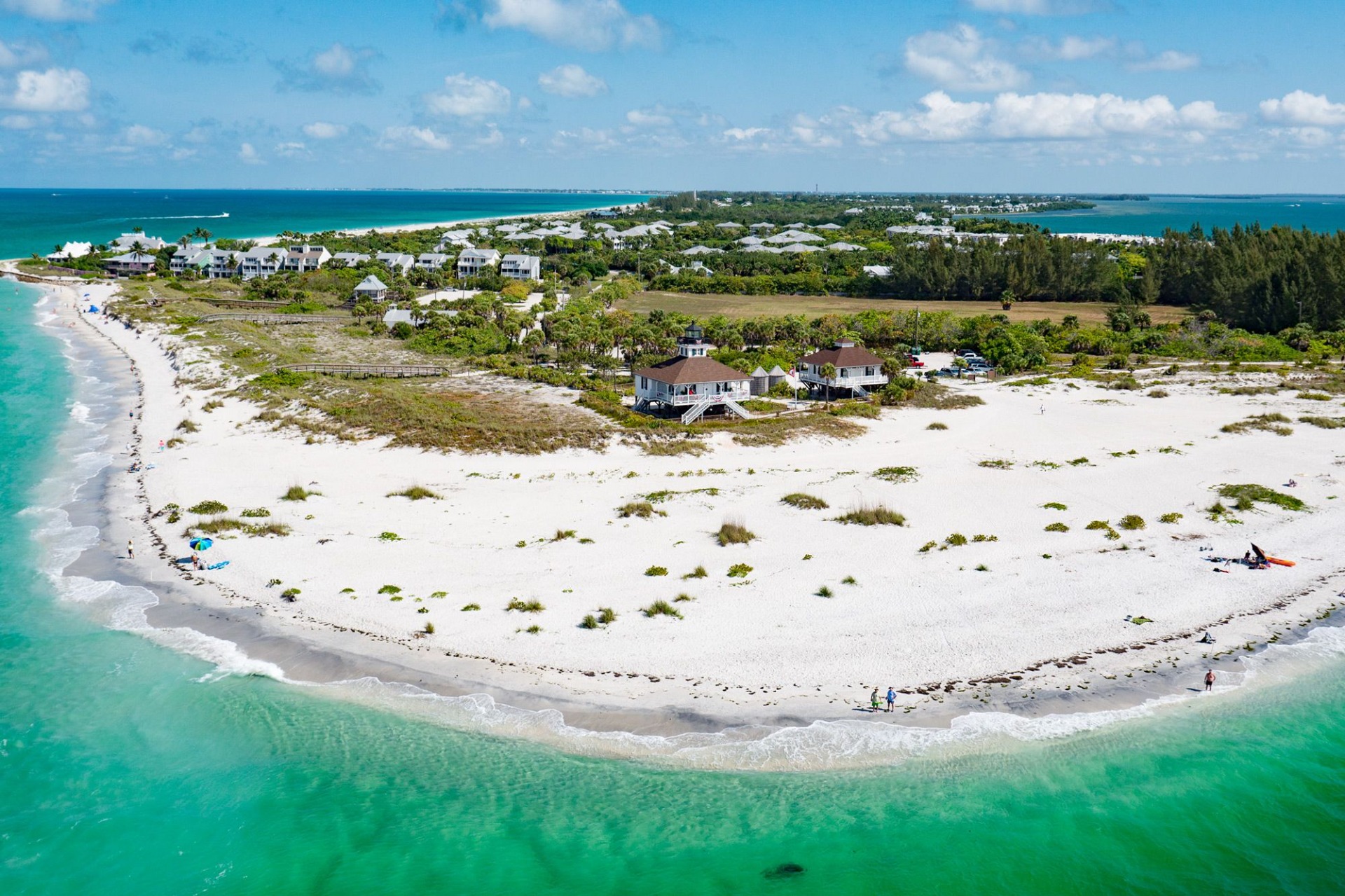
There's a fairly reliable geography to it. The Gulf-facing beaches, especially anywhere with an onshore breeze and open sky, are generally the most comfortable at dusk. That's a big part of why sunset on the beach works so well as a family ritual here — we've written more about making that go smoothly in our guide to catching a Boca Grande sunset without the meltdown.
| Location type | Evening bug pressure | Why |
|---|---|---|
| Open Gulf beach, breezy | Usually lowest | Steady onshore wind, no sheltered vegetation |
| Bayside docks and seawalls | Often highest | Still air, adjacent mangrove and tidal flats |
| Shaded inland trails and hammock | High at dusk | Dense cover, damp ground, no air movement |
| Mangrove edges anywhere | High | Primary habitat for both species |
| Screened porch with fine mesh + fan | Low | Physical barrier plus moving air |
| Open village streets midday | Very low | Bright, warm, breezy, wrong time of day |
Kayak launches and boat ramps deserve a specific mention, because they combine everything unfavorable: bayside, sheltered, near mangroves, and used most often at dawn and dusk. If you're launching at first light, get your gear ready the night before so you're not standing still in the parking area for twenty minutes.
Repellents and Clothing That Actually Work for Kids
We're hosts, not physicians, so take this as practical experience rather than medical advice — and check any product with your pediatrician if your child is very young or has sensitive skin. That said, here's what holds up in real use, in the order we'd reach for it.
- Timing first. Shifting an outdoor plan by forty-five minutes is more effective than any product, costs nothing, and requires no negotiation with a five-year-old about spray.
- Long, lightweight, light-colored layers at dusk. A thin long-sleeve sun shirt and lightweight pants remove most of the target area. Kids already wear sun shirts here all day — just don't take them off at sunset.
- An EPA-registered repellent, applied per the label. Look for registered active ingredients such as DEET, picaridin, oil of lemon eucalyptus, or IR3535. The label carries the age guidance and reapplication interval — follow it rather than guessing. Note that CDC guidance advises against oil of lemon eucalyptus for children under three.
- Apply it yourself on small children. Spray your hands, then apply — avoiding eyes, mouth, and hands that will end up in mouths.
- Permethrin-treated clothing for the adults doing early-morning things. It goes on fabric, not skin, and it's meant for gear. Read the label carefully; it is not applied to skin at all.
- Wash it off at bedtime. A rinse after the last outdoor stretch is a good habit, and it usually coincides with getting sand off anyway.
What we'd skip: wristbands, ultrasonic gadgets, and vitamin-based remedies. We've watched a lot of families try them and we've never seen one change an evening. The old candle-and-torch approach helps slightly in still air by adding smoke and a little heat, but a fan is more reliable and doesn't involve open flame near children.
Screening, Porches, and What to Check in a Rental
Because no-see-ums pass through standard screen, the question for any porch isn't "is it screened" but "what mesh." Fine-mesh insect screening — often sold explicitly as no-see-um screen — is the fix, and it's what makes a covered outdoor space genuinely usable at dusk here. It trades a little airflow for a lot of peace, which is why a ceiling fan or floor fan usually accompanies it.
A few practical habits that matter more than people expect: don't prop the door open while unloading the cart at sunset, dump standing water out of buckets and toys and plant saucers after rain, and turn off unnecessary porch lights during the dusk window, since lights draw insects toward the door. If you're staying with us at Seaside Boca, ask us about the porch and fans when you check in — we'd rather answer it up front than have you discover it at dinner on night one.
How We'd Actually Plan a Family Evening Here
The version that works, over and over: beach or pool through the late afternoon, head back and rinse off before the light goes gold, eat on the porch with a fan running or inside with the doors shut, then go back out for the bike ride or the walk once it's fully dark and things have settled. Full dark is genuinely better than dusk for an evening ride — just add lights and reflective gear, which you want on island roads regardless.
If you're riding at dusk anyway, keep moving. Bites happen at the stops — the photo stop, the "wait for your sister" stop, the flat-tire stop. Long sleeves and repellent on ankles and the back of the neck cover the gap. Our family beach day packing list already accounts for most of this, and adding a small repellent stick to the cart bag is the only change we'd make for a summer stay.
With very young children the calculus shifts a little more toward avoidance than product, mostly because toddlers are close to the ground, in shade, and wearing less. Shifting the whole day earlier is usually the answer — and that's roughly what we recommend anyway in our guide to a Boca Grande beach day with a toddler.
None of this should make the island sound hostile. Most weeks of the year, most families deal with this for about twenty minutes a day and never think about it again. Learn the dusk window, respect the wind, keep a repellent in the cart, and the rest of the day is yours.
Questions Guest Families Actually Ask Us
What time of day are no-see-ums worst on Gasparilla Island?
They're generally worst around dawn and again around dusk, with the evening window being the one that affects most families. The period surrounding sunset is typically the peak, and it often eases once it's fully dark. A steady breeze can shorten or eliminate that window entirely.
Is the beach or the bay side worse for bugs?
The bay side is usually worse. Mangrove edges, tidal flats, docks, and sheltered launches sit right next to prime habitat and tend to have still air. The open Gulf beach, with an onshore breeze and no dense cover, is normally the most comfortable place to be at sunset.
Will a regular screened porch keep no-see-ums out?
Not reliably. Biting midges are small enough to pass through standard window screen, so fine-mesh insect screening is what actually keeps them out. Pairing that screening with a fan makes a covered porch comfortable even during the dusk window.
What repellent is safe for young kids here?
Look for an EPA-registered product with an active ingredient such as DEET, picaridin, or IR3535, and follow the label for age guidance and reapplication timing. CDC guidance advises against oil of lemon eucalyptus for children under three. Apply it to your own hands first and then onto small children, avoiding eyes and mouth, and check with your pediatrician if you have any concerns.
Are bugs bad enough to avoid visiting in summer?
No — plenty of our guest families come in summer and enjoy it. You do need to plan around the dusk window more deliberately than you would in winter, and to expect a surge in the days after heavy rain or unusually high tides. Winter and early spring are the easiest months if you specifically want long outdoor evenings.
Can we still do an evening bike ride?
Yes, and the simplest adjustment is to ride after full dark rather than right at dusk. Keep moving, since most bites happen during stops, and wear long lightweight layers with repellent on ankles and the back of the neck. Lights and reflective gear are worth using on island roads at night regardless of insects.

Travel DRD - Free Land Vacations — IATA certified, IATAN and ASTA members, hosting families since 2007. We manage every home in this collection ourselves.
Last updated: September 20, 2026