
On Gasparilla Island, UV is strongest from late morning to mid-afternoon. During daylight saving time, solar noon falls after 1 p.m., so the peak runs later than many visitors expect. Plan beach, bike and golf-cart outings for early morning and late afternoon, reapply broad-spectrum SPF 30+ at least every two hours and after swimming, and give kids water on a schedule instead of waiting for them to say they're thirsty. Heavy sweating, cool clammy skin, dizziness, headache or nausea can be early signs of heat exhaustion: get the child into shade, cool them down and give fluids.
We've hosted guests on the Gulf Coast for 18 years, and the sunburn story we hear most goes like this: a family arrives, the kids can't wait, everyone heads to the sand around eleven, and by two o'clock someone is red, cranky and done for the day. Usually nobody was careless. They just didn't know how strong the sun is here or how late in the day it peaks.
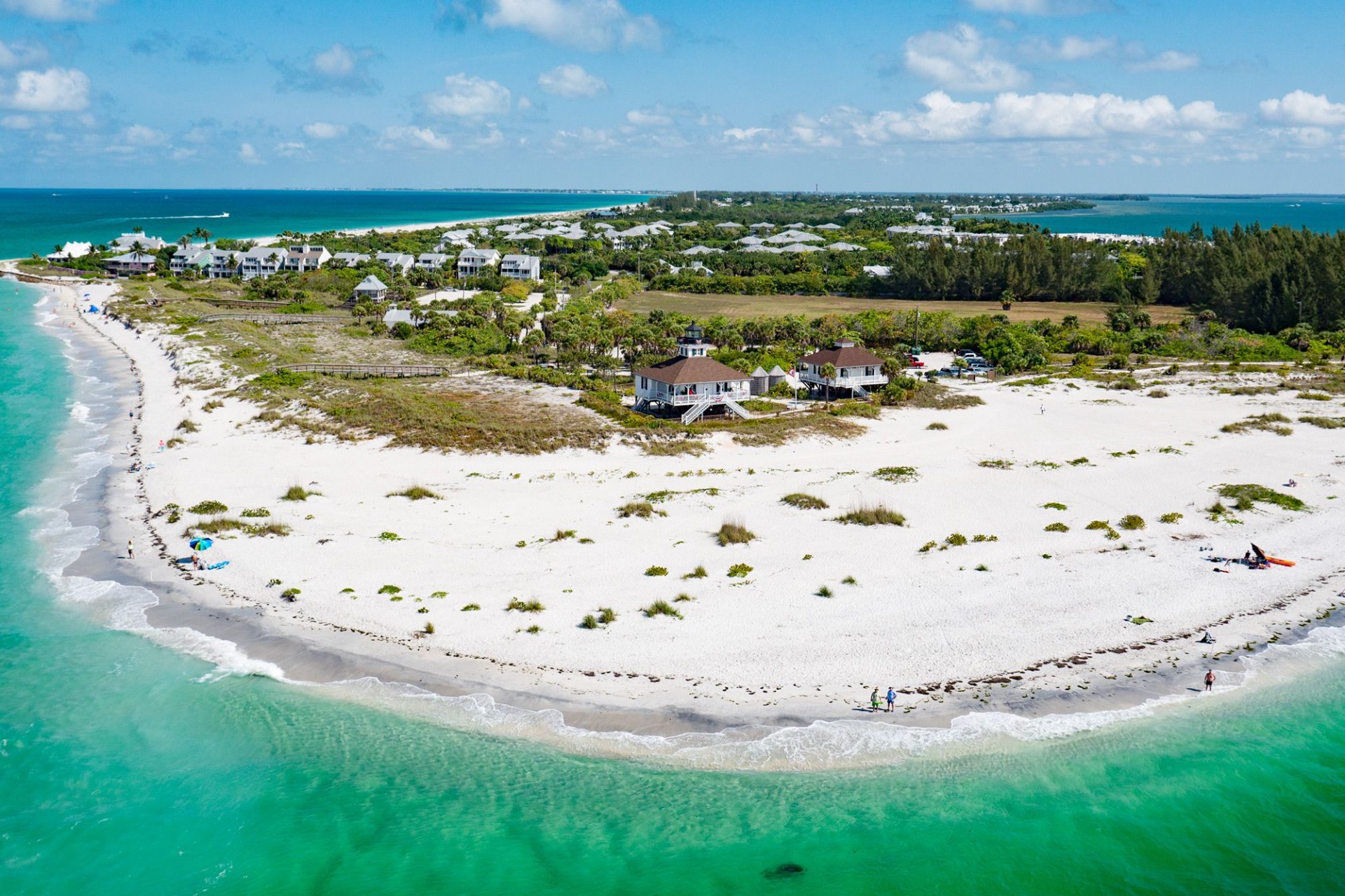
Gasparilla Island is wide open. The beaches have pale sand, very little natural shade and a lot of water reflecting light back up at you. This guide covers how we plan sun and heat for our own family: which hours to avoid, how to read the two numbers that matter, how sunscreen actually works, and what heat trouble looks like in a child before it gets serious.
Which hours should we avoid, and does it change by season?
The usual advice is to limit sun between 10 a.m. and 4 p.m., and that's a good default. The detail visitors miss is the clock. During daylight saving time, roughly March through early November, solar noon on Gasparilla Island falls after 1 p.m. That's when the sun is highest. So the most intense stretch is closer to 11 a.m. to 3 p.m. than the 10-to-2 window many people picture.
| Season | Midday sun | What we suggest for kids |
|---|---|---|
| Late spring and summer | Strongest of the year; UV index often very high to extreme around midday | Beach early (before about 10:30) and again after about 4; spend the middle hours indoors, at the pool in shade, or resting |
| Early fall | Still summer-strength on many days, with heavy humidity | Treat it like summer until the forecast UV index starts to drop |
| Winter | Lower, but midday UV can still reach moderate to high on clear days | Midday beach time is reasonable with sunscreen and hats; watch for wind keeping everyone feeling cool while they burn |
Summer afternoons in Southwest Florida also bring thunderstorms. So the late-afternoon beach window can close early. Check the radar before you pack the wagon, and if you hear thunder, get off the beach.
How do we read the UV index and the heat index?
These are two different numbers and you need both. The UV index measures how much sunburn-causing radiation is reaching the ground. The heat index combines air temperature and humidity to estimate how hot it feels to the body. A breezy winter day can have a comfortable heat index and still give your kids a sunburn. A cloudy, humid August afternoon can have a moderate UV index and a dangerous heat index.
- UV index 0–2 (low): minimal precautions for most people.
- 3–5 (moderate): sunscreen, hat and sunglasses; seek shade around midday.
- 6–7 (high): reduce time in the sun around midday; reapply diligently.
- 8–10 (very high): take extra precautions; unprotected skin burns quickly.
- 11+ (extreme): avoid midday sun when you can, especially with young children.
A quick check with no app needed is the shadow rule: if your shadow is shorter than you are, UV is high and it's time for shade or sunscreen. On a summer day here, your shadow stays short for most of the middle of the day.
What sunscreen should we use, and how often do we really reapply?
Dermatologists recommend a broad-spectrum, water-resistant sunscreen of SPF 30 or higher. Put it on about 15 minutes before going outside. Reapply at least every two hours, and right away after swimming, toweling off or heavy sweating. A "water resistant (40 minutes)" or "(80 minutes)" label tells you how long the protection holds up in the water. It does not mean you can skip reapplying. Most families use far too little. For an adult's exposed skin, the usual guide is about a shot glass, or one ounce.
- Apply at the house, before swimsuits get sandy. Sunscreen goes on and stays on far better on clean, dry skin.
- Set a phone timer for two hours the moment you reach the sand.
- Reapply after every long swim, even if the timer hasn't gone off.
- For faces, spray into your hands first and rub it on. Don't spray toward a child's eyes or mouth.
- Don't forget ears, the tops of feet, the part line in hair and the back of the neck. Those are the burns we see most.
About "reef-safe": the term isn't regulated in the United States, so the label alone tells you very little. Read the active ingredients instead. Many families choose mineral sunscreens with zinc oxide or titanium dioxide and skip oxybenzone and octinoxate. Hawaii banned the sale of those two ingredients over concerns about coral reefs. The waters off Gasparilla support seagrass, fish and other marine life, so this choice matters here too. Mineral formulas are also often gentler on sensitive young skin.
For babies under six months, pediatricians advise keeping them out of direct sun entirely and using shade and clothing as the main protection. If shade isn't available, apply a small amount of sunscreen to exposed areas only.
How much should kids drink, and how do we know it's enough?
Kids don't notice thirst early, and they won't stop playing to tell you. So don't use thirst as the signal. Give water on a schedule: a drink before you leave the house, regular small drinks during play (every 15 to 20 minutes is an easy rhythm to remember), and more after. Cold water is usually all they need. For long, sweaty outings, ask your pediatrician whether a drink with electrolytes makes sense for your child.
- Pack more water than you think you'll need. Freeze a couple of bottles overnight so they melt into cold water by midmorning.
- Give each child their own bottle. Kids drink more when the bottle is theirs.
- Check bathroom trips and urine color. Pale yellow is a good sign; dark yellow means they need more fluids.
- Water-rich snacks like watermelon, grapes and cucumber slices help, but they don't replace drinking.
Don't wait for a child to ask for water. Hand it to them on a schedule.
What are the early signs of heat exhaustion in children?
Heat exhaustion usually builds slowly, which gives you time to catch it if you know what to watch for. Common signs include heavy sweating, cool and clammy skin, a pale or flushed face, weakness or unusual tiredness, dizziness, headache, nausea or vomiting, and muscle cramps. With little kids, the first sign is often a change in mood: a cheerful child who suddenly becomes whiny, clingy or limp.
If you see these signs, move the child to shade or air conditioning, loosen or remove extra clothing, cool their skin with wet cloths or a cool bath, and give sips of water. If symptoms get worse or don't improve within an hour, or the child is vomiting, get medical help. Heat stroke is an emergency: very high body temperature, hot red skin, confusion, slurred speech, fainting or a seizure. Call 911 and start cooling them right away.
How do we plan beach, bike and golf-cart outings around the midday peak?
Most of the island's best activities fit easily into the early and late parts of the day. Here's a rhythm that has worked for our guests:
- Early morning: the multi-use bike path is at its most pleasant before the heat builds, and the beach is calm, cool and good for shelling.
- Midday: head indoors for lunch, naps, a pool session under an umbrella, or a slow browse through town in the shade.
- Late afternoon: go back to the sand once your shadow starts getting long, then watch the sunset over the Gulf.
- Golf carts: the roof shades heads and shoulders, but open sides and light reflecting off the road and sand still reach arms, legs and faces. Put sunscreen on before every ride, not just beach days.
On the beach itself, bring your own shade, because there's very little built in. We cover canopy and umbrella setups that hold up in Gulf breezes in our guide to beach shade on Gasparilla Island. If you have a little one, our toddler beach-day guide shows how to fit naps and snacks around the cooler hours. Heat isn't the only thing to watch in the water either, so read through our beach safety field guide before the first swim.
Staying close to the water makes all of this easier. At Seaside Boca, a midday break means a short trip back for lunch and air conditioning, not giving up the beach for the rest of the day.
Questions Parents Ask Us About Sun and Heat in Boca Grande
What time is the sun strongest on Gasparilla Island?
During daylight saving time, solar noon on the island falls after 1 p.m., so the strongest sun usually runs from late morning into mid-afternoon. In winter, the peak moves earlier and is less intense. Either way, the 10 a.m. to 4 p.m. window is a sensible time to limit direct sun for kids.
Can kids get sunburned on a cloudy day in Boca Grande?
Yes. A large share of UV passes through light or scattered clouds, and pale sand and water reflect it back onto skin. Many of the worst burns we hear about happen on overcast or breezy days, when families feel cool and skip reapplying.
How often should children reapply sunscreen at the beach?
At least every two hours, and right away after swimming, toweling off or heavy sweating. Water-resistant labels say how long protection lasts in the water (40 or 80 minutes), not how long you can go without reapplying. A phone timer set when you reach the sand makes this much easier.
Is 'reef-safe' sunscreen actually regulated?
No. The term isn't regulated in the United States, so read the active ingredients instead. Many families choose mineral sunscreens with zinc oxide or titanium dioxide and avoid oxybenzone and octinoxate, the two ingredients Hawaii banned over concerns about coral reefs.
What's the difference between heat exhaustion and heat stroke in kids?
Heat exhaustion often shows up as heavy sweating, cool clammy skin, tiredness, dizziness, headache or nausea. It usually improves with shade, cooling and fluids. Heat stroke is a medical emergency, marked by very high body temperature, hot red skin, confusion or fainting. Call 911 and start cooling the child immediately.
Are golf carts and bikes safe for kids in the summer heat?
They're a great way to get around the island. Schedule rides for early morning or late afternoon, bring water on every trip, and put sunscreen on beforehand. A golf cart's roof shades the top of the head, but sun still reaches arms, legs and faces from the open sides and the road surface.

Travel DRD - Free Land Vacations — IATA certified, IATAN and ASTA members, hosting families since 2007. We manage every home in this collection ourselves.
Last updated: October 23, 2026