
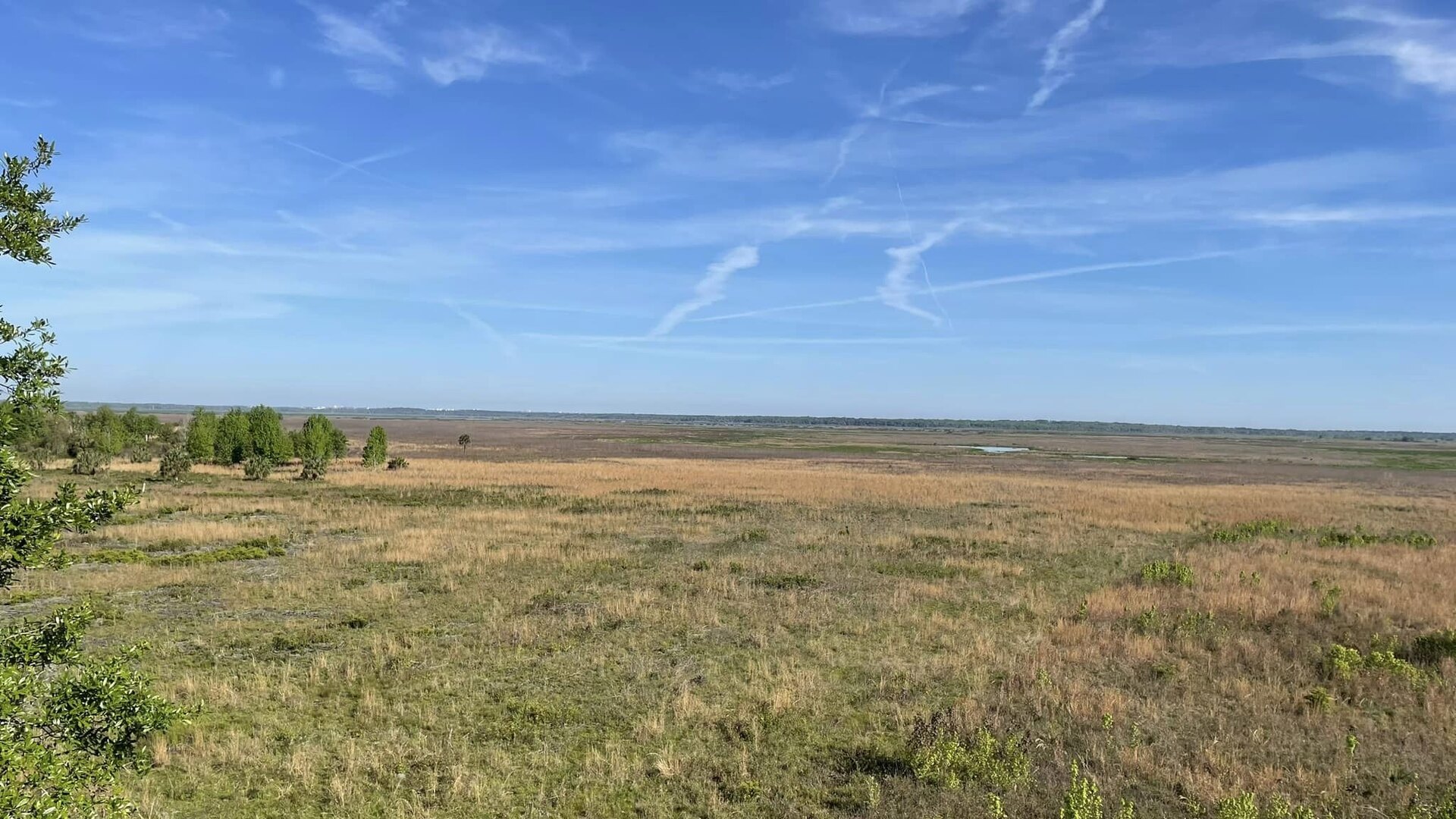
Families staying on Gasparilla Island or around Placida and Port Charlotte can reach Myakka River State Park east of Sarasota in roughly an hour to an hour and a half, depending on where you start and traffic on State Road 776 and I-75. Arrive close to park opening: wildlife is most active in the cool early hours, shade is limited, and parking near the main attractions fills later in the morning. Walk the short boardwalk and weir area with young children, ride the tram or boat only if a departure lines up with your arrival, and leave by mid-afternoon to be back on the coast well before sunset. Bring insect repellent, sun protection, water, and closed shoes.
Guests book a beach house and then, somewhere around day four, the kids have had enough sand. The sunscreen routine has become a negotiation, someone is peeling, and the cooler is depressing. That is the day to drive inland.
Myakka River State Park sits east of Sarasota, and it is the closest thing to Old Florida that a family staying on the Charlotte Harbor side can reach in a morning. Open prairie, oak hammock, a wide slow river, and more birds than most people have seen in one place. This is the plan we give guests, built around the two things that actually decide whether the day is good: what time you arrive, and how far you ask small legs to walk.
Why swap a beach day for this at all?
Because the coast and the interior are genuinely different Florida, and most visitors only see one. Out on the barrier islands you get Gulf, shells, and sunsets. Thirty-some miles inland you get wet prairie, cabbage palm, and wading birds working the shallows. Kids who have gone glassy-eyed at another beach will stand very still on a boardwalk watching a great blue heron stalk a fish.
It also breaks up the week honestly. If you have been reading up on the mainland side of the harbor — the part between the islands and the interstate — our guide to Port Charlotte, Placida and Cape Haze covers what is close to home. This trip goes one step further east, and it is worth the extra half hour.
The beach is what you came for. The prairie is what you'll talk about on the drive home.
How long is the drive, and what's the best route?
From Boca Grande and Gasparilla Island, budget the most time: you first have to get off the island via the causeway, then work your way up through Placida and Englewood. From Placida, Cape Haze, or Rotonda you are looking at a shorter run. From Port Charlotte it is shorter still, since you can get to I-75 quickly.
There are two sensible ways to go, and they trade off differently:
- The inland route (I-75): head to the interstate, run north, and cut east toward the park's main entrance on State Road 72. Usually the faster and more predictable option, especially mid-morning.
- The coastal route (SR 776 / US 41): prettier through Englewood and Venice, but it is a two-lane-heavy corridor with lights, seasonal traffic, and a drawbridge or two. In winter season it can add real time.
- Season matters more than distance. From roughly the new year through spring, everything on this coast takes longer. Add a cushion.
- Check the entrance before you go. The park has more than one entrance and they are far apart on the map. Confirm which one your directions are sending you to, because the wrong turn costs you a long backtrack.
Practical note for the driver: fill up before you head east. Once you turn inland on SR 72 there is a long stretch of nothing, which is exactly the point, but it is not where you want to discover a quarter tank.
What's the best time to arrive for wildlife and heat?
Be at the gate at or near opening. That single decision does more for the day than anything else on this page.
Three reasons. First, animals are moving in the cool hours — birds are feeding, alligators are hauled out on banks, and deer and hogs are still up. By late morning much of that goes quiet and shady. Second, this is open prairie country with limited canopy; midday sun on a boardwalk with no shade is how a good day turns into a meltdown. Third, parking near the most popular spots is finite, and it does not stay open.
Summer flips the math. Heat and humidity build fast and afternoon thunderstorms are routine, so an early arrival is not a preference in July — it is the only version of the trip that works. Plan to be walking by mid-morning at the latest and heading out before the sky stacks up.
Which walk should we do with young children?
Be realistic about range. A four-year-old is good for a short distance and then becomes cargo. Pick short, flat, and interesting over long and scenic.
- Start at the water. The area around the weir where the river passes under the park drive is the highest-payoff, lowest-effort stop in the park. Alligators, wading birds, turtles, and fish congregate there. Kids get an immediate win in the first ten minutes, which buys you goodwill for everything after.
- Do a short boardwalk or lakeside stretch next. Flat, defined edges, no scrambling, and easy to turn around on. This is where a stroller or a carrier earns its keep.
- Add the canopy walkway if the group is up for it. It is a genuinely memorable stop — a suspended walkway through the treetops with a tower at one end. It is not a long hike, but it does involve stairs and some height, so know your kids.
- Save the long trails for another trip. The backcountry here is real backcountry: exposed, buggy in the warm months, and easy to underestimate. Not a first outing with small children.
If the treetop section is the part your family is most curious about, we wrote about it separately in what a family actually sees up on the canopy walk, including how the kids handled the height. And for the fuller picture of the park — the trails, the wildlife, and the honest answer on whether to book the boat — start with our complete Myakka River State Park guide.
How do we time the boat tour or tram?
The park's guided boat and tram tours run on a posted schedule that shifts with the season, staffing, and water levels, and they can sell out or be canceled outright. So treat them as a bonus, not the anchor of your day.
The way that works: check the current schedule the night before, then build your arrival around the earliest departure that fits. Get your walking done first if there is a gap, because a tour is the easiest part of the day to do tired — everyone sits down. Do not drive an hour and a half with a car full of kids on the assumption that a specific departure will be running. If it is, wonderful. If it is not, the weir and the boardwalk still carry the morning.
One more thing worth saying plainly: on the water you will see alligators, and you will see them closer than you expect. That is thrilling for most kids and genuinely too much for a few. You know yours.
What do we actually need to bring?
Two enemies out there: sun and insects. Both are manageable, and both are miserable if you show up unequipped.
- Insect repellent, applied before you get out of the car. Mosquitoes and biting flies are worst near water, in shade, and around dawn and dusk. Warm, wet months are the hard ones.
- Long, light sleeves for the adults. Better than reapplying repellent all morning, and better sun coverage.
- Hats and sunscreen, no exceptions. Open prairie and boardwalks mean very little shade.
- More water than feels necessary, plus real snacks. Options inside the park are limited and seasonal.
- Closed shoes. Flip-flops are wrong here even though you drove in from the beach.
- Binoculars if you own a pair. This is the single item that turns a walk into an event for a curious eight-year-old.
- Cash or a card for the entrance fee, and patience for a line at the gate on a cool, clear weekend morning.
- A change of clothes in the trunk — it is Florida, and someone is going to find water.
What to leave home: drones, pets on trails where they are not permitted, and any intention of feeding wildlife. Feeding alligators is both illegal and dangerous in Florida, and it is how a healthy animal becomes an animal that has to be removed. Keep the distance the signs ask for and keep small children close to the water's edge rather than at it.
Can we still make it back for sunset?
Easily, if you leave the park by mid-afternoon. The point of arriving early is that you are done early — you will have seen the best of it before lunch, and the drive back is the same hour to hour and a half in reverse.
Our suggested shape for the day: gate at opening, water and boardwalk first, tour if the timing works, lunch either in the park or on the way out, and roll west with time to spare. Stop for a late lunch or an early dinner in Venice or Englewood if you want to break the drive. Then get home, rinse the repellent off, and walk out for the sunset you actually came to Florida for. Gulf-side sunsets on this stretch of coast are the reliable part of the trip.
Families staying with us on the mainland side tend to find this trip easiest to pull off, since you skip the causeway entirely — our Seaside Boca home puts you within reasonable striking distance of both the islands and the interior, which is exactly the flexibility a week like this needs.
After eighteen years of hosting, here is the pattern we see: the families who try one inland morning almost always add it to the next trip. The beach is not going anywhere. Give it up for half a day.
Questions Families Ask Us Before They Go
How far is Myakka River State Park from Boca Grande or Placida?
Plan on roughly an hour to an hour and a half of driving, depending on your starting point and the season. Gasparilla Island takes the longest because you have to cross the causeway and work north through Placida and Englewood first. Port Charlotte is the shortest run since you can reach I-75 quickly.
What time should we get to the park with kids?
As close to opening as your family can manage. Wildlife is most active in the cool early hours, shade is limited once the sun is up, and parking near the popular stops fills through the morning. An early start also means you are back on the coast in plenty of time for sunset.
Is it safe to bring young children around the alligators?
Yes, with normal caution. Alligators are common and visible here, and the park is designed for families to view them from boardwalks, the weir area, and tour boats. Keep children back from the water's edge, never feed or approach wildlife, and follow posted signage. Feeding alligators is illegal in Florida.
When are the mosquitoes worst?
The warm, wet months are the hard stretch, and biting insects are most active near water, in shade, and around dawn and dusk. Apply repellent before you leave the car and consider light long sleeves. The cooler dry-season months are noticeably more comfortable.
Should we book the boat tour in advance?
Treat the guided boat and tram tours as a bonus rather than the reason for the trip. Schedules shift with season, staffing, and water levels, and tours can sell out or be canceled. Check the current schedule the night before and build your arrival around a departure that fits, but have a plan that works without it.
Is there anywhere to eat, or should we pack lunch?
Pack water and real snacks at minimum. Food service inside the park is limited and seasonal, so do not count on it. Many families walk in the morning, eat a packed lunch, then stop in Venice or Englewood on the way back to the coast.

Travel DRD - Free Land Vacations — IATA certified, IATAN and ASTA members, hosting families since 2007. We manage every home in this collection ourselves.
Last updated: August 22, 2026