

A family scavenger hunt through downtown Boca Grande can loop past the old railroad depot, the banyan canopy on Banyan Street, the historic storefronts on Park Avenue, and the harbor edge, in about 60 to 90 minutes on foot or by bike. Clues work best when they fit the child's age: pictures and colors for little ones, counting and reading for school-age kids, and history questions for teens. Go early in the morning or in the late afternoon for shade and cooler air, and bring water.
Kids will walk a long way when they're looking for something. After many years of hosting families on Gasparilla Island, we've learned that the fastest way to get a reluctant eight-year-old interested in a 1910 railroad depot is to hide a question inside it. Downtown Boca Grande is small, flat, and packed with old buildings, big trees, and odd details, which makes it a great place for a scavenger hunt.
This is the hunt we'd give our own guests: a loose route, clue ideas sorted by age, places to cool off, and honest advice on timing. You don't need to buy anything or print fancy cards. A phone camera, a pencil, and a list written on the back of an envelope will do. If you want the slower, history-first version of the same streets, our guide to strolling the historic village at a kid's pace pairs well with this one.
How does a Boca Grande scavenger hunt work?
Keep it simple. Every stop gets one or two clues: something to find, count, photograph, or answer. Kids check off each stop, and the prize at the end is whatever your family agrees on, like picking the ice cream flavor, choosing dinner, or getting the front seat of the golf cart tomorrow. We've found that a small, agreed-on reward works better than a big surprise, because kids stay focused on the hunt itself.
- Give each child (or team) their own list so nobody is just following along.
- Use photos as proof. A picture of the clue answer settles arguments quickly.
- Let the oldest child hold the map and decide the turns. It keeps teens involved.
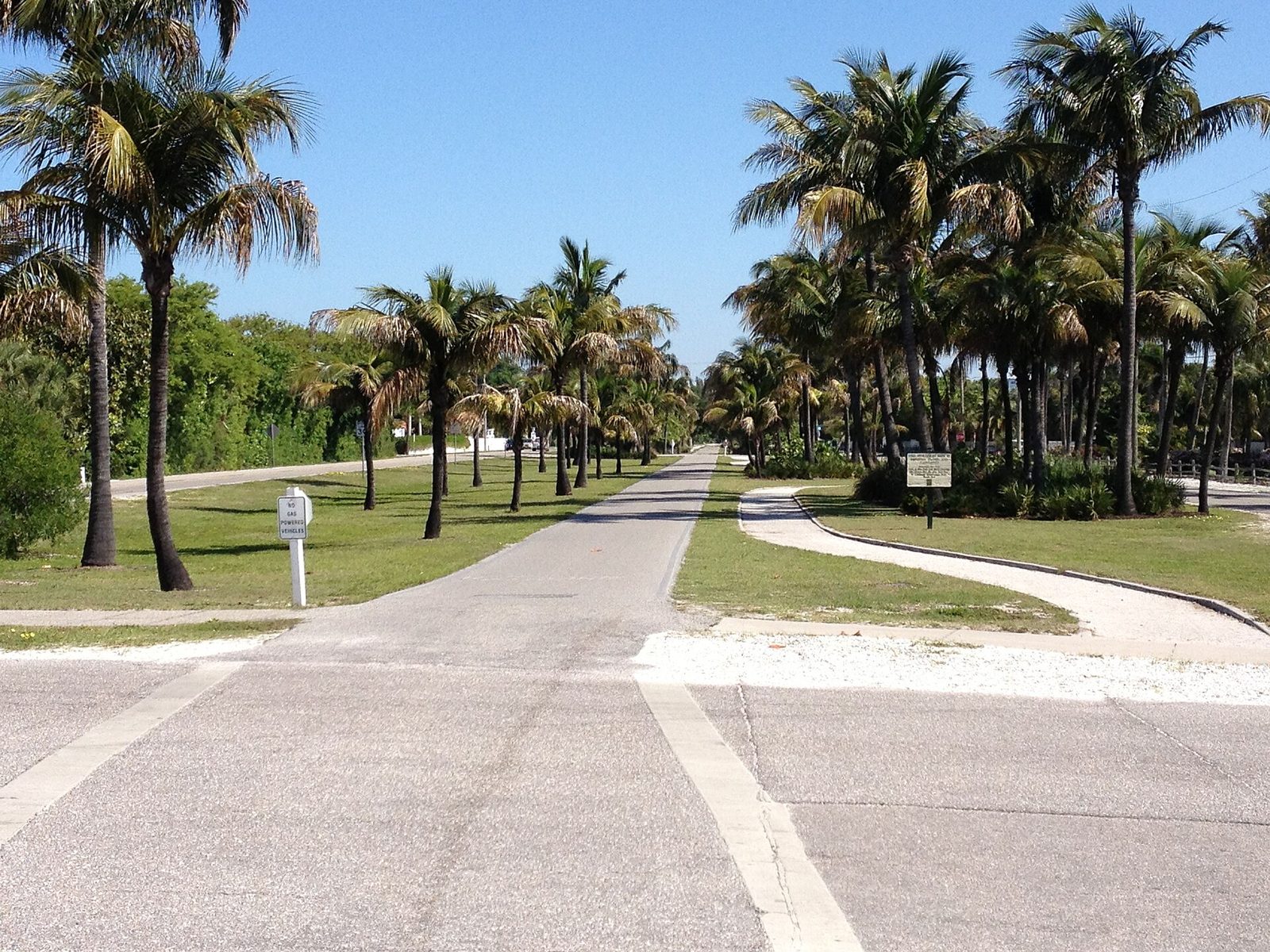
- Set one firm rule before you start: everyone stays on the sidewalk or bike path and waits at every corner.
What's a good route through downtown Boca Grande?
Downtown Boca Grande is only a handful of blocks, and the streets are laid out in a fairly tidy grid. That means you can go in almost any order, and if someone gets tired you can cut the loop short without getting lost. Here is the order we suggest, starting at the depot because it has a recognizable landmark, shade, and places to regroup.
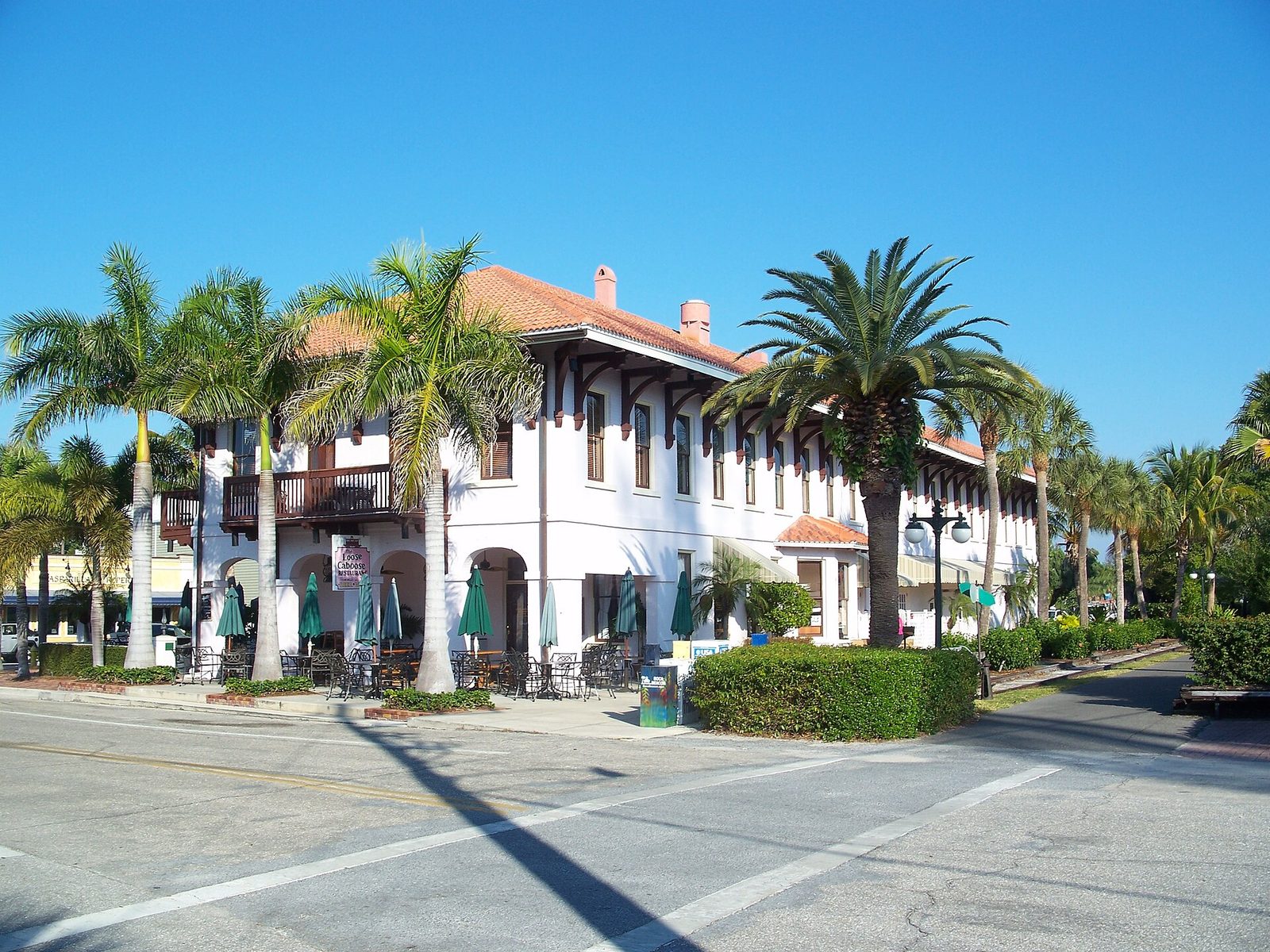
- The old railroad depot on Park Avenue at 4th Street: the white building with arched windows, a red tile roof and a long roofline.
- The historic storefronts along Park Avenue and the surrounding blocks: awnings, old signs, and courtyards.
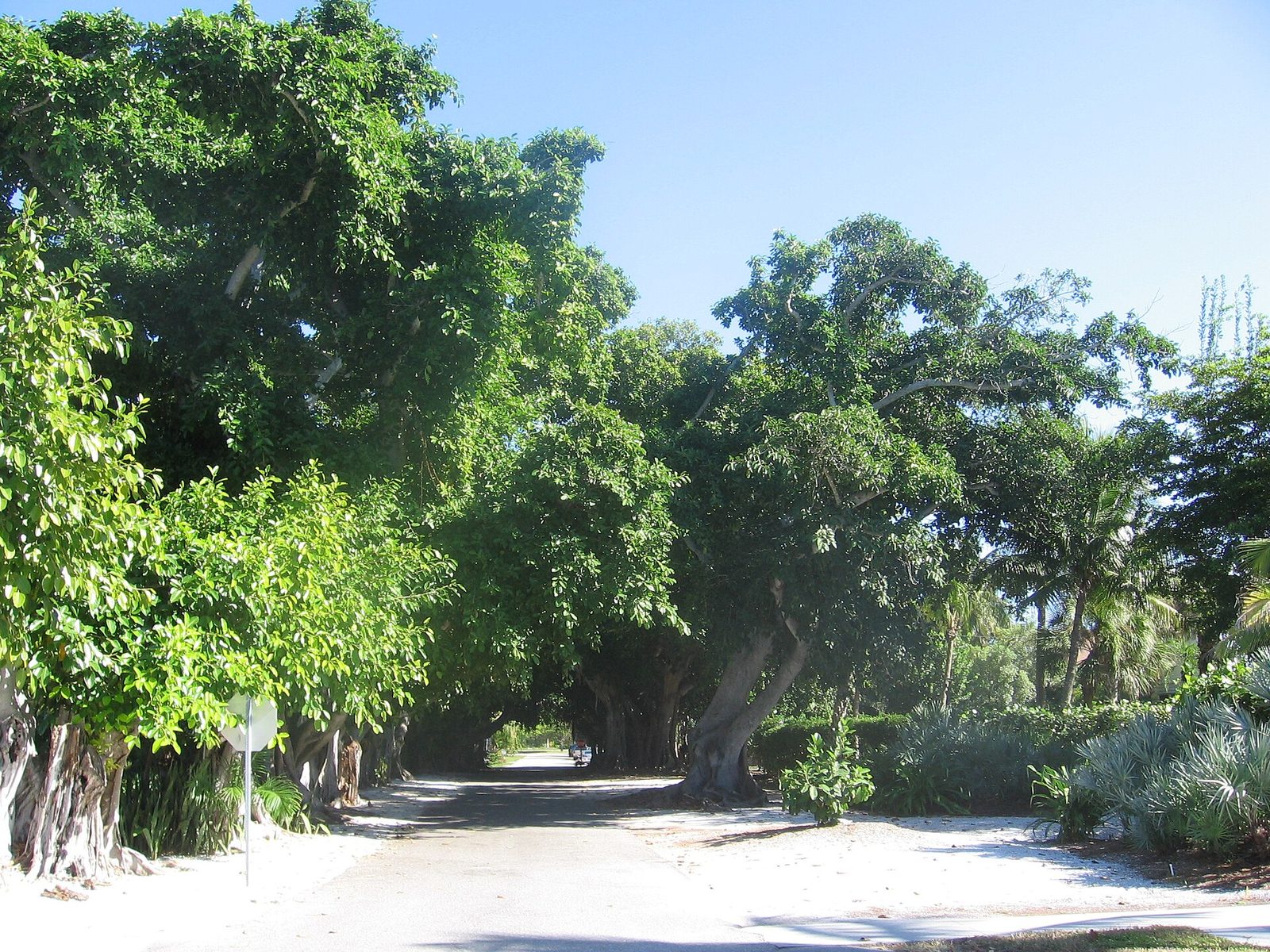
- Banyan Street: the famous canopy of banyan trees with roots hanging down over the road.
- The library and community buildings a short walk away: Spanish-style architecture with tile, arches, and courtyards.
- The harbor side of the village near Bay Avenue: boats, docks, and the waterfront restaurants.
- Back toward the depot to finish, ideally with a cold drink.
On foot at a kid's pace with stops for clues, this usually takes 60 to 90 minutes. By bike it's quicker, but most families end up spending the time they saved lingering under the banyans. The village has a well-used bike path, and golf carts share the streets, so bikers should ride single file and stop at intersections.
What clues work for different ages?
The same stop can work for a four-year-old and a fifteen-year-old if the questions are different. Here are clue ideas we've seen families enjoy, sorted by age group.
| Stop | Ages 3–6 | Ages 7–11 | Ages 12+ |
|---|---|---|---|
| Train depot | Find something round on the building | Count the arched windows on one side | What year was it built, and what did the railroad carry? |
| Storefronts | Spot three different awning colors | Find a sign with a number on it and write it down | Find the oldest-looking storefront and explain why you picked it |
| Banyan Street | Touch a hanging root (gently) | Count how many trunks one tree seems to have | Look up how banyan roots turn into new trunks |
| Library and courtyards | Find a tile with a pattern | Find an arch and a fountain or bench | Name the architectural style and point to two details that show it |
| Harbor | Spot a bird near the water | Count boats with a flag | Find a boat name and guess where it came from |
For little ones, colors and shapes work better than reading. For middle kids, counting is the sweet spot, because it's concrete and they can't argue with the answer. Teens usually want either a challenge or a camera, so give them a "best photo" assignment at every stop and let them judge the family's pictures at the end.
Give a child something to look for, and an old village turns into a map full of answers.
Why are the banyan trees such a highlight?
Banyan Street is the stop children talk about afterward. The trees form a canopy over the road, and their aerial roots drop from the branches, reach the ground, and slowly thicken into new trunks. To a kid it looks like a tree that's growing legs. It is also one of the shadiest spots in the village, so it makes a good halfway rest. Please don't climb on the roots or pull on them. They are part of what keeps the trees standing, and the street is a residential neighborhood.
Where can we find shade and water along the way?
Southwest Florida sun is stronger than many visitors expect, even in the cooler months. Plan for shade before anyone gets cranky. The banyan canopy, the covered walkways and porches around the depot, and the tree-lined side streets are the best natural breaks. The depot area and the shops downtown give you a chance to step inside, use a restroom where one is offered to customers, and buy a drink.
- Bring a refillable water bottle for every person, even on a short loop.
- Pack sunscreen and hats. A lot of the sidewalk between stops has no cover in the middle of the day.
- Have one snack in your bag. A hungry hunter quits early.
- Plan a treat stop at the end instead of the middle, so it pulls everyone through the second half.
If you want to stretch the day without spending much, our list of free and low-cost family fun on Gasparilla Island has beach and park ideas that fit nicely before or after the hunt.
When is the best time of day to go?
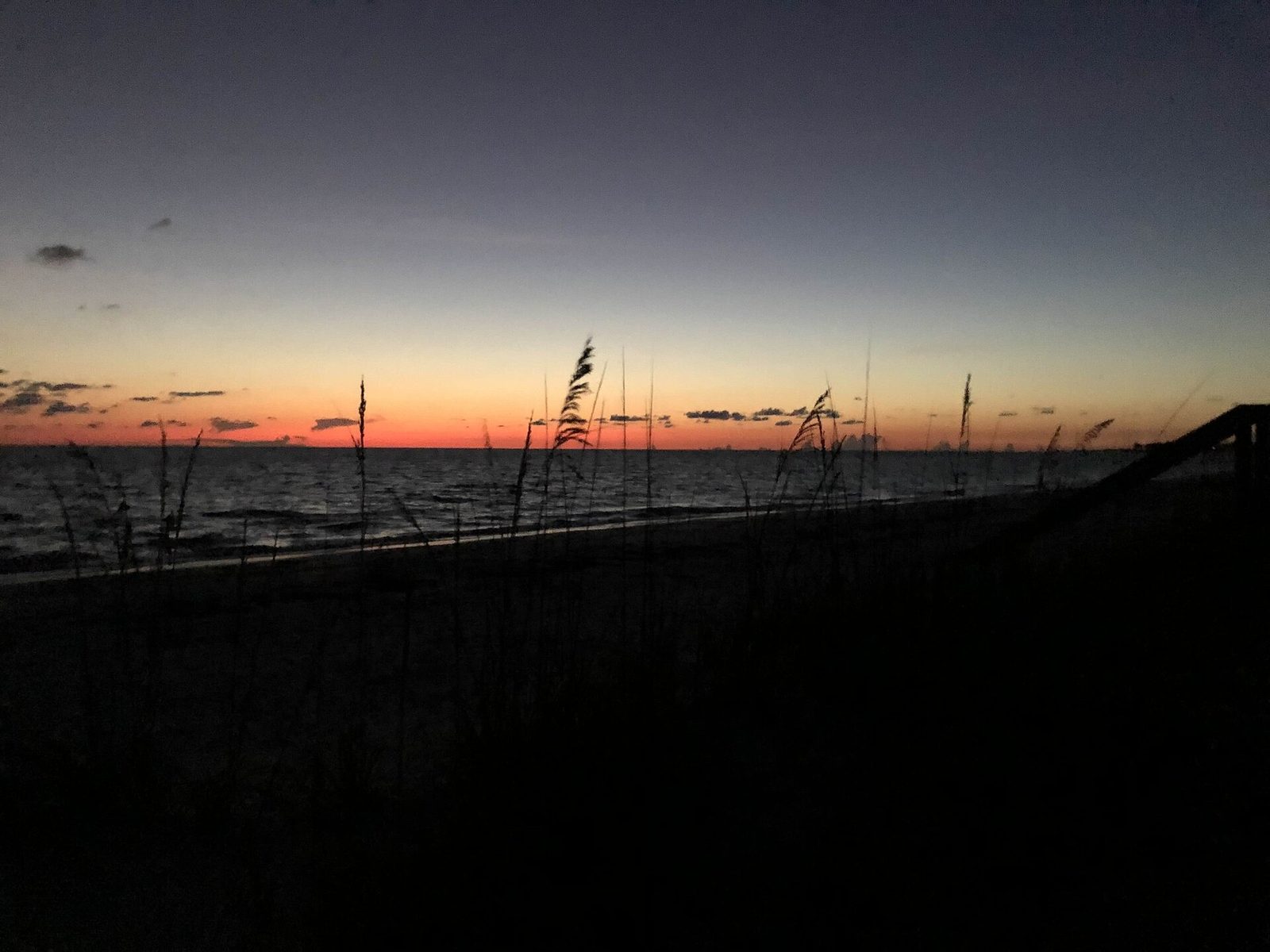
Early morning is our first choice. It's cooler, the light is soft for photos, the streets are quiet, and you're finished before the hottest part of the day. Late afternoon is a close second, especially if you plan to end with dinner nearby. Midday works in winter if you lean on the shady stops, but in summer we'd skip it. Summer afternoons also bring frequent thunderstorms, so keep an eye on the sky and head indoors at the first sign of lightning.
One tradeoff: many village shops keep shorter hours and some close for part of the week or in the slower months. If browsing is part of your plan, our guide to shopping Boca Grande Village with kids covers how to time it.
How can we make the hunt our own?
The best hunts add a few clues only your family would understand: find something the same color as Grandma's car, or find a boat name that starts with your first initial. On a second visit, let the kids write the clues for the adults. Families staying at Seaside Boca often do the hunt on their first morning, and it gives everyone a feel for the island before the beach days start.
Boca Grande Scavenger Hunt Questions Families Ask Us
How long does the Boca Grande scavenger hunt take?
Most families finish the downtown loop in about 60 to 90 minutes on foot, including time to solve clues and rest in the shade. By bike it goes faster, though many families spend the extra time at Banyan Street or the harbor. You can cut the route short at any point because the village is compact.
Is downtown Boca Grande stroller- and bike-friendly?
The village is flat, with sidewalks and a popular bike path, so strollers and bikes generally do well. Golf carts and cars share the streets, so stop at every intersection and keep younger riders close. Some older sidewalks and courtyards are uneven, so watch your step.
Do we need to spend money on the scavenger hunt?
No. The landmarks, streets, trees, and harbor views are all free to look at from public areas. The only costs are optional ones, like a drink, a snack, or an ice cream at the end.
What age is this scavenger hunt best for?
It works for almost any age if you match the clues to the child. Preschoolers do well with colors and shapes, school-age kids like counting challenges, and teens tend to enjoy history questions or a photo contest. Mixed-age families can work in teams with an older child paired with a younger one.
What should we bring?
Bring water for everyone, sunscreen, hats, a small snack, a phone for photo proof, and your clue list. A pencil and a clipboard or a stiff piece of cardboard make it easier for kids to check things off. If you visit in summer, keep a light rain layer handy for afternoon storms.

Travel DRD - Free Land Vacations — IATA certified, IATAN and ASTA members, hosting families since 2007. We manage every home in this collection ourselves.
Last updated: November 23, 2026