
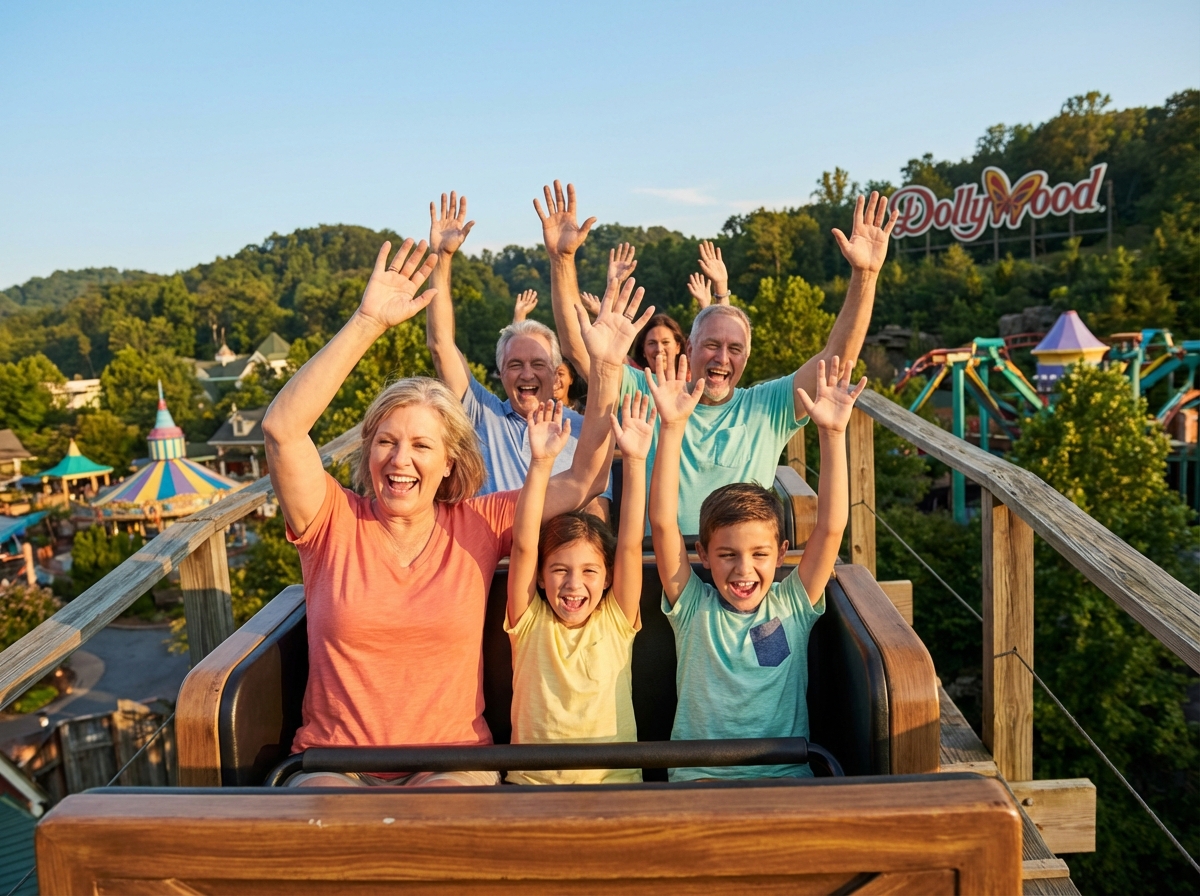
A slower Dollywood day is built around two or three live shows and a stretch in Craftsman's Valley watching artisans like blacksmiths, glassblowers and candle makers. Check the day's show times in the official Dollywood app or park map when you arrive, pick indoor or covered shows for the hottest part of the afternoon, and put rides in the gaps between shows. Kids usually last longest at demos where something visibly changes shape, like hot glass or glowing iron, so keep each stop short and leave before boredom sets in.
Most families walk into Dollywood with a ride list. By about two in the afternoon that list has turned into a sweaty kid on a bench, a parent checking the time, and an argument about whether one more coaster is worth the line. After 18 years of hosting guests in Pigeon Forge, we've heard the same story again and again, and the fix that works best is a different kind of day.
Dollywood is more than a ride park. It has a deep lineup of live music and a whole area, Craftsman's Valley, where working artisans make things in front of you. Build your day around those, put rides in the gaps, and you get cooler afternoons, steadier kids, and a trip people talk about for the right reasons.
Why plan a Dollywood day around shows instead of rides?
Shows give a day a shape. Rides are open all day, so it's easy to drift from line to line until everyone is spent. A show has a start time, a seat, and a set length. That gives you built-in rest stops you don't have to argue for, because you're not 'taking a break,' you're 'going to the show.'
Many of the shows are in indoor, air-conditioned theaters or covered outdoor venues. That matters a lot in a Smoky Mountain summer, when the park's hillside paths and afternoon humidity wear people down faster than they expect. A show at the hottest point of the day is often the most useful thing you can schedule.
How do you build a show schedule that actually works?
Show times change by season and by day, so don't plan from an old screenshot or last year's blog post. When you arrive, check the official Dollywood app or the printed park map for that day's times. Then build the day backward from two or three anchor shows.
- Pick one late-morning show and one mid-afternoon show as your anchors. The afternoon one should be indoors or well covered.
- Note where each venue is on the map. Dollywood is spread out across hilly ground, and walking time between areas is real, especially with a stroller.
- Plan to arrive at each venue a little early. Popular shows can fill up, and early arrival is how you get a seat you like instead of the last row.
- Fill the gaps with rides and food that sit near the next show, not across the park.
- Leave one open slot in the late afternoon for whatever the kids loved most: a ride again, a return to a demo, or simply sitting down.
If you're still working out the bigger picture, like when to arrive and how long to stay, our Dollywood with kids planning guide covers the full-day framework. This post fits inside it as the slower, show-centered version.
Where can families find shade and good seating?
Seating matters more with kids than most parents expect. A child who can't see the stage is a child who wants to leave. A few habits help:
- Favor indoor theaters for midday and early afternoon shows, when sun and heat are at their worst.
- At outdoor or covered venues, look at where the sun will be by showtime, not where it is when you sit down.
- Sit near an aisle with little ones. You can slip out for a bathroom trip or a restless toddler without stepping over a row of strangers.
- Give smaller kids a clear sightline. A seat a few rows back on a slope is often better than a front-row seat behind a tall adult.
- Bring refillable water bottles and use the time in your seat to drink. Kids rarely ask for water until they're already cranky.
Craftsman's Valley also has tree cover in spots, and many of the demonstrations happen inside open-front shops, so watching a craftsperson often doubles as a few minutes out of direct sun.
Which Craftsman's Valley demos hold kids' attention?
Craftsman's Valley is where Dollywood's working artisans keep Appalachian crafts alive. Depending on the day, you may see blacksmiths, glassblowers, candle makers, woodworkers, leatherworkers and other trades. Not every demo works the same way for every age, so here's how we'd think about it.
| What kids see | Best for | Tip | |
|---|---|---|---|
| Glassblowing | Glowing glass stretched and shaped into something recognizable | Most ages, especially early elementary and up | Watch one full piece from start to finish if you can |
| Blacksmithing | Hot iron, sparks, hammering, a piece changing shape | Kids who like noise and action | Stay behind barriers and let them see the color of the metal change |
| Candle making | Repeated dipping, layers building, colors and shapes | Younger kids and patient watchers | Short visits work well; it's easy to come back |
| Woodworking and leather | Slower, detailed handwork | Older kids and teens with an interest in making things | Ask a question if the artisan isn't busy |
The pattern we've noticed: kids stay longest where something visibly transforms. Red-hot glass turning into a bowl, or a straight iron bar becoming a hook, has a beginning, middle and end a child can follow. Slower crafts are wonderful, but plan shorter stops for younger kids and leave while they're still interested.
Leave the demo while they still want to stay, and they'll ask to come back.
How do you mix shows and rides to avoid heat and meltdowns?
Think in alternating blocks: something active, then something seated. A ride or two, then a show. A demo, then a snack in the shade. The rhythm keeps energy steady instead of spending it all by lunch.
- Morning: rides while it's cooler and lines are often shorter, plus a first show if one fits.
- Midday: a sit-down meal, then a stretch in Craftsman's Valley.
- Hottest hours: your indoor anchor show. This is the block that saves the afternoon.
- Late afternoon: back to rides or a favorite area as it cools, then head out before everyone is past their limit.
Food breaks are part of the plan, not an interruption. Our guide to feeding kids at Dollywood covers where to eat and how to work around picky eaters and allergies. If you're weighing whether a TimeSaver pass is worth it on a show-focused day, our Dollywood budget guide walks through tickets, TimeSaver and parking in order. On a slower day built around shows, many families find they need fewer ride shortcuts than they thought.
Who is a slow Dollywood day best for?
This approach works especially well for families with toddlers or preschoolers, kids who are too short for the big coasters, grandparents along for the trip, anyone traveling in peak summer heat, and families on a second or third park day who've already done the rides. It also suits kids who love music or making things. A child who watches a glassblower once may talk about it longer than any coaster.
It helps to end the day somewhere calm. Our cabins near the park, Pigeon Hills and Water's Edge Lodge, give families a quiet place to cool off, eat at their own table, and put tired kids to bed without a long drive.
Questions Families Ask About Shows and Craft Demos at Dollywood
Where can I find Dollywood's show times for the day?
Check the official Dollywood app or the park map you pick up when you arrive. Show times vary by season and by day, so look them up the day you go rather than relying on an old schedule.
Are Dollywood's shows included with admission?
Dollywood's regular live shows are generally part of a day at the park. Some special events or dining experiences may be separate, so check the official Dollywood site for anything that isn't a standard show.
What can kids see in Craftsman's Valley?
Craftsman's Valley is where Dollywood's artisans work in front of guests. Depending on the day, that can include blacksmithing, glassblowing, candle making, woodworking and leatherwork. Demos where something visibly changes shape, like hot glass or iron, tend to hold younger kids' attention longest.
How many shows should a family plan in one Dollywood day?
Two or three anchor shows is a comfortable number for most families. That gives you seated breaks in the morning and the hottest part of the afternoon while leaving plenty of time for rides, food and Craftsman's Valley.
How early should we arrive for a show with kids?
Arriving a little before showtime gives you a better choice of seats, especially for popular shows that can fill up. With small children, an aisle seat with a clear view of the stage is worth the short wait.

Travel DRD - Free Land Vacations — IATA certified, IATAN and ASTA members, hosting families since 2007. We manage every home in this collection ourselves.
Last updated: October 24, 2026