
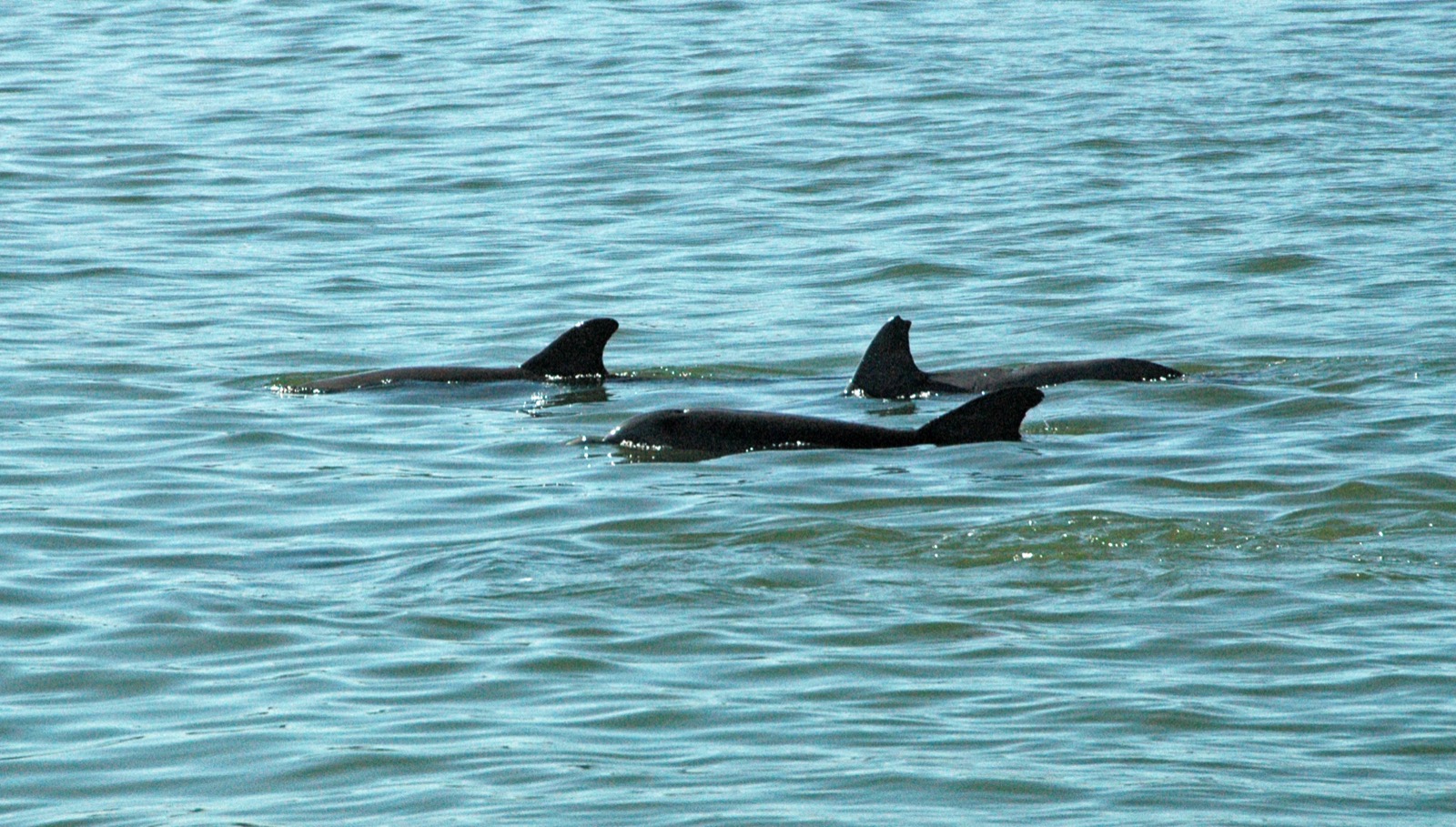
Bottlenose dolphins live year-round in Charlotte Harbor. NOAA says stay at least 50 yards away on the water; federal law makes feeding, chasing, or swimming with them illegal. The outing that works is a slow morning on calm water — a kayak or a boat that holds position — not a tour that promises a close pass.
Every family that stays near Placida asks the same question by day two: where do we actually see dolphins, and do we need to buy a ticket to do it? The honest answer is more useful than the brochure version. Bottlenose dolphins live here. They are not an attraction someone stocks in the harbor. And the trips that work are the ones that treat them as wild animals with a legal buffer, not as a guaranteed photo.
We've hosted families minutes from Charlotte Harbor for 18 years out of Seaside Boca in Placida. Dolphins come up in the same conversation as the marina, the causeway, and the kayak launch — and so does the disappointment when a two-hour "dolphin tour" turns into a fast boat chasing a pod that has already moved on. This is the version we give at check-in.
Are there actually dolphins in Charlotte Harbor, or is that a tour-boat line?
It's real habitat. NOAA Fisheries treats the bottlenose dolphins of Pine Island Sound, Charlotte Harbor, Gasparilla Sound, and Lemon Bay as a resident estuarine stock — animals that live in this water year-round, not a seasonal pass-through. Photo-identification work going back decades has documented long-term residency in this exact system. Abundance for the combined stock is listed as unknown in NOAA's Gulf of Mexico bay, sound, and estuary assessments; that is not the same as "rare." It means the population has not been counted well enough to publish a number, not that you should expect to go a week without seeing a dorsal fin.
The species you will see from a kayak or a small boat here is the common bottlenose dolphin (Tursiops truncatus), the nearshore dolphin of Florida's Gulf coast. They use the same shallow, seagrass-lined water that makes Charlotte Harbor a family boating estuary in the first place. For the paddle-trail layout of that water, our guide to Charlotte Harbor Preserve State Park covers the launches closest to Placida.
The trips that work treat dolphins as wild animals with a legal buffer, not as a guaranteed photo.
How close is too close?
NOAA Fisheries' current marine-life viewing guidelines are unambiguous: stay at least 50 yards from dolphins when you are on the water — half a football field. Large whales are 100 yards. North Atlantic right whales are 500 yards by federal law, which does not apply to a Charlotte Harbor morning but shows how seriously the same statute treats approach distance. Limit viewing time to 30 minutes or less. Do not chase, encircle, leapfrog, or trap a pod between boats or between a boat and the shore. If a calf is present, give the pair even more room and never put a vessel between mother and calf.
The Marine Mammal Protection Act of 1972 makes it illegal to feed, hunt, capture, kill, or harass a marine mammal in U.S. waters. NOAA defines harassment as any act of pursuit, torment, or annoyance that has the potential to injure a marine mammal or to disrupt its natural behavior — including breathing, nursing, feeding, or sheltering. Feeding wild dolphins is a specific federal prohibition. NOAA's own campaign language is blunt: interactions with people change dolphin behavior for the worse, and feeding them teaches them to beg near boats and propellers. Civil and criminal penalties can follow; NOAA cites fines of up to $100,000 and/or up to one year in jail for feeding or harassing wild dolphins.
Swimming with wild dolphins is in the same bucket. There is no permit category for a commercial swim-with-wild-dolphin tour in U.S. waters. If a listing promises you will get in the water with them, that is not a family activity — it is a red flag. Stay on the boat or the kayak. Let the animal close the distance if it chooses to. You do not close it.
Kayak, rented boat, or a commercial tour — which should a family pick?
This is the decision that actually shapes the morning, and it depends on who is in the group. A family of six with a four-year-old and a teenager is not one outing. It is two different tolerances sharing a dock.
| How you go | Best for | Honest trade-off |
|---|---|---|
| Kayak or paddleboard | Quiet water, small groups, kids who can sit still | Closest to how dolphins actually use the shallows; slower; weather-dependent |
| Self-rented small boat | Families who already have a Florida boating-safety card | Covers more harbor; you are responsible for speed zones and the 50-yard buffer |
| Commercial viewing tour | First-timers, mixed ages, anyone who does not want to skipper | Ask how they hold distance. Skip anyone who promises a guaranteed close pass or a swim. |
A kayak is often the better wildlife platform, for the same reason it is for manatees: low, quiet, and able to sit still in water a powerboat should not be running through. If the group is already planning a paddle morning, pair it with the Catfish Creek access in Placida — five to ten minutes from Seaside Boca — and keep the outing short enough that a restless four-year-old still has a beach afternoon left. Our Charlotte Harbor manatee guide covers that same water in winter, when manatees concentrate inland; dolphins are here in every season.
A rented boat covers more of the harbor and gets you onto places a kayak does not, including the boat-only beach at Don Pedro Island State Park. It also puts you in charge of posted idle-speed and slow-speed zones, seagrass, and the 50-yard buffer. If anyone in the group was born on or after January 1, 1988, they need a Florida Boating Safety Education ID Card to run a motor of 10 horsepower or more — the rule we walk through in the Southwest Florida boat-rental guide. Do not show up at the dock without it.
A commercial tour is the right call when you do not want to skipper, when ages are mixed, or when the four-year-old will last ninety minutes on a boat with a restroom and a shade canopy. NOAA's Dolphin SMART program was built specifically so families could tell a responsible Florida operator from a chase boat: look for the commitment to stay back, not to put you in the water. Ask three questions before you pay: How close do you approach? What do you do if a pod comes to the boat on its own? Do you ever feed or encourage swimming? Anyone who hedges on the first or says yes to the third is not the trip.
Where do you actually go to look, near Boca Grande?
- Charlotte Harbor inside the mangroves. The preserve's paddle trails off Catfish Creek in Placida are the low-effort, low-wake option. You are in the water the dolphins already use, not running to find them.
- The Boca Grande Causeway and Placida channel. Early morning, before the weekend boat traffic builds, is when a dorsal fin is most often visible from a slow boat or even from the causeway itself.
- Punta Gorda waterfront. Fishermen's Village and Gilchrist Park sit on calm harbor water with public docks. You do not need a boat. Our Punta Gorda harbor-town guide covers how to spend the rest of that day if the sighting is a five-minute gift and not a two-hour hunt.
- Pine Island Sound and Captiva Pass, further south. Same estuary system, more open water, and the same NOAA rules. This is a longer day from Placida and only worth it if the group already wanted a southern boat day.
When is the best time of year — and does time of day matter more?
Time of day matters more than month. Bottlenose dolphins in this estuary are year-round residents. You do not need to wait for winter the way you do for manatees. What you do need is calm water and less boat traffic, which in practice means an early morning on a settled day, or a late afternoon when the wind drops. Midday on a Saturday in the pass is the worst of both: glare, wakes, and animals that have already been run over by every rental in the harbor.
Winter still has an advantage, and it is not about dolphins. The air is drier, the mosquitoes are fewer, and the same outing can include a manatee watch without changing the plan. Summer works if you start early and are off the water before the afternoon thunderstorm — the daily pattern in our hurricane-season booking guide, not a reason to cancel the week.
What should you do if a dolphin approaches the boat?
Put the engine in neutral. Hold your position. Do not turn toward them, do not speed up to stay with them, and do not let anyone reach over the gunwale. NOAA's guidance for a vessel that finds itself closer than the recommended distance is to take immediate steps to move away once you can do it without cutting across the animals. If they bow-ride, that is their choice. It is not an invitation to follow when they peel off.
If you see an injured, entangled, or stranded dolphin, do not try to help it yourself. Call the FWC Wildlife Alert Hotline at 888-404-3922. For a possible Marine Mammal Protection Act violation — feeding, chasing, a tour putting people in the water — NOAA's Office of Law Enforcement takes those reports at 1-800-853-1964. Both numbers are worth saving in a phone before you leave the dock.
Is this a good morning with young kids?
Yes, if you sell it as a boat ride that might include a dolphin, not as a dolphin show that happens to use a boat. A sighting is often ten seconds of a fin and a blow, then nothing. Kids who can sit through that without needing the next thing immediately do well. Kids who cannot should be on a short, shaded tour or a kayak loop with a beach stop already on the calendar. Bring polarized sunglasses — they cut surface glare and are the single cheapest way to actually see an animal under the water — and a hat. Leave the Bluetooth speaker at the house.
This is also why staying in Placida earns its keep for a water morning. You can be at the Catfish Creek launch or the marina before the harbor wakes up, be home for lunch, and still have the pool and the beach. That is the logistics argument for Seaside Boca — 3 bedrooms plus a bunk, 3.5 baths, sleeps 10, minutes from the water you came to sit on — not a second pitch. The house is the reason the outing can stay short. If you are still choosing among the five homes, start on the vacation rentals index and book from there.
Southwest Florida Dolphin Watching FAQs
Southwest Florida Dolphin Watching FAQs
Where can you see dolphins near Boca Grande?
Charlotte Harbor, Gasparilla Sound, and Pine Island Sound are year-round bottlenose dolphin habitat. The easiest family options from Placida are the paddle trails at Charlotte Harbor Preserve State Park's Catfish Creek access, the Boca Grande Causeway channel early in the morning, and the Punta Gorda waterfront at Fishermen's Village and Gilchrist Park.
Is it legal to swim with or feed wild dolphins in Florida?
No. The Marine Mammal Protection Act prohibits feeding, chasing, or harassing wild dolphins. NOAA recommends staying at least 50 yards away on the water and does not issue permits for commercial swim-with-wild-dolphin tours in U.S. waters.
Do I need a boat tour to see dolphins in Southwest Florida?
No. Dolphins are regularly seen from kayaks, from a slow private boat, and from shore at Punta Gorda's harbor parks. A commercial tour is useful when you do not want to skipper or when mixed ages need a shaded, timed outing — not because the animals are otherwise hidden.
When is the best time to see dolphins in Charlotte Harbor?
Year-round; these are resident estuarine bottlenose dolphins, not a winter-only visitor. Early morning on a calm day beats any particular month. Winter has the bonus that the same outing can include manatees.
What should I do if a dolphin comes up to our boat?
Put the engine in neutral, hold position, and do not reach toward the animal. Do not follow when it leaves. If you are closer than 50 yards, move away as soon as you can without cutting across the pod. Report an injured animal to FWC at 888-404-3922.
- NOAA Fisheries — Marine Life Viewing Guidelines: Guidelines and Distances
- NOAA Fisheries — Protect Wild Dolphins: Admire Them from a Distance
- NOAA Southeast U.S. Marine Mammal and Sea Turtle Viewing Guidelines (PDF)
- NOAA — Common Bottlenose Dolphin Gulf of Mexico Bay, Sound, and Estuary Stocks
- NOAA — Whale SENSE, Dolphin SMART, and Blue Star
- FWC Wildlife Alert Hotline

Travel DRD - Free Land Vacations — IATA certified, IATAN and ASTA members, hosting families since 2007. We manage every home in this collection ourselves.
Last updated: September 6, 2026