
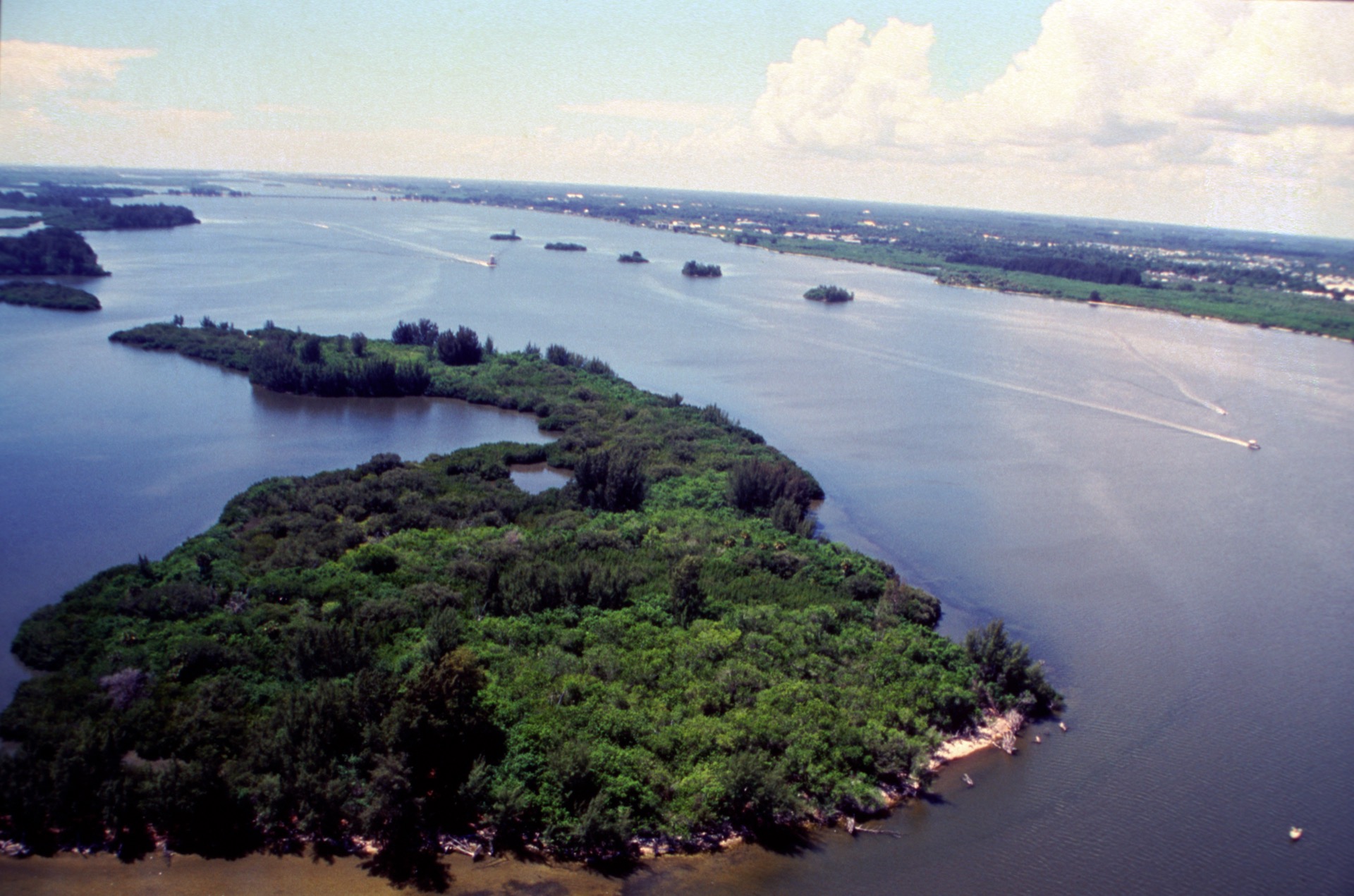
The Indian River Lagoon is a 156-mile-long estuary system running along Florida's east coast from Ponce de Leon Inlet near New Smyrna Beach south to Jupiter Inlet, made up of three connected bodies of water — Mosquito Lagoon, the Banana River, and the Indian River itself. It's recognized as the most biologically diverse estuary in North America, home to more than 4,300 plant and animal species, including roughly 700 fish species, 310 bird species, and one of the densest manatee populations in the state. In Vero Beach, it's the water behind the Historic Jungle Trail, the Environmental Learning Center, and most of the region's inshore fishing.
Guests ask us about the Jungle Trail, the Environmental Learning Center, and where to book a fishing guide as if those are three separate decisions. They're not. All three sit on the same 156-mile estuary, and understanding what that estuary actually is changes how you plan a Vero Beach week — when to go, what you'll see, and why the water looks the way it does depending on the season.
This is the estuary primer we wish more guests read before their first paddle or cast.
What Is the Indian River Lagoon, Exactly?
The Indian River Lagoon isn't a river — the name is a holdover from early Spanish and English mapping. It's a lagoon system: a shallow, largely enclosed body of brackish water separated from the Atlantic Ocean by a barrier island, with only a handful of inlets letting ocean water exchange in and out. The system runs roughly 156 miles along Florida's east coast, from Ponce de Leon Inlet near New Smyrna Beach south to Jupiter Inlet in Palm Beach County, and is made up of three connected water bodies — Mosquito Lagoon in the north, the Banana River around Cape Canaveral, and the Indian River itself, which is the stretch that runs past Vero Beach.
Because the lagoon is shallow (average depth is only a few feet in most stretches) and has limited ocean exchange, it behaves differently than open coastline — calmer water, warmer water, and a mix of salt and fresh input from the surrounding watershed that makes it an estuary rather than a straight marine environment. That mix is exactly what makes it such a productive nursery for marine life.
Why the IRL Is North America's Most Biodiverse Estuary
The Indian River Lagoon is consistently ranked as the most biologically diverse estuary in North America. It's home to more than 4,300 species of plants and animals, including more than 2,200 animal species and over 2,100 plant species. Within that count are roughly 700 fish species and 310 bird species — numbers that put it well ahead of most other estuaries on the continent, largely because it sits at a biogeographic overlap zone where temperate and subtropical species ranges meet.
That diversity is why the lagoon was designated an Estuary of National Significance in 1990 under the EPA's National Estuary Program, and it's why the water you're looking at from the Jungle Trail overlooks or an ELC pontoon tour isn't scenery in the incidental sense — it's one of the reasons this stretch of Florida looks the way it does at all. Seagrass beds in the lagoon function as nursery habitat for juvenile fish and blue crab, mangrove shorelines buffer storm surge and filter runoff, and the lagoon's economic value to the region — fishing, boating, ecotourism, and property values tied to water quality — has been estimated at over $7.6 billion annually.
It isn't scenery in the incidental sense — it's one of the reasons this stretch of Florida looks the way it does at all.
The Lagoon Isn't Postcard-Perfect Everywhere, and That's Worth Knowing
We'd rather guests hear this from us than be surprised by it: parts of the Indian River Lagoon, particularly the more developed and less-flushed segments to the north around Melbourne and the Banana River, have dealt with seagrass loss and algal bloom events over the past decade, driven by nutrient runoff from the surrounding watershed. It's a documented, actively managed problem — NOAA Fisheries and the Indian River Lagoon National Estuary Program both run restoration and water-quality programs targeting it, and manatee mortality events tied to seagrass loss made national news in recent years.
The Vero Beach stretch of the lagoon that our guests actually visit — the water along the Jungle Trail, around the ELC's Wabasso Bridge campus, and the flats fishing guides work — has generally fared better than the northern segments, and it's exactly the kind of habitat the restoration work is trying to protect elsewhere. We mention the broader picture not to talk anyone out of a paddle, but because understanding it is part of understanding what you're looking at. A healthy afternoon of birdwatching on a boardwalk is also, quietly, a look at a system that conservation groups are actively working to keep that way.
How Our Guests Actually Experience the Lagoon
You don't need a boat to spend real time on the Indian River Lagoon in Vero Beach — though it helps. Here's how the pieces our guests use most often connect to the same estuary:
- Historic Jungle Trail — an 8-mile unpaved road running along the lagoon's western shoreline through coastal hammock, with pull-offs and overlooks facing the water and Pelican Island. Free, and the easiest way to see the lagoon by land.
- Environmental Learning Center — a 64-acre campus built directly on the lagoon, with kayak and paddleboard rentals and a daily pontoon eco-tour out to Pelican Island. The most direct way to get on the water without owning a boat.
- Inshore fishing charters — the lagoon's seagrass flats hold redfish, snook, and spotted seatrout year-round, and a local guide will read the water in a way a first-time visitor can't from shore.
- Sebastian Inlet — the nearest ocean-to-lagoon connection point north of Vero Beach, where the tidal exchange concentrates baitfish and, in turn, the gamefish and birds that follow them.
Most guest weeks end up combining two or three of these without anyone planning it that way on purpose — a Jungle Trail morning, an ELC paddle the next afternoon, maybe a half-day charter later in the week. It works because it's the same lagoon each time, just a different vantage.
When to Visit for the Best Wildlife
Early morning is the strongest window on the lagoon in any season — cooler air, calmer water, and wading birds actively feeding before the day heats up. Winter (roughly November through March) tends to bring the most visible bird activity, since the lagoon sits within the Atlantic Flyway and hosts wintering waterfowl and shorebirds alongside its year-round resident species like ospreys, herons, and egrets. Manatees are also more concentrated and visible in the lagoon's warmer pockets during cold snaps, when they move toward the springs and warm-water outflows the region is known for.
Summer brings more insect activity and afternoon thunderstorms, so if you're planning a paddle or a trail walk between June and September, mornings aren't optional — they're the difference between a comfortable outing and a hot, buggy one.
Visiting From a Nearby Home
Guests staying at our Vero Oaks home are on Orchid Island, minutes from the lagoon's western shoreline where the Jungle Trail runs and close enough to the Wabasso Bridge to make an ELC morning easy. It's the same short drive whether you're headed out for a self-guided paddle, a pontoon tour, or just an evening stop at one of the trail's overlooks to watch the light change over the water. We keep beach bikes on-site, and more than a few guest families have used them to cover a Jungle Trail stretch before swapping to the water for the afternoon.
If a lagoon morning turns into a fishing itch, our guide to booking a charter with kids covers the logistics we'd apply here too — most of it (timing, expectations, what to bring) carries over from Gulf-coast tarpon fishing to lagoon inshore trips just as well.
Eighteen years of sending families out onto this water has taught us that the guests who enjoy it most are the ones who go in knowing it's not just a scenic backdrop — it's a working estuary, and a rare one. That context tends to turn a routine kayak trip into something guests remember.
Indian River Lagoon Questions Our Guests Ask
How long is the Indian River Lagoon?
The Indian River Lagoon system runs roughly 156 miles along Florida's east coast, from Ponce de Leon Inlet near New Smyrna Beach south to Jupiter Inlet in Palm Beach County, made up of three connected water bodies: Mosquito Lagoon, the Banana River, and the Indian River.
Why is the Indian River Lagoon considered so biodiverse?
It's documented as the most biologically diverse estuary in North America, home to more than 4,300 species of plants and animals, including roughly 700 fish species and 310 bird species, largely because it sits where temperate and subtropical species ranges overlap.
Is the Indian River Lagoon safe and healthy near Vero Beach?
The Vero Beach stretch — including the water along the Jungle Trail and the ELC's Wabasso Bridge campus — has generally fared better than the more developed northern segments of the lagoon, which have dealt with documented seagrass loss and algal bloom events tied to nutrient runoff. NOAA Fisheries and the Indian River Lagoon National Estuary Program both run active restoration programs on the system.
What's the best way to see the Indian River Lagoon without a boat?
The Historic Jungle Trail gives you free land access along the lagoon's western shoreline, and the Environmental Learning Center offers kayak, canoe, and paddleboard rentals plus a daily pontoon eco-tour for guests who'd rather not paddle themselves.
When is the best time to see wildlife on the lagoon?
Early morning is strongest in any season. Winter (November through March) tends to bring the most visible bird activity from wintering species along the Atlantic Flyway, and manatees concentrate more visibly in warmer pockets of the lagoon during cold snaps.

Travel DRD - Free Land Vacations — IATA certified, IATAN and ASTA members, hosting families since 2007. We manage every home in this collection ourselves.
Last updated: July 31, 2026