
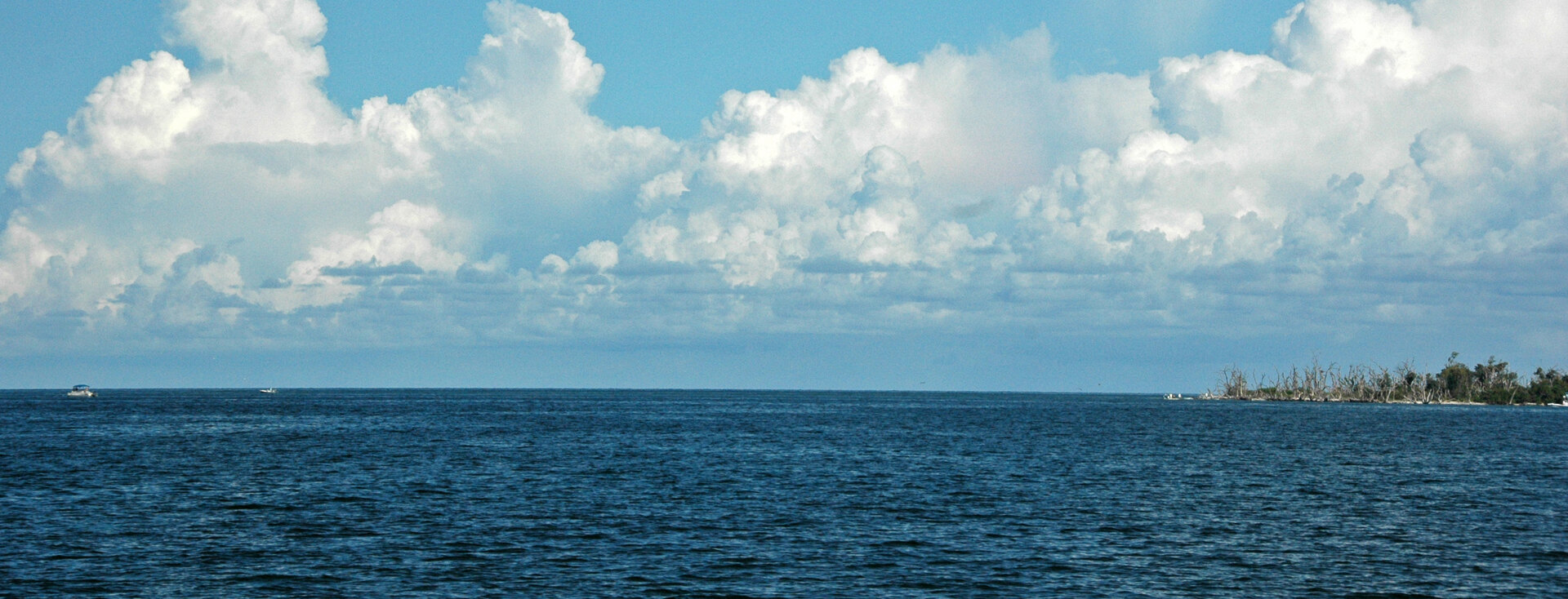
Charlotte Harbor's shallow, mangrove-fringed water is year-round manatee habitat, and sightings are most reliable from December through February, when manatees leave the open Gulf for warmer, protected water inland. The best low-effort spots near Boca Grande are the paddle trails inside Charlotte Harbor Preserve State Park and the calm water off Fishermen's Village and Gilchrist Park in Punta Gorda; from a boat, marked idle-speed and slow-speed zones throughout the harbor mark where manatees are known to gather. Florida law (the Manatee Sanctuary Act) makes it illegal to touch, feed, or pursue a manatee — the responsible approach is to stay still, stay quiet, and let them approach you.
Every host who's spent a winter near Placida has the same story: a slow morning on the water, no wind yet, and a gray back rolling up for air ten feet from the kayak. It happens often enough here that guests start to expect it, and rare enough that it never stops being the best five minutes of the trip.
We've hosted families minutes from Charlotte Harbor for 18 years out of Seaside Boca in Placida, and manatees come up in almost every conversation about the water — where to see one, whether it's safe to get close, whether the kids can touch it (no). This is the honest version of that conversation.
Is Charlotte Harbor actually manatee habitat, or is that a tourism line?
It's real. Charlotte Harbor is one of Florida's larger open-water estuaries, fed by the Peace and Myakka Rivers, and its shallow, seagrass-lined water is exactly the habitat manatees need: warm, calm, close to freshwater, and rich in the seagrass and vegetation they graze on. The Florida Fish and Wildlife Conservation Commission (FWC) designates manatee protection zones across the harbor — idle-speed and slow-speed areas posted with signage — specifically because manatees are known to concentrate there, not as a general precaution. This isn't a spot where you might get lucky once a season; it's a working part of the state's manatee range.
When is the best time to see one?
Winter, and it isn't close. Manatees can't tolerate water below roughly 68°F for long, so as Gulf water cools from late fall through late winter, they move into warmer, more protected inland water — rivers, canals, and harbors like Charlotte Harbor — and gather more densely than they do in summer. December through February is the reliable window. In summer, manatees spread back out across the open Gulf and coastal waters, so sightings become more scattered and more a matter of luck than season.
It happens often enough here that guests start to expect it, and rare enough that it never stops being the best five minutes of the trip.
Where do you actually go to look?
- Charlotte Harbor Preserve State Park paddle trails — the Catfish Creek access point in Placida is a five- to ten-minute drive from Seaside Boca; the shallow, mangrove-lined paddle trails here are calmer than open Gulf water and one of the more reliable places in the region to spot manatees from a kayak.
- Fishermen's Village and Gilchrist Park, Punta Gorda — both sit directly on Charlotte Harbor's calm water downtown, with public docks and seawalls where manatees are regularly seen surfacing near the marina, no boat required.
- The Boca Grande Causeway and Placida boat ramps — slower-moving water around the causeway pilings and ramp areas is a common spot for a manatee to surface, especially early morning before boat traffic picks up.
- Any marked idle-speed or slow-speed zone — the FWC posts these zones throughout Charlotte Harbor precisely because manatees are known to use that water; a boat moving at idle speed through one of these zones is often your best chance from the water.
Is a kayak or a boat the better way to see one?
A kayak, if you have the choice. Manatees are far more likely to surface near a slow, quiet, low-profile craft than near an engine, and a kayak lets you sit still in shallow water a powerboat can't reach. If you're on a boat, staying inside the posted idle-speed zones does double duty: it's the law, and it's also simply the way you're most likely to actually see one before it dives. For a family that's already planning a Charlotte Harbor paddle day, our guide to Charlotte Harbor Preserve State Park covers the trailheads and launch points in more detail.
What are the actual rules for being near a manatee?
The Florida Manatee Sanctuary Act makes it illegal to harass, hunt, capture, kill, or otherwise disturb a manatee — which the FWC interprets to cover touching, feeding, giving them fresh water, chasing, cornering, or separating a mother from a calf. Manatees are federally protected under the Endangered Species Act and the Marine Mammal Protection Act as well, and violations of the Sanctuary Act can carry real fines. The practical rule for a family on the water is simple: don't touch, don't feed, don't chase. If a manatee approaches your kayak on its own, that's the animal's choice to make, and it's fine to stay still and let it. Approaching it, following it, or trying to pet it is not.
Why do the slow-speed zones matter so much?
Boat strikes are the leading human-caused threat to manatees in Florida, and Charlotte Harbor's posted idle-speed and slow-speed zones exist specifically to reduce them. A manatee surfaces briefly for air and can be difficult to spot from a moving boat until it's close, which is why the zones aren't optional courtesy — they're the difference between a boat having time to react and not. If you're renting a boat or a jet ski for a Charlotte Harbor day, know the posted zones before you leave the dock; they're marked on the water with signage and are enforced.
Is this a good activity with young kids?
Yes, with the caveat that it rewards patience over excitement. A manatee sighting isn't guaranteed and isn't fast — it's a quiet float, a wait, and then thirty seconds of a gray back and a paddle-shaped tail before it's gone again. Kids old enough to sit reasonably still in a kayak or on a dock for ten or fifteen minutes tend to do best with it; younger kids may need the promise of a beach afternoon right after to make the patience worth it. The upland trails at Catfish Creek make a good land-based option to pair with a water outing if part of the group wants to walk instead of paddle.
Charlotte Harbor Manatee FAQs
Charlotte Harbor Manatee FAQs
What is the best time of year to see manatees in Charlotte Harbor?
December through February, when cooling Gulf water pushes manatees into Charlotte Harbor's warmer, more protected inland water and they gather more densely than in summer.
Where near Boca Grande is the best spot to see a manatee?
The paddle trails at the Catfish Creek access point of Charlotte Harbor Preserve State Park in Placida, five to ten minutes from Seaside Boca, are one of the more reliable spots from a kayak. Fishermen's Village and Gilchrist Park in downtown Punta Gorda are reliable no-boat options.
Is it legal to touch or feed a manatee?
No. The Florida Manatee Sanctuary Act, along with federal protections under the Endangered Species Act and Marine Mammal Protection Act, prohibits touching, feeding, chasing, or otherwise disturbing manatees. Fines apply for violations.
Do we need a boat to see manatees, or can we see them from a kayak?
A kayak is often the better option. Manatees are more likely to surface near a quiet, low-profile craft than near an engine, and a kayak can access the shallow water they favor.
Why are there slow-speed zones in Charlotte Harbor?
Boat strikes are the leading human-caused threat to manatees, and Charlotte Harbor's posted idle-speed and slow-speed zones exist to reduce collisions in the shallow water manatees use most.

Travel DRD - Free Land Vacations — IATA certified, IATAN and ASTA members, hosting families since 2007. We manage every home in this collection ourselves.
Last updated: September 3, 2026