
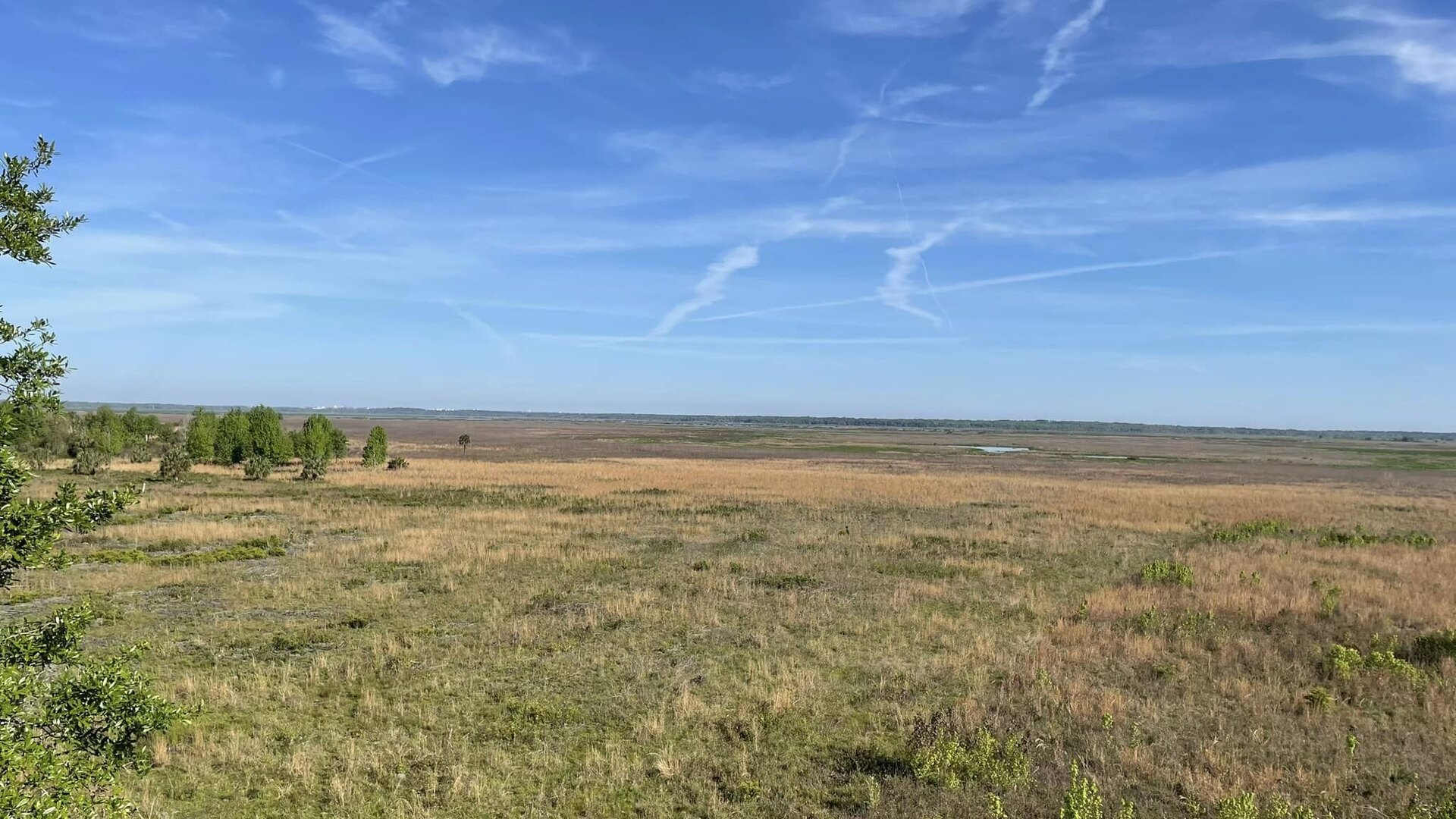
Deep Hole is a deep sinkhole in the Wilderness Preserve of Myakka River State Park, where alligators and wading birds gather, mostly in the dry season. Only a limited number of vehicles may enter each day, and each one needs a free permit from the ranger station at the park's main entrance. Permits go first come, first served, so arrive early. After you park, it is a flat, unshaded walk of more than a mile each way, so it suits kids who can handle a real hike and will stay close to an adult.
Guests ask us about Deep Hole almost every winter. Someone saw a photo of dozens of alligators lined up along a dark pool, with herons and storks working the shallows, and they want to know if it's real and if they can take their kids. It's real. It's also one of the few wildlife outings near us that needs a little planning, because the park limits how many cars can go in each day.
This guide covers what we tell families before they go: how the permit works, what the walk is like, how to watch the animals without crowding them, and an honest read on whether it suits your crew.
What exactly is Deep Hole?
Deep Hole is a sinkhole off the Myakka River, near Lower Myakka Lake, inside the Wilderness Preserve section of Myakka River State Park. The preserve sits apart from the busier main park drive, and the number of visitors is kept low on purpose so the area stays quiet.
The hole is much deeper than the shallow river and marsh around it. In the dry months, when water levels drop across the floodplain, fish collect in that deeper water. Alligators and wading birds follow the fish. That's why one pool can hold more gators at once than most visitors see in a lifetime of Florida trips.
How does the daily vehicle permit work?
You can't just drive up to the preserve gate. Each day the park issues a limited number of free vehicle permits for the Wilderness Preserve at the ranger station at the main entrance. They go first come, first served. Once they're gone, they're gone for the day.
- Pay the regular park entrance fee at the main gate like any other visitor.
- Ask at the ranger station for a Wilderness Preserve permit. Go early, especially on winter and spring weekends, when demand is highest.
- Listen to the instructions you're given: where the preserve gate is, how to use the gate, and when the permit has to be returned. Follow them exactly.
- Drive to the preserve entrance, park in the designated area, and start walking from there.
Our advice is simple. Make Deep Hole the first stop of the day, not a plan for the afternoon. If you show up mid-morning on a busy winter Saturday, have a backup plan in the main park ready.
What is the walk in from the gate like?
This is the part families tend to underestimate. You leave the car behind and walk to Deep Hole on an unpaved track across open prairie and floodplain. Expect more than a mile each way. The ground is mostly flat, but there's very little shade, and the Florida sun is strong even in winter.
- Water: more than you think you need, for every person. There's nowhere to refill out there.
- Sun protection: hats, sunscreen, and light long sleeves work better than tank tops.
- Footwear: closed-toe shoes. Low spots can stay muddy or wet after rain.
- Bug spray: useful in any season, and essential as the weather warms.
- Binoculars: they let everyone see faces and feathers from a respectful distance.
- Snacks and a small first aid kit: no services, no shop, and no quick way back to the car.
If your kids have never done a longer flat hike, try one of the shorter trails in the main park first. Our guide to hiking Myakka River State Park with kids sorts the trails by age, which helps you judge whether the Deep Hole walk is a stretch or an easy day.
How close is too close to the alligators?
At Deep Hole the alligators are usually resting on the banks or floating in the open water. They look sleepy, and that's exactly what tempts people to inch closer for a photo. Don't. A basking gator can move fast over a short distance, and the edge of the water is their territory, not ours.
- Stay well back from the water's edge and never stand between an alligator and the water.
- Hold small children's hands near the bank, not just keep an eye on them.
- Never feed, throw anything at, or try to provoke any animal. Feeding wild alligators is illegal in Florida, and it teaches them to approach people.
- If an alligator hisses, opens its mouth, or moves toward you, you're too close. Back away calmly.
- Give nesting and feeding birds space too. If a bird stops what it's doing to watch you, step back.
The best view at Deep Hole is the one where the gator never notices you were there.
We wrote a full guide to watching alligators and herons at Myakka without getting too close, including how to explain the rules to kids so they actually stick. It's worth reading together the night before.
Which birds might we see?
Wading birds come to Deep Hole for the same reason the gators do. Depending on the day, families often spot great egrets, great blue herons, wood storks, white ibis, and sometimes roseate spoonbills feeding in the shallows. Ospreys and other raptors work the open water overhead. If your kids get hooked, our first birdwatching morning at Myakka guide has easy ways to turn sightings into a game.
Is Deep Hole a good outing for young kids?
Honestly, it depends on the child more than the age. Here's how we'd think about it:
| Usually a good fit | Think twice | |
|---|---|---|
| Walking | Kids who happily hike a couple of miles | Kids who need carrying after a short stretch |
| Listening | Kids who stop when you say stop | Kids who bolt toward anything interesting |
| Heat | Cool, dry winter mornings | Warm, humid afternoons |
| Gear | A sturdy carrier for a baby or toddler | A stroller (the ground is rough and uneven) |
For toddlers and preschoolers, a hiking carrier usually works better than asking them to walk. Older elementary kids and teens tend to love it. It feels like a real expedition, and the payoff is huge.
When is the best time of year and day to go?
The dry season is the classic time for Deep Hole. As the marshes shrink through winter and into spring, wildlife gathers more densely at the deep water. Cooler temperatures also make the walk far more pleasant for kids.
In the wet summer months, high water spreads the fish and wildlife across the floodplain, so you may see fewer animals at the hole itself. Heat, afternoon storms, and insects make the walk harder too. Parts of the park can also be affected by high water, so check conditions before you plan a summer visit.
Whatever the season, mornings are best. You have a better shot at a permit, the light is softer for photos, and you finish the walk before the hottest part of the day.
How long is the drive from Boca Grande and Port Charlotte?
Myakka River State Park's main entrance is on State Road 72, east of Sarasota. From Port Charlotte, most families take I-75 north to the State Road 72 exit and head east to the park, which is a manageable morning drive. From Boca Grande and our Seaside Boca home, add time to get off the island before you reach the main roads north. Families staying farther south at Estero Escape can make the trip as well, but should leave early and treat it as a full-day outing.
Check your route and traffic the night before, and plan to reach the ranger station soon after the park opens. Pack lunch in a cooler for after the walk. The picnic areas in the main park are a good place to rest before the drive home.
Deep Hole Questions Families Ask Us
Do we need a reservation to visit Deep Hole?
There's no advance reservation in the usual sense. The park hands out a limited number of free Wilderness Preserve vehicle permits each day at the ranger station at the main entrance, first come, first served. Arriving early is the best way to get one, especially on winter and spring weekends.
How far is the walk from the parking area to Deep Hole?
Expect a walk of more than a mile each way on an unpaved, mostly flat track with very little shade. It isn't technical, but heat and sun make it feel longer than it is. Bring plenty of water and plan on a real hike.
Can we bring a stroller?
We wouldn't. The track is unpaved and can be rough, sandy, or muddy depending on recent weather. A sturdy hiking carrier is a much better choice for babies and toddlers.
Is it safe to see so many alligators in one place?
It can be a safe, memorable outing if you keep a generous distance, stay back from the water's edge, and hold young children's hands near the bank. Never feed or provoke wildlife. Feeding wild alligators is illegal in Florida. If an animal reacts to you, you're too close, so back away calmly.
What's the best month to see wildlife at Deep Hole?
The dry season, roughly late fall through spring, is usually best, because falling water concentrates fish and the animals that feed on them. Cooler weather in those months also makes the walk easier for kids. Summer brings higher water, more heat, and fewer animals gathered at the hole itself.

Travel DRD - Free Land Vacations — IATA certified, IATAN and ASTA members, hosting families since 2007. We manage every home in this collection ourselves.
Last updated: November 19, 2026