
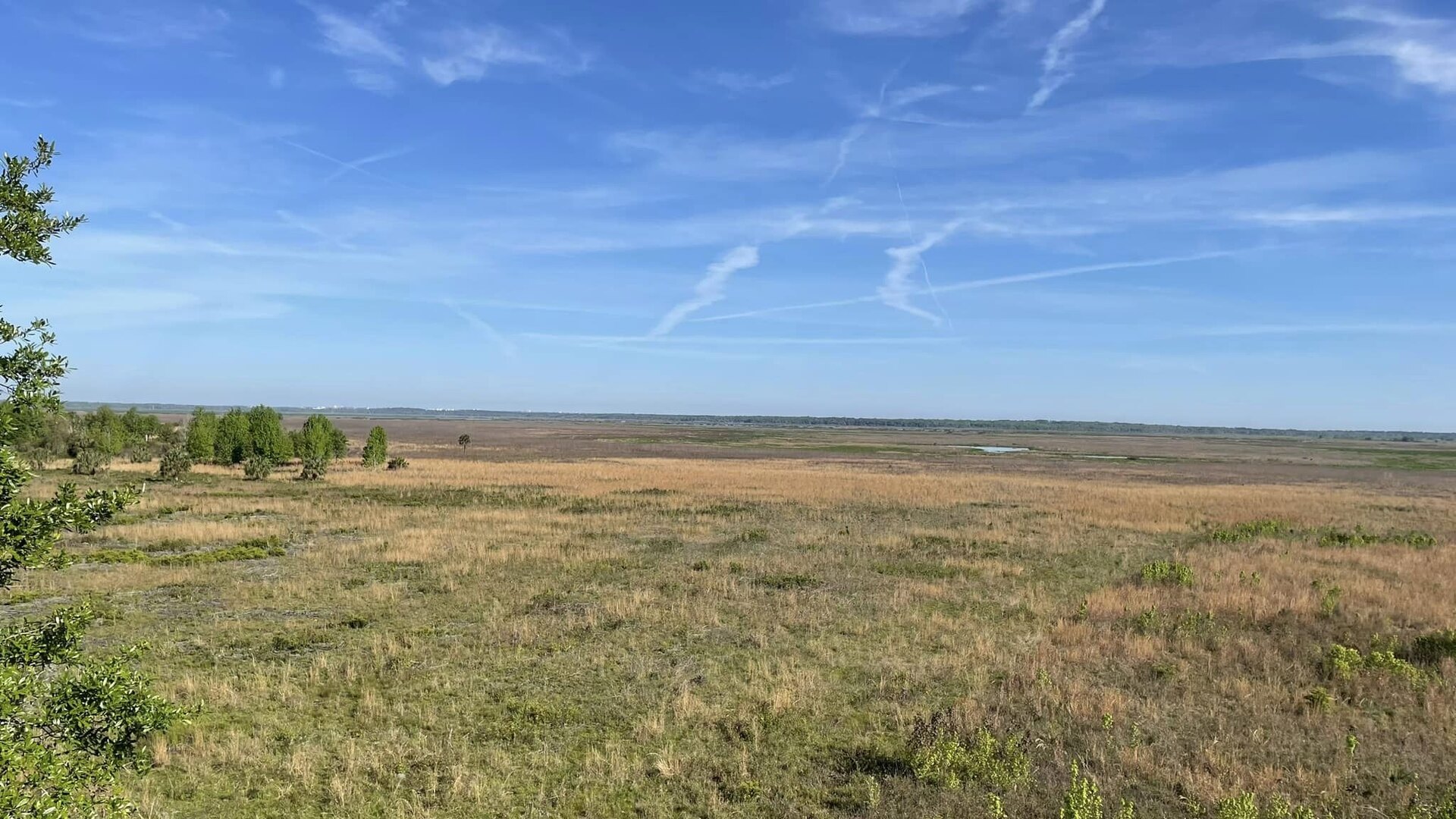
You'll see the most wildlife at Myakka River State Park in the dry season, roughly late fall through spring, early in the morning or late in the afternoon. Stay well back from the water's edge, keep children within arm's reach and never between an alligator and the water. Feeding or harassing wild alligators is illegal in Florida, and the park doesn't allow feeding any wildlife. A pair of binoculars will get you closer than your feet should.
Almost every family that stays with us and drives inland to Myakka comes back with the same story. Somebody spotted a big alligator lying in the grass a lot closer to the path than anyone expected. The kids loved it. The parents' hearts were pounding a bit. After years of hosting guests who make that trip, we've come to think the best Myakka morning is a calm one, where you see plenty and never feel you have to grab a child's arm.
This guide covers watching wildlife safely. It explains where to stand, when to go, what to bring and which rules matter. If you're still deciding whether to go at all, start with our overview of Myakka River State Park. Then come back here before you pack the car.
How close is too close to an alligator?
Farther than you'd guess. Alligators usually look slow and sleepy, and most of the time they are. But they can lunge a short distance very quickly, especially from the water's edge. You can't read their mood from their posture, so the safe habit is simple. Give them lots of room, and if one reacts to you in any way, you're already too close.
- If an alligator hisses, raises its body or turns toward you, back away slowly. Don't turn and run toward the water.
- Never walk between an alligator and the water. That's the path it'll take if it feels crowded.
- Use binoculars or a zoom lens instead of stepping closer for a photo. A phone held at arm's length isn't worth an extra step.
- Treat every log-shaped thing near the shore as an alligator until you've had a good look.
If the alligator changes what it's doing because of you, you are too close.
Where should kids stand at the water's edge?
Our house rule is that little ones stay on the path, not the bank, and stay close enough to touch. Kids move fast and low to the ground, and they naturally drift toward anything interesting. They also sit at about the height where a gator notices things. So what matters is where the adult stands, not only where the child stands.
- Stand with the adult on the water side and the child on the land side.
- Choose viewing spots with a clear, open bank so you can see what's lying in the grass.
- Keep toddlers in a carrier or holding a hand near the lake and river. A stroller can roll.
- Don't let kids throw sticks, rocks or snacks toward the water, even as a game.
- Keep dogs on a short leash and well away from the shoreline, because alligators notice small animals.
Bridges, boardwalks and raised overlooks are the easy choice with young children. You get a clear view down into the water, and there's a rail between your family and the bank.
When is the best season and time of day for sightings?
Southwest Florida's dry season runs roughly from late fall through spring, and that's when Myakka is at its best for wildlife. As the water level drops, fish crowd into the remaining shallows. Wading birds follow the fish, and alligators gather where the water is. On a cool, sunny morning in winter you can often see alligators basking on the banks to warm up. They're much easier to spot then than in the heat of summer, when they spend more time in the water.
The time of day matters almost as much as the season. The first couple of hours after the gates open, and the late afternoon, bring more bird activity, softer light and fewer people. The middle of a summer day is hot and often stormy, and a lot of the wildlife is resting out of sight. In the wet summer months, plan to be off the water and out of open areas before the afternoon thunderstorms roll in.
What wildlife can a family realistically expect to see?
Alligators are the main attraction, but let the kids know the birds are half the fun. Along the lake and river it's common to see great blue herons, great egrets, white ibis, wood storks and anhingas drying their wings. Roseate spoonbills show up at times too, and children love their pink feathers. In the woods and fields you might also see white-tailed deer, turtles basking on logs, and feral hogs rooting around at the edges.
A simple game works well here. Give each child a short list of birds to find and one pair of binoculars to share. It keeps them looking instead of wandering toward the water. For a view from above, the canopy walkway is a good way to spend some of that energy.
What are the rules about feeding wildlife?
They're short and firm. Don't feed any wildlife in the park. Feeding wild alligators is also illegal under Florida law, and there are good reasons for that. An alligator that learns to link people with food loses its natural caution. It starts approaching people, and that often ends with the animal being removed. Feeding birds causes problems too, and leftover food can draw alligators toward areas where people gather.
- Eat picnic lunches away from the shoreline and pack out every scrap.
- Don't clean fish or toss bait scraps at the water's edge.
- Don't collect or disturb plants, animals or nests. Leave what you find where you found it.
How do you plan an easy Myakka wildlife morning from the coast?
Most of our guests drive inland early and are back at the beach by mid-afternoon. We laid out that exact plan in our Myakka day trip guide for families. If you're staying at Seaside Boca, it's an easy half-day change from sand and surf. Families at Estero Escape have a longer drive, so they usually leave earlier and make a full morning of it.
- Binoculars, one pair per two kids if you can manage it
- Water, sunscreen, hats and bug spray, since shade is patchy near the water
- Closed-toe shoes for trails that can be muddy after rain
- Snacks to eat in the car or at a picnic area, not on the bank
Questions Families Ask Us About Myakka Wildlife
Is Myakka River State Park safe for young children?
Yes, as long as adults follow a few habits. Keep kids on paths and boardwalks instead of on the bank, and keep them within arm's reach near water. Always leave a wide gap between your family and any alligator. Raised overlooks and bridges are the easiest places to watch with toddlers.
What time of year will we see the most alligators at Myakka?
The dry season, roughly late fall through spring, is usually best. Low water brings alligators and wading birds together in fewer spots, and cool mornings bring alligators up onto the banks to bask. Summer sightings still happen, but the animals are more spread out and spend more time in the water.
What should we do if an alligator comes toward us?
Back away calmly and keep moving away from the water. Alligators rarely chase people on land, and distance is the answer. If an alligator seems to be approaching people, it may have been fed. Report it to park staff.
Can we feed the birds or ducks at Myakka?
No. The park doesn't allow feeding any wildlife, and feeding wild alligators is illegal in Florida. Food left near the water can also draw alligators toward the spots where families gather.
Do we need binoculars?
They're the most useful thing you can bring. With binoculars the kids can see a heron's eye or an alligator's scales from a safe distance, so nobody's tempted to walk closer.

Travel DRD - Free Land Vacations — IATA certified, IATAN and ASTA members, hosting families since 2007. We manage every home in this collection ourselves.
Last updated: September 22, 2026