
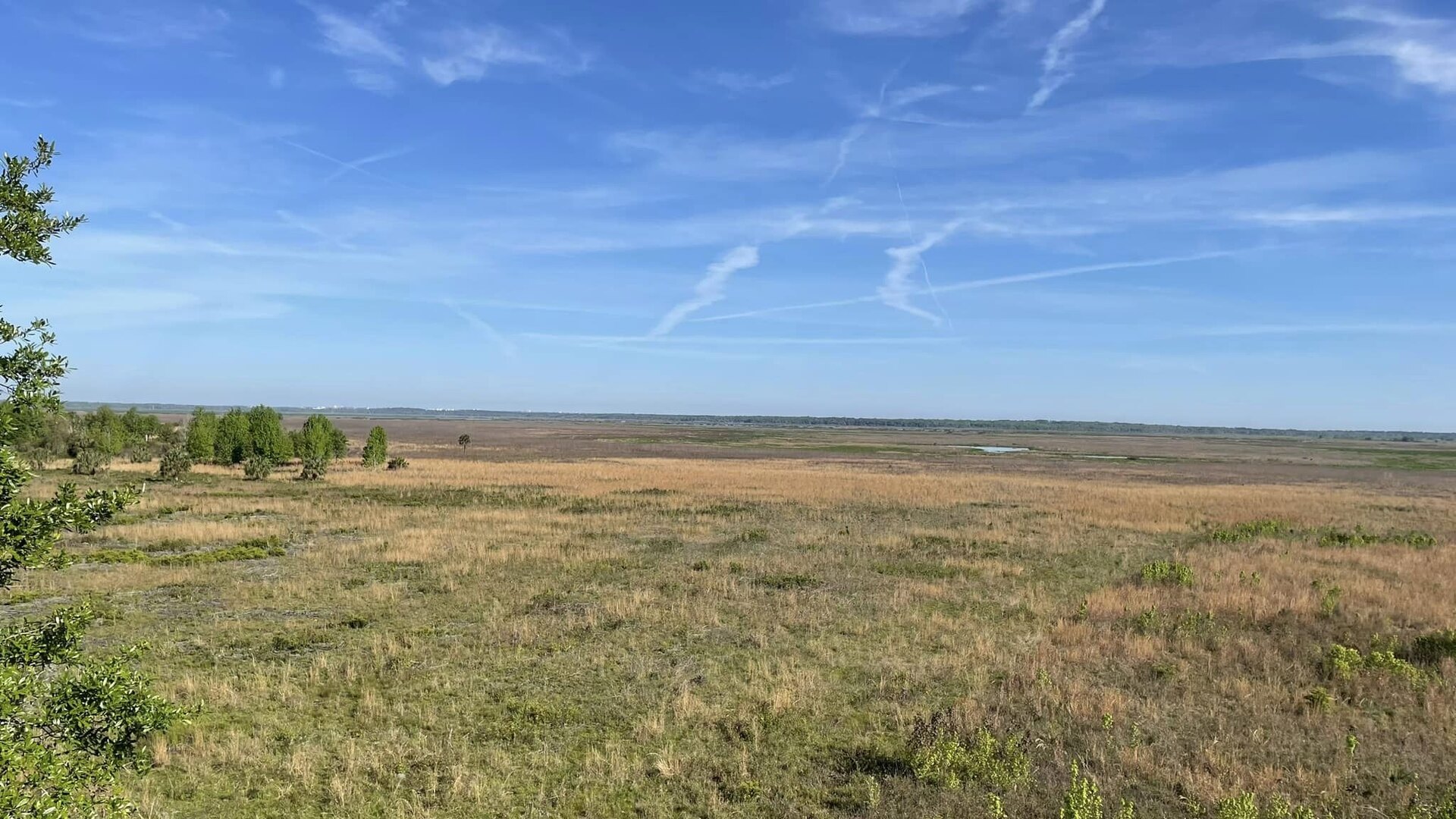
The easiest birdwatching spots for families at Myakka River State Park are the Birdwalk boardwalk on Upper Myakka Lake, the lake shoreline itself, and the wetland edges along the park drive. Go early in the morning during the dry season, roughly late fall through spring, when low water concentrates wading birds like roseate spoonbills, wood storks and sandhill cranes. Bring binoculars, water, sun protection and a simple checklist so children have something to look for.
The first time we took our kids birdwatching at Myakka, we made the classic mistake: we arrived after lunch in August, walked out on the boardwalk, and saw a lot of hot water and one distant heron. The kids gave it about four minutes. The next winter we went back at sunrise, and within a half hour a group of roseate spoonbills was feeding in the shallows close enough that our youngest could see the pink without binoculars. Same boardwalk. Completely different day.
That is really the whole secret to birdwatching with children at Myakka River State Park: pick the right spot, the right season and the right hour, then give them a job to do. This guide covers the three places we go back to every time, what you will likely see, and a checklist that has kept our own kids looking up instead of at a screen.
Where should a family go first?
If you only have one morning, walk the Birdwalk. It is a long boardwalk that extends out over the marshy edge of Upper Myakka Lake, so you are standing above the shallow water where wading birds feed. It is flat, stroller-friendly, has railings, and puts kids at eye level with the action. If you have already been to the park for the gators and the treetop walk (we wrote up that trip in our Myakka River State Park family guide), the Birdwalk is a completely different experience and worth its own visit.
After the Birdwalk, drive or bike the main park road and stop wherever you see open shallow water along the roadside wetlands. Some of our best sandhill crane sightings have been from the car window, not from any official viewpoint. Cranes tend to feed in open grassy areas and wet prairie, so scan the fields, not just the water.
- Birdwalk boardwalk on Upper Myakka Lake: best for spoonbills, wood storks, herons, egrets and ibis feeding in the shallows.
- Upper Myakka Lake shoreline near the boat basin: good for pelicans, cormorants, anhingas drying their wings, and ospreys overhead.
- Roadside wetlands and wet prairie along the park drive: the most reliable place we have seen sandhill cranes, often in pairs or small family groups.
Which birds will the kids actually see?
Set honest expectations. Birds move, and no spot guarantees anything. That said, on a dry-season morning at the Birdwalk, a family has a very good chance of seeing several of these, and each one is easy for a child to identify.
| Bird | How kids recognize it | Where we see it most |
|---|---|---|
| Roseate spoonbill | Bright pink body and a long flat bill shaped like a spoon that it sweeps side to side | Birdwalk shallows |
| Wood stork | Large white bird with black wing edges and a bald, dark, wrinkled head | Birdwalk and lake edges |
| Sandhill crane | Tall gray bird with a red patch on the forehead, often walking in pairs, loud rattling call | Roadside prairie and fields |
| Great egret | All white, yellow bill, black legs, stands very still | Everywhere there is shallow water |
| Anhinga | Dark bird perched with wings spread open to dry | Lake shoreline and canal edges |
| Osprey | Hawk-like bird circling over the lake, dives feet-first for fish | Over Upper Myakka Lake |
Wood storks are the one children remember most, partly because of that bald head and partly because they are big. It helps to know the wood stork is a federally protected species in Florida, which makes seeing one feel like a real find. Alligators will almost certainly be part of the scene too, so read our guide to watching alligators and herons safely with kids before you go and keep everyone on the boardwalk.
What time of day and what season work best?
Early morning wins every time. Wading birds feed actively in the first couple of hours after sunrise, the light is soft, and the Florida heat has not arrived yet. Late afternoon before sunset is the second-best window. Midday is the worst: birds rest, the glare on the water is harsh, and children wilt. If your family is not a sunrise crowd, plan a late afternoon instead and stay until the light goes gold.
Season matters even more than hour. Southwest Florida's dry season runs roughly from late fall into spring. As water levels drop, fish get concentrated into shrinking pools, and wading birds gather where the food is. That is when the Birdwalk can look like a crowded buffet. Winter also brings migratory birds that are not around in summer. The wet season, summer into early fall, spreads water and fish across the whole floodplain, so birds are scattered and harder to find. You will still see birds in summer, just fewer, farther away, and with more mosquitoes.
- Check the park's current hours and any weather or flooding closures the night before.
- Arrive close to opening and go straight to the Birdwalk before it gets busy.
- Spend a slow 30 to 45 minutes on the boardwalk, then drive the park road and stop at wetlands.
- Finish by mid-morning, or come back for the last hour before sunset.
What should we bring for a birdwatching morning?
You do not need expensive gear. One decent pair of binoculars for the family is enough, and a compact child-sized pair is worth it if you have a kid who wants their own. Practice focusing them in the driveway first, because learning to use binoculars while a spoonbill is flying away is frustrating for everyone.
- Binoculars, at least one pair, plus a cheap kid pair if you can.
- Water for everyone, more than you think. There is little shade on the boardwalk.
- Hats, sunscreen and light long sleeves. Even in winter the sun on open water is strong.
- Bug spray, especially in the wet season and around dawn or dusk.
- Closed-toe shoes for the trails and the roadside stops.
- A printed checklist and a pencil per child (see below).
- A phone camera with the zoom set ahead of time so kids can try a photo.
- A small snack for the car ride between stops. Do not feed anything to the birds or the gators.
How do we keep the kids engaged?
A checklist changes the whole outing. Instead of waiting for a parent to point at something, each child is hunting. We keep it short, mix easy wins with a couple of stretch goals, and add a few non-bird items so nobody goes long without checking a box. Let them draw a tally mark for repeats. Our kids compete over who spotted the first anhinga with its wings out.
- A pink bird (roseate spoonbill)
- A white bird with a bald head (wood stork)
- A tall gray bird with a red forehead (sandhill crane)
- A bird drying its wings open like a coat hanger (anhinga)
- A bird standing perfectly still hunting (egret or heron)
- A bird diving into the lake (osprey or pelican)
- A turtle sunning on a log
- An alligator, spotted from the boardwalk only
- A bird call you can imitate
- A feather on the ground (look, do not take)
Two other tricks that work for us. First, give a younger child the job of counting one species, like every egret they see, and report the total at the end. Second, ask older kids to figure out what a bird is eating by watching it for one full minute. A spoonbill sweeping, a stork probing, and a heron striking are three different hunting styles, and once kids notice that, they start watching instead of just spotting.
Give a child a list and a pair of binoculars, and the boardwalk becomes a hunt instead of a walk.
Can we combine birding with the Canopy Walk?
Yes, and it makes a full family morning. Do the Birdwalk first while the birds are active, then head to the Canopy Walkway as the day warms up, since the shade under the oaks and palms is welcome by then. From the tower at the top you may spot ospreys or vultures riding the warm air, which is a nice contrast to the wading birds below. Save the airboat or tram tour for a second visit unless your kids have long attention spans, because after two walks most families are ready for lunch.
Where do we stay if Myakka is on the list?
Myakka is a comfortable day trip from our Gulf Coast homes, and we usually suggest doing it as an early start with a slow afternoon afterward. Families staying at Seaside Boca in Boca Grande can pair the morning with a beach afternoon, and the island has its own birds, including ospreys and shorebirds, to keep the checklist going. Estero Escape is another good base for a Myakka day, with a shorter drive to other wildlife stops in the region. Either way, pack the binoculars the night before and set the alarm. The early birds are the ones the kids will talk about.
Questions Families Ask Before Birdwatching at Myakka
What is the single best spot for kids to see roseate spoonbills at Myakka?
The Birdwalk boardwalk on Upper Myakka Lake is the most reliable spot. It extends over the shallow marsh where spoonbills and other wading birds feed, and it is flat, railed and stroller-friendly. Go early in the morning during the dry season for the best chance.
When is the best season for birdwatching at Myakka River State Park?
The dry season, roughly late fall through spring, is best. Lower water concentrates fish and draws wading birds into visible shallow areas, and winter migrants add to the mix. Summer still has birds, but they are more spread out and mosquitoes are worse.
Do we need binoculars for a family birdwatching trip?
One decent pair for the family is enough, and many birds on the Birdwalk are close enough to see well without them. A small child-sized pair helps kids feel involved. Practice using them at home first so nobody struggles in the moment.
Where are sandhill cranes most likely to be seen?
Sandhill cranes usually feed in open grassy areas and wet prairie rather than deep water. Scan the fields and roadside wetlands along the main park drive, often from the car. They frequently travel in pairs or small family groups and have a loud rattling call.
Is the Birdwalk safe with alligators nearby?
The boardwalk has railings and keeps you above the water, which is exactly why it works well for children. Keep kids on the boardwalk, never let anyone climb the rails or dangle anything over the edge, and never feed wildlife. Alligators are part of the scene and are best watched from that distance.
How long should we plan for a birdwatching visit with young kids?
Plan on about 30 to 45 minutes on the Birdwalk, then another hour driving the park road with wetland stops. That keeps the outing under a couple of hours, which is about the limit for most young children. Add the Canopy Walkway only if energy levels are still high.

Travel DRD - Free Land Vacations — IATA certified, IATAN and ASTA members, hosting families since 2007. We manage every home in this collection ourselves.
Last updated: September 23, 2026