
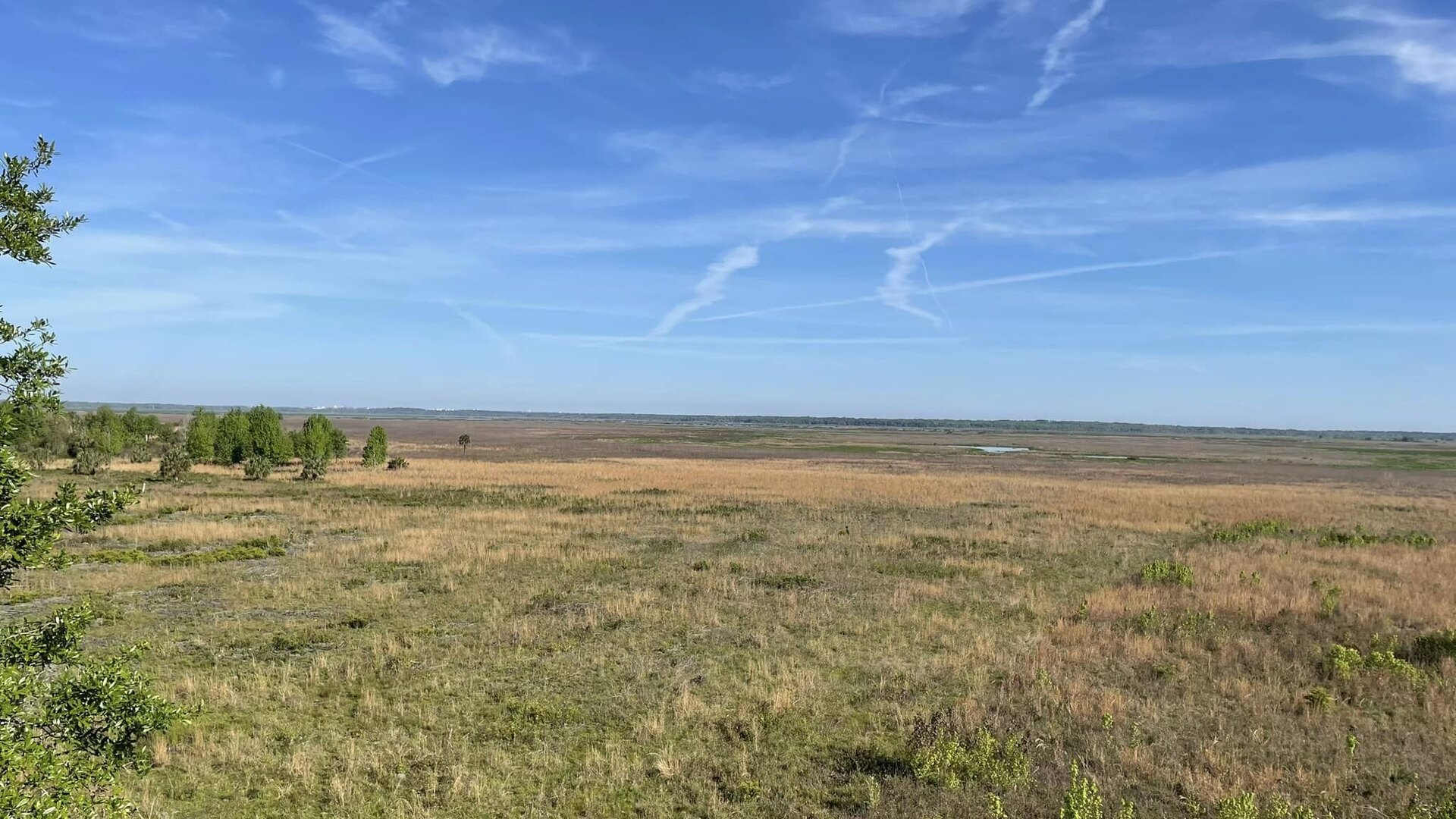
Families with young children do best on Myakka River State Park's short, mostly dry walks: the Birdwalk boardwalk on Upper Myakka Lake and the William S. Boylston Nature Trail, which leads to the Canopy Walkway. Older kids who hike often can try part of the backcountry hiking trail, but those loops cross open prairie and low ground that often flood in the wet season (roughly late spring through early fall). Bring more water than you think you need, wear closed-toe shoes, and plan longer walks for cooler, drier months.
Guests ask us about Myakka River State Park more than almost any other day trip, and they often follow up with a question: "Can our kids actually hike there?" Yes, they can. But Myakka isn't a park where you pick a trail off the map and hope for the best. Some trails are short and easy for a stroller-age toddler. Others run for miles across open prairie with almost no shade, and in summer parts of them are underwater.
This guide goes trail by trail and matches each walk to a child's age, patience, and the time of year. If you're still deciding whether Myakka is worth the drive, start with our overview of the park, the alligators, and the airboat. Then come back here when you're ready to plan the walking part of the day.
How are Myakka's trails laid out?
Picture the park in two layers. The first runs along the main park drive, where the short walks are: the Birdwalk, the nature trail to the Canopy Walkway, picnic areas, and the lake area with restrooms and the concession. You can drive between these stops, which helps a lot with small children because the car is never far away.
The second layer is the backcountry. A long, marked hiking trail winds through pine flatwoods, oak and palm hammocks, and wide dry prairie. It's built for experienced hikers and backpackers, not for a casual family stroll. Most families stay on the first layer and spend a short stretch on the second if the kids are older and the ground is dry.
Which trails suit which ages?
Here's how we'd match the main walks to children. Treat the ages loosely. A seven-year-old who hikes every weekend can handle more than a ten-year-old who has never left the pavement.
| Best ages | What it is | Shade | Summer flooding | |
|---|---|---|---|---|
| Birdwalk | All ages, strollers included | A short boardwalk out over the marsh at Upper Myakka Lake | Very little | Rarely affects the boardwalk |
| Boylston Nature Trail + Canopy Walkway | About 4 and up (younger in a carrier) | A shaded loop through hammock to the suspended walkway and tower | Good | Low spots can be muddy |
| Park drive pull-offs | All ages | Short stops to view prairie, wetlands, and wildlife | Varies | Wet edges in summer |
| Backcountry hiking trail (partial) | About 9 and up, experienced walkers | Long marked loops through flatwoods and prairie | Patchy to none | Often flooded in the wet season |
What are the best short walks for toddlers and preschoolers?
The Birdwalk comes first for little ones. It's flat, it ends at an observation area over the marsh, and there's almost always something moving: wading birds, turtles, and often an alligator at a safe distance below. The whole walk takes only a few minutes, so it rarely outlasts a young child's patience. The trade-off is sun. Little shade reaches the boardwalk, so go early and bring hats.
The Boylston Nature Trail is the next step up. It's a shaded loop under oaks and palms, and partway along, the Canopy Walkway rises into the treetops. Preschoolers usually do fine on the trail itself. Whether they'll want to climb the tower is another question. We cover that honestly in our Canopy Walkway guide, including what you'll actually see from the top.
With small kids, the best Myakka hike ends while everyone still wants more.
Can older kids handle the longer backcountry loops?
Kids around nine and up who already hike can enjoy a piece of the backcountry trail. Don't plan to do a full loop. Walk out for a set amount of time, then turn around. That way you control the distance whatever the trail map says, and a tired child never ends up at the far point of a loop.
Out there you'll notice how different the landscapes feel. Flatwoods give you scattered shade. Hammocks are cool and closed in. The dry prairie is wide open and beautiful, but it gets hot fast and has nowhere to rest out of the sun. If the plan crosses prairie, go in the cooler months and start in the morning.
Which trails flood in summer?
Myakka is a river-and-wetland park, and the wet season changes it. From roughly late spring into early fall, heavy rain raises the river and lake and soaks the low prairie. Long stretches of the backcountry trail can then sit under standing water, sometimes for weeks. Treat the backcountry as a dry-season activity for children. We explain the full seasonal picture in Myakka by season.
- Backcountry hiking loops: the most likely to flood. Skip them with kids in the wet season.
- Boylston Nature Trail: usually walkable, but expect mud and puddles after rain.
- Birdwalk boardwalk: built above the marsh and usually the most dependable choice year-round.
- Any trail after a storm: ask at the ranger station before you set out. Conditions change quickly.
Summer afternoons bring one more issue: thunderstorms with lightning that build fast. In the warm months, do your walking in the morning and be back near the car or a building by early afternoon.
Where can families find shade, water, and a break?
The developed areas along the park drive have restrooms and picnic spots. The lake area also has a concession with snacks and drinks, though hours vary. Out on the trails there's no water at all. Each person should carry their own, and in warm weather a parent should carry extra for the child who finished theirs in ten minutes.
- Start at the Birdwalk early, before the boardwalk heats up.
- Drive to the nature trail and walk the shaded loop to the Canopy Walkway.
- Break for lunch, restrooms, and water near the lake.
- With older kids on a dry day, add a timed out-and-back on the backcountry trail.
- Leave before everyone is worn out, which makes the drive home much easier.
What should kids wear on their feet?
Wear closed-toe shoes with a real tread: sneakers or light hiking shoes. Skip flip-flops and open sandals. Florida trails have fire ant mounds, sandspurs, roots, and shell or sand patches that slide underfoot. Socks above the ankle help with bugs and scratchy grass. After rain, pack a spare pair of socks and shoes in the car, because the drive back is much nicer in dry ones.
Add sunscreen, hats, and insect repellent. Teach kids two park rules before you leave the car: stay on the trail, and stay well back from the water's edge. Alligators are a normal part of Myakka. A family that keeps its distance and never feeds wildlife will enjoy watching them without trouble.
How does Myakka work as a day trip from a Southwest Florida rental?
From our Gulf Coast homes, Myakka makes a full but easy day trip. Leave after breakfast, hike in the cool morning, eat lunch at the park, and be back at the house for a swim in the afternoon. Families at Seaside Boca or Estero Escape often pair a Myakka morning with a slow beach evening, and it's a good balance for kids who have spent the day walking.
Questions Families Ask About Hiking Myakka With Kids
What is the easiest trail at Myakka River State Park for small children?
The Birdwalk is the easiest. It's a short, flat boardwalk out over the marsh at Upper Myakka Lake, and it works for strollers and toddlers. It has little shade, so go in the morning and bring hats.
Is the Canopy Walkway trail good for kids?
The Boylston Nature Trail leading to the Canopy Walkway is shaded and manageable for most children around four and up. The walkway and tower involve stairs and height, so some kids love it and others would rather stay on the ground. That's fine either way.
Are Myakka's hiking trails flooded in summer?
The backcountry hiking trail often has flooded sections during the wet season, roughly late spring through early fall, especially across low prairie. The short walks near the park drive are more dependable, but ask at the ranger station about current conditions.
What should kids wear hiking at Myakka?
Closed-toe sneakers or light hiking shoes with good tread, socks above the ankle, a hat, and sunscreen. Fire ants, sandspurs, and muddy patches make sandals a poor choice, and a dry change of shoes in the car helps after rain.
Is it safe to hike near alligators at Myakka with kids?
Alligators are common at Myakka, and families see them safely all the time by staying on trails, keeping well back from the water's edge, and never feeding wildlife. Keep young children within arm's reach near the lake and river.
When is the best time of year to hike Myakka with children?
The cooler, drier months are best for longer walks. Trails are firmer, bugs are fewer, and the heat is easier on kids. In summer, stick to short morning walks and be off the trails before afternoon thunderstorms.

Travel DRD - Free Land Vacations — IATA certified, IATAN and ASTA members, hosting families since 2007. We manage every home in this collection ourselves.
Last updated: October 25, 2026