
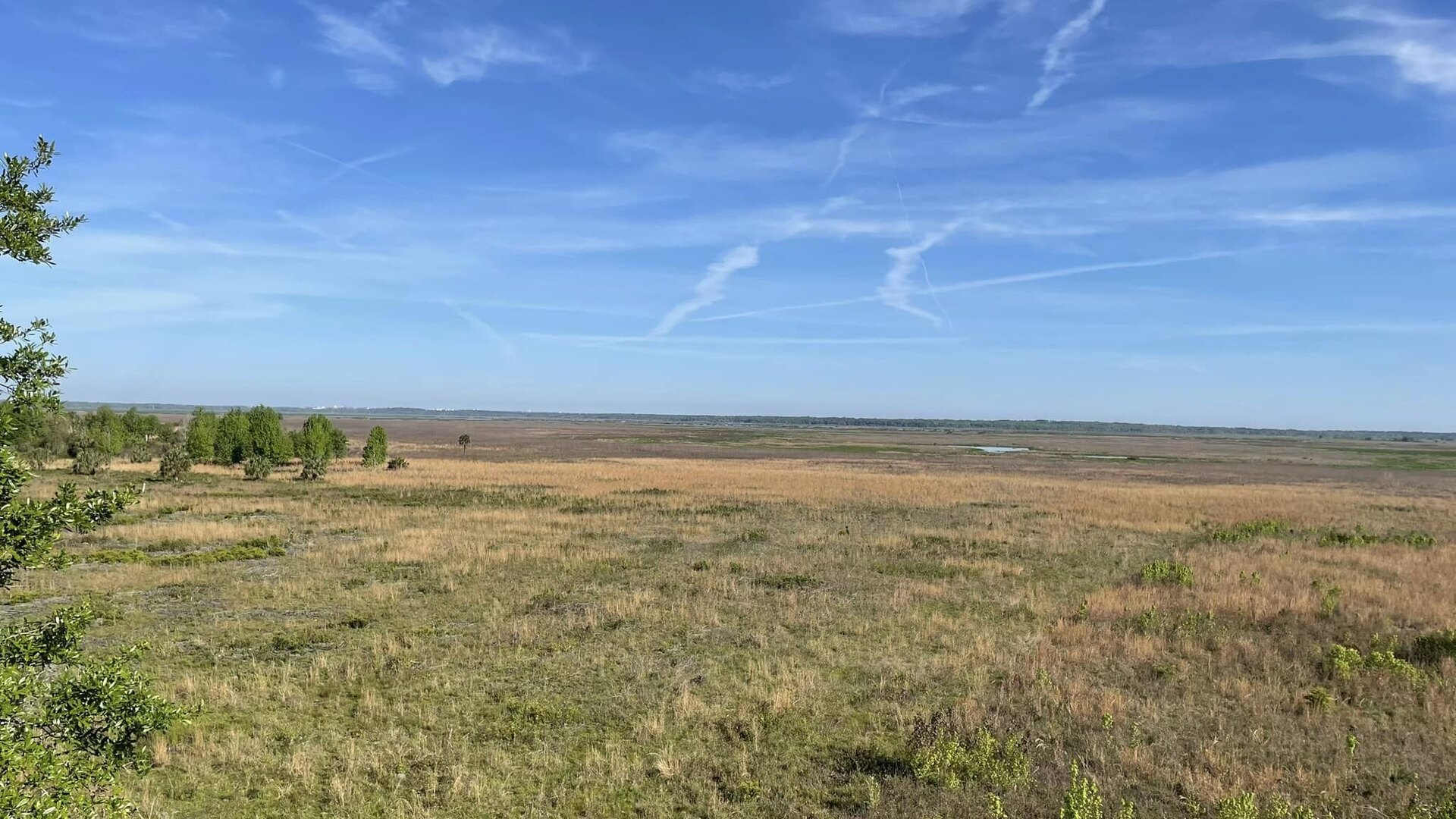
For most families, the simplest Myakka paddle is to rent a canoe or kayak inside the park near Upper Myakka Lake, stay on the calmer river stretches and the lake's sheltered edges, and go out in the morning before the wind picks up. Water levels change a lot between Florida's wet summer and dry winter and spring, so check conditions before you go. Give every alligator plenty of room, never feed wildlife, and keep hands and feet inside the boat.
Most guests who ask us about Myakka River State Park picture the canopy walkway and the alligators sunning on the banks. Fewer know that one of the best ways to see the park is low and quiet, from a canoe or kayak, gliding past wading birds that don't care much about a slow-moving boat. It's also one of the easier paddles for a family to pull off, as long as you plan around wind, water levels, and the park's largest residents.
This is the plan we'd hand our own family: whether to rent or haul your own boat, where beginners should paddle, how the seasons change the water, and how to fit it all into a half day from a rental down in Charlotte County. If this is your first visit, our full Myakka River State Park guide covers the canopy walk, the airboat tours, and the rest of the park.
Should we rent a canoe or kayak, or bring our own?
For most visiting families, renting is the easy answer. The park's concession near Upper Myakka Lake rents canoes and kayaks, so you skip roof racks, straps, and the job of hauling a boat to the water. Rentals usually come with paddles and life jackets, and the staff can tell you what the water is doing that day. That's worth more than any blog post.
Bringing your own makes sense if your kids already paddle, you have a boat they're comfortable in, or you want to explore past where most rental boats go. Bring your own life jackets sized to each child, because a loose adult vest on a small child isn't much use. Check the park's current launch rules before you load up.
| Renting in the park | Bringing your own | |
|---|---|---|
| Gear hassle | Minimal; boat waits at the water | Racks, straps, loading and unloading |
| Life jackets | Usually provided; check fit for small kids | You bring and fit your own |
| Best for | First-timers and mixed-age groups | Families who already paddle together |
| Watch out for | Limited availability on busy days | Launch rules and low water in dry season |
Where is the calmest water for beginners and young kids?
Upper Myakka Lake is wide, shallow, and open. On a still morning it's beautiful. On a windy afternoon it can turn into a long, choppy slog back to the launch, and that's usually when tired kids stop paddling. The open middle of the lake isn't where beginners should be when the breeze builds.
The river stretches near the lake are more sheltered. They're narrower and bordered by grass and trees, so the wind has less room to push you around, and there's more to look at up close. For a first family paddle, stay near the launch and close to shore, and turn back while everyone still has energy. A good rule is to paddle out against the wind or current first, so the trip home is the easy half.
- Put the strongest paddler in the back of a canoe to steer; kids do best in front.
- Give kids a short, simple job: spotting birds, counting turtles, watching for the next bend.
- Plan to go out and back, not a long one-way route that needs a shuttle.
- Bring more water than you think you need, plus sun hats and sunscreen. There's very little shade on the lake.
How do water levels change between the wet and dry seasons?
The Myakka is a river that follows the rain. In Southwest Florida's wet season, roughly late spring through early fall, afternoon storms can raise the river and flood the low ground around it. In big years, high water has closed parts of the park or the roads that lead to them. In the drier months of winter and spring, the water can drop a lot. Parts of the lake and river get shallow enough to ground a boat, and the wildlife crowds into whatever water is left.
Both seasons have tradeoffs. Dry-season paddling often means more birds and more alligators packed into less water, plus milder temperatures, but you may hit shallows and mud flats. Wet-season paddling means fuller water and green scenery, but also heat, bugs, and lightning, which tends to build in the afternoon. If you're paddling in summer, plan to be off the water before the storms roll in.
How do we keep a safe distance from alligators from a boat?
You will almost certainly see alligators at Myakka, and from a canoe they're closer to eye level than they are from the trail. Most will ignore you or slide quietly into the water. Your job is to keep it that way by never giving one a reason to come closer.
- Give every alligator several boat lengths of space. If one is in your path, wait or go wide around it. Don't paddle past at arm's length.
- Never paddle between an alligator and the bank, and stay well away from any gator guarding a nest or small young.
- Keep hands, feet, and dangling toys inside the boat. No trailing fingers in the water.
- Never feed, splash at, or throw anything toward wildlife. Leftover snacks and fish scraps go home with you.
- If an alligator hisses or moves toward you, calmly back off and give it more room.
For more on teaching kids to watch wildlife without crowding it, see our guide to alligators, herons, and kids at Myakka.
At Myakka, the best wildlife sighting is the one where the animal never noticed you were there.
How do we time a half-day paddle from a Gasparilla Island or Port Charlotte rental?
From Port Charlotte, Myakka is a manageable morning drive. From Boca Grande and a home like Seaside Boca, it's a longer trip off the island and up the mainland, so check your map app the night before and plan around it. Either way, an early start is what makes the day work. You get calmer water, cooler air, more active wildlife, and a better shot at a rental boat before the busy hours.
- Leave early enough to reach the park entrance near opening time. You'll pay an entry fee at the gate.
- Head straight to the boat rental area first and save the canopy walk and trails for after.
- Plan on two to three hours on the water for young kids. Shorter is fine.
- Eat lunch in the park or on the drive back, then have a slow beach afternoon at home.
- In summer, watch the sky and the forecast, and be off the water before afternoon storms.
If your crew catches the paddling bug, the Peace River is another calm-water option closer to Charlotte County, with the bonus of fossil hunting on its sandbars.
What should we pack for a family paddle at Myakka?
- A properly fitted life jacket for every person. Florida requires them aboard, and young children must actually wear them.
- A dry bag for phones, keys, and car snacks.
- Water, plus a small snack each, eaten in the boat and packed out.
- Wide-brim hats, sunglasses with straps, and reef-safe sunscreen.
- Bug spray, especially in the wet season and near dusk.
- A change of clothes and a towel left in the car for the ride home.
Questions Families Ask Before Paddling Myakka
Can you rent kayaks and canoes at Myakka River State Park?
Yes. The park's concession near Upper Myakka Lake rents canoes and kayaks, and the rental usually includes paddles and life jackets. Availability can be limited on busy days, so arriving early helps. Check with the park for current options and pricing.
Is Upper Myakka Lake safe for beginner paddlers?
It can be, on a calm morning, if you stay near shore and close to the launch. The lake is wide and open, so afternoon wind can make the trip back much harder. Beginners and young kids usually do better on the more sheltered river stretches nearby.
Is it safe to kayak with alligators at Myakka?
Alligators are common, and most avoid people when they're given space. Keep several boat lengths away, never paddle between a gator and the bank, keep hands and feet in the boat, and never feed wildlife. If an alligator hisses or approaches, calmly back away.
What is the best time of year to paddle Myakka?
Many families like the cooler, drier months for comfortable temperatures and dense wildlife viewing, though low water can mean shallows. Summer brings fuller water but also heat, bugs, and afternoon lightning. In any season, mornings tend to be calmer and better for wildlife.
How long should a family paddle at Myakka last?
For young kids, two to three hours on the water is usually plenty, and shorter is fine. Plan an out-and-back route and turn around while everyone still has energy. Paddle out against the wind first so the return is easier.

Travel DRD - Free Land Vacations — IATA certified, IATAN and ASTA members, hosting families since 2007. We manage every home in this collection ourselves.
Last updated: October 21, 2026