
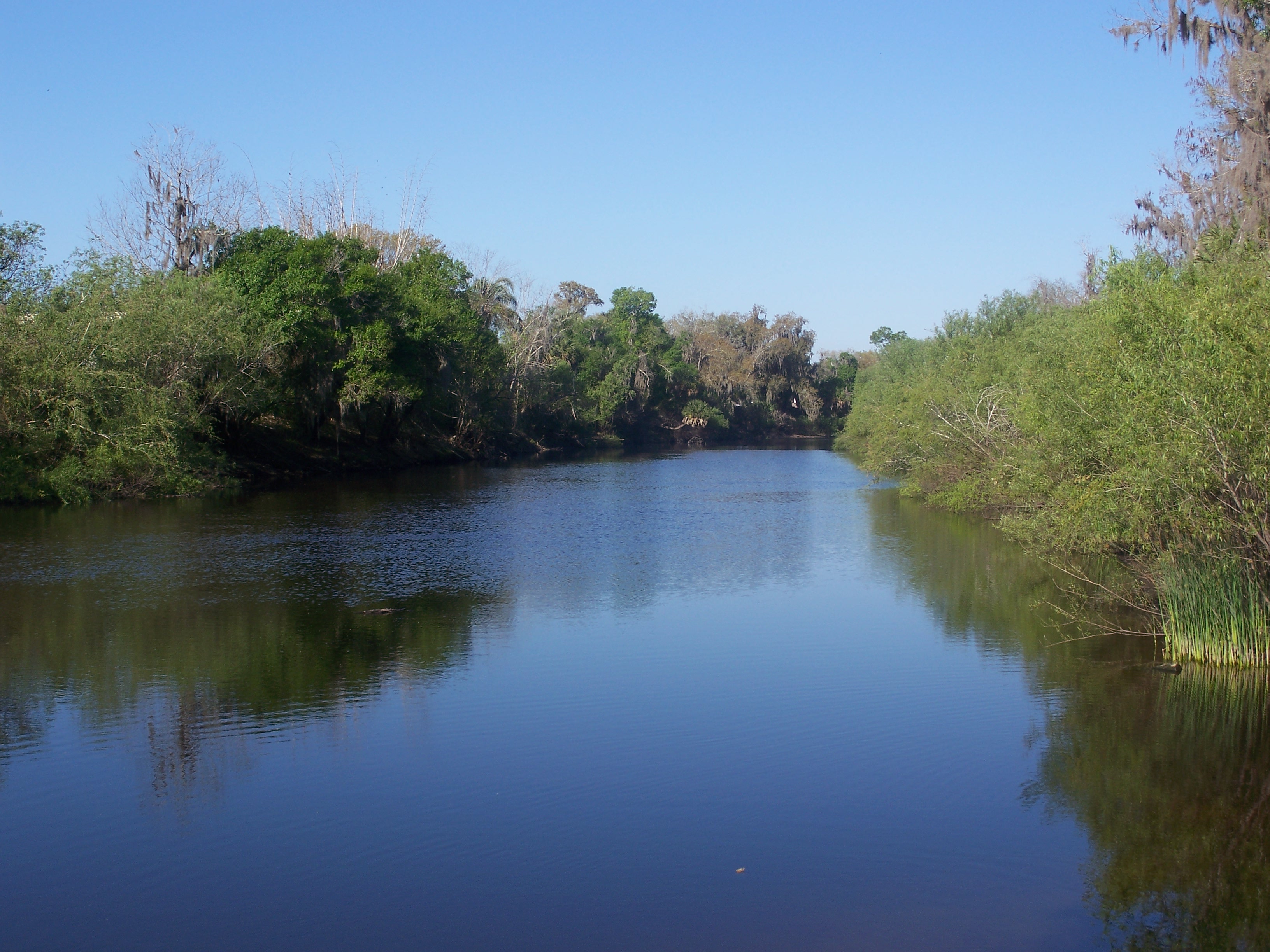
The Peace River runs 106 miles through Polk, Hardee, and DeSoto Counties before reaching Charlotte Harbor, about an hour northeast of Placida. It's one of the calmest paddling rivers in Florida — minimal current, no rapids — and its exposed gravel bars are one of the state's best-known spots for shark tooth fossils, some millions of years old, that anyone can legally collect without a permit.
Most rivers you paddle for the scenery. The Peace River you paddle with one eye on the water and one eye on the gravel bars, because somewhere under that brown, tannin-stained current is a shark tooth that predates the Florida coastline itself. It is not a dramatic river. There are no rapids, no narrow chutes, nothing that requires whitewater skill. That is exactly the point.
We host families out of Seaside Boca in Placida, on the Charlotte County mainland near Boca Grande, and the Peace River is one of the trips that keeps coming up from parents who want a day on the water that a nervous six-year-old — or a nervous grandparent — can actually enjoy without a wetsuit or a guide screaming instructions over rapids.
Where is the Peace River, and how far is the drive from Placida?
The Peace River runs roughly 106 miles from its headwaters near Bartow, through Polk, Hardee, and DeSoto Counties, before widening into Charlotte Harbor near Punta Gorda — the same estuary that Placida and Boca Grande sit on the edge of. The most popular paddling and fossil-hunting stretch runs through and around Arcadia, the DeSoto County seat, roughly an hour's drive northeast of the Placida/Cape Haze area, mostly along State Road 17 through ranchland and citrus groves.
It is inland Florida in a way the Gulf coast isn't — cattle pasture, live oaks, and a river the color of sweet tea, a world away from the white sand ten minutes from our door.
Why is the Peace River called the calm-water option?
Because it genuinely is one. The Peace River is a low-gradient blackwater river with minimal current and no rapids for its entire paddleable length, which is why it has been a beginner and family paddling destination for decades rather than a whitewater run. Canoe Outpost–Peace River, founded in 1969 in Arcadia and one of Florida's oldest paddlesport outfitters, describes the river's gentle waters and minimal current as exactly what makes it accessible to paddlers of every experience level, including first-timers.
It is not a dramatic river. There are no rapids, no narrow chutes, nothing that requires whitewater skill. That is exactly the point.
That doesn't mean it's a lake. There is current, it moves you downstream steadily, and after heavy rain the river can rise and run faster and murkier than usual — always check conditions before you launch. But compared with a Gulf kayaking day fighting wind and chop, the Peace River is the calm, sheltered, kid-friendly alternative.
Where do you rent a canoe or kayak?
Canoe Outpost–Peace River, on the river just west of downtown Arcadia off State Road 70, is the long-standing outfitter for the stretch — canoe and kayak rentals, half-day, full-day, and overnight camping trips, with a shuttle back to your car built into the price. A handful of other operators run guided fossil-and-paddle combination trips out of the same area, pairing a river float with a stop on a known gravel bar.
| Trip length | Typical distance | Best for |
|---|---|---|
| Half day | ~6–9 river miles | First-timers, young kids, a single fossil-hunting stop |
| Full day | ~10–15 river miles | Confident paddlers, a longer fossil stop plus a picnic |
| Overnight / camping trip | Multi-day, riverside camping | Older kids, teens, and adults wanting a real river trip |
Bring water shoes, sun protection, and a dry bag — the river bottom near gravel bars is where you'll be wading, and it's not always soft sand underfoot.
What fossils will you actually find?
Shark teeth, mostly, and a lot of them. The Peace River cuts through Miocene- and Pliocene-age sediment — layers laid down when much of Florida was still shallow sea — and exposes that fossil-bearing gravel on its banks and shoals. Shark teeth are the most common find by far, ranging from small, common species up to the occasional Megalodon tooth, alongside ray teeth, marine mammal bone, and, less often, Ice Age land mammal fossils like horse, camel, mastodon, and giant sloth.
The technique is simple and doesn't require special gear beyond your hands and patience: paddle to a gravel bar, wade the shallows at the waterline, and sift through the gravel by eye or with a mesh screen scoop. Shark teeth are usually black or dark gray, smooth, and denser than the surrounding shell fragments — most people find their eye for them within the first twenty minutes.
Do you need a permit to collect fossils?
Not for shark teeth. Under Florida law, shark teeth can be collected from Florida waterways without a permit, which is why the Peace River's reputation is built almost entirely around them. If you want to keep any non-shark-tooth vertebrate fossil — a piece of mammoth bone, a horse tooth, anything from an Ice Age land mammal — Florida requires a low-cost Fossil Permit issued by the Florida Museum of Natural History, which also sets the rules for what can be collected on public land.
The rule that matters most on the water: collecting is meant to happen below the waterline, in the river itself and its exposed shoals — digging into riverbanks above the waterline is not permitted, and it's also how you damage the site for the next paddler. Native American and historical artifacts are off-limits entirely and should be reported, not collected. The Florida Fish and Wildlife Conservation Commission has enforcement authority on the river; the Florida Museum of Natural History administers the permit itself and is the authoritative source to confirm current rules before you go.
Is the Peace River safe for kids and inexperienced paddlers?
For a calm-water Florida river day, yes, with the same basics that apply to any moving water: life jackets on every paddler regardless of swimming ability, no paddling alone, and a check on river levels before you launch, since the current picks up noticeably after heavy rain. Alligators live in the river, as they do in nearly every Florida freshwater system, so keep the same distance and no-feeding rules that apply at any Florida waterway. Outfitters brief every group on this before launch, which is one good reason to rent through Canoe Outpost or a similar operator on a first visit rather than launching on your own gear with no local guidance.
When is the best season to paddle and hunt fossils?
The dry season — roughly November through April — is the better window for both. Water levels drop through the winter and spring, exposing more gravel bar and making fossil hunting easier, and the cooler, drier weather is simply more comfortable for a half-day on the water. Summer brings higher, faster water from the rainy season, more submerged gravel, and Florida's daily afternoon thunderstorm pattern, which shortens your paddling window and raises the current.
A Peace River day that actually works with kids
- Morning — Arrive at the outfitter by mid-morning, get fitted for life jackets, and launch before the day heats up.
- Early paddle — Cover the first stretch at a relaxed pace; the current does most of the work.
- Fossil stop — Pull onto a gravel bar for 30–60 minutes and let kids wade and sift; this is usually the trip's favorite part.
- Midday — Picnic riverside in the shade of live oaks; pack more water than you think you need.
- Afternoon — Finish the paddle to the pickup point; outfitter shuttles handle the return to your car.
- Evening — Head back toward the coast — it's about an hour to Placida, plenty of time for a pool evening at the house.
Pairing the Peace River with a coastal stay
The Peace River works best as one change-of-pace day inside a longer Gulf coast trip. Families staying at Seaside Boca in Placida usually build it in mid-week, between beach days — the pool, mini golf, and infrared sauna at the house are the right way to end a day spent wading a river in the sun. If inland Florida becomes the theme of your week, our guide to Myakka River State Park covers the alligator-and-canopy-walk counterpart closer to Sarasota, and our Port Charlotte, Placida & Cape Haze guide covers what's nearer to home.
For the coastal side of the same trip, our Boca Grande family guide, our Cayo Costa State Park guide, and our Gasparilla Island State Park guide cover the beach and barrier-island days that pair naturally with an inland fossil-hunting day.
So is the Peace River worth the drive?
If your family wants a genuinely calm paddling day, one where the current does the work and the excitement comes from what's underfoot rather than what's ahead of the bow, yes. An hour inland trades sand for gravel bars and turns a river float into a small-scale dig for prehistoric shark teeth — and it's rare that a single day trip works equally well for a nervous first-time paddler and a kid obsessed with fossils.
Peace River questions families ask
How far is the Peace River from Placida and Boca Grande?
About an hour's drive northeast of the Placida/Cape Haze area, mostly along State Road 17 through ranchland, to the Arcadia area in DeSoto County — the most popular stretch for paddling and fossil hunting.
Do you need a permit to collect shark teeth on the Peace River?
No. Shark teeth can be collected from Florida waterways without a permit. Collecting non-shark-tooth vertebrate fossils, such as Ice Age mammal bone, requires a low-cost Fossil Permit from the Florida Museum of Natural History.
Is the Peace River safe for young kids or first-time paddlers?
Generally yes — it's a low-gradient river with minimal current and no rapids, which is why outfitters market it as a family and beginner destination. Life jackets are required for every paddler, and it's worth checking river levels before you go, since current increases after heavy rain.
What's the best season to paddle and hunt fossils on the Peace River?
Roughly November through April. Lower dry-season water levels expose more gravel bar for fossil hunting, and cooler, drier weather makes for a more comfortable paddle than Florida's hot, storm-prone summer.
Where do you rent a canoe or kayak for the Peace River?
Canoe Outpost–Peace River in Arcadia, founded in 1969, is the area's long-standing outfitter, offering half-day, full-day, and overnight canoe and kayak trips with shuttle service included.

Travel DRD - Free Land Vacations — IATA certified, IATAN and ASTA members, hosting families since 2007. We manage every home in this collection ourselves.
Last updated: July 24, 2026