
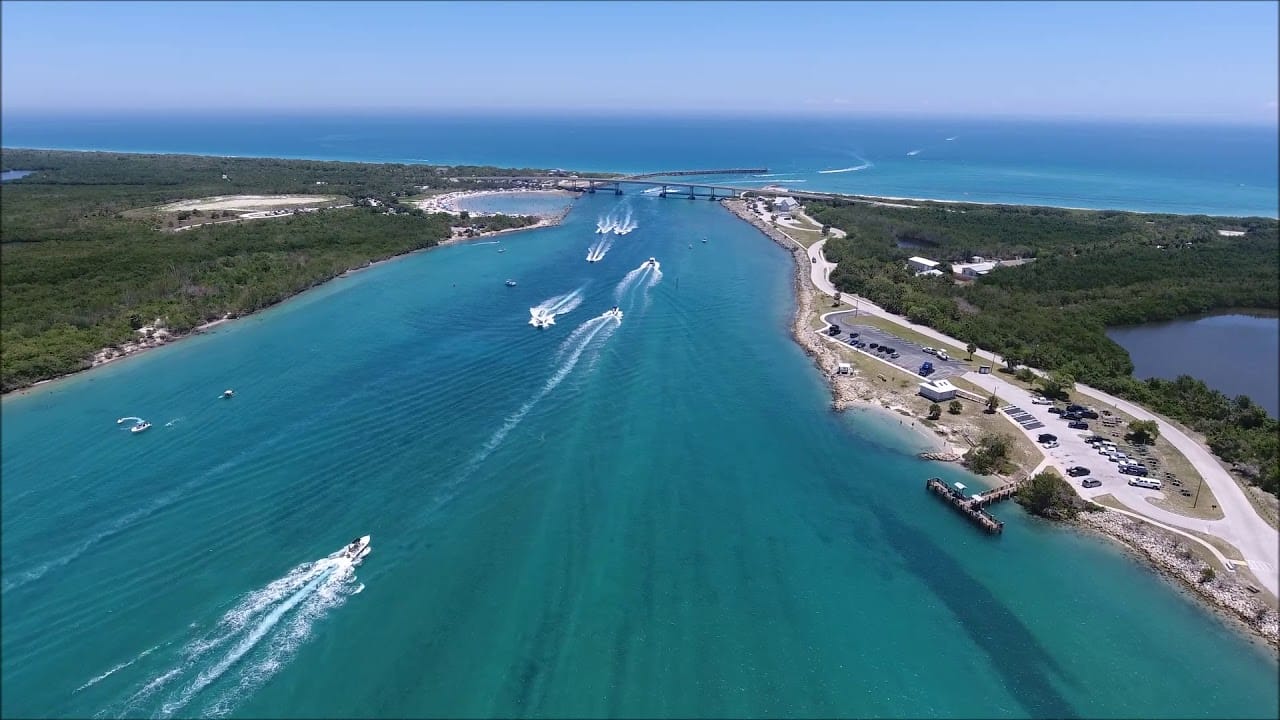
Sebastian Inlet State Park has two fishing jetties. The north jetty is longer and reaches farther into the Atlantic, so it draws bigger crowds and heavier tackle. The south jetty is usually the easier place to start with young kids. Most anglers aim for moving water around a tide change, early or late in the day, and fish simple bottom rigs with live shrimp or cut bait. Florida does not require a saltwater fishing license for anyone under 16, but visiting adults 16 and older usually need one unless an exemption applies.
Sooner or later, almost every family that stays with us in Vero Beach asks about the Sebastian Inlet jetties. They have seen the photos: a long concrete walkway with a railing, people shoulder to shoulder, rods bent over the rail, waves breaking off the end. It looks exciting, and it is. It can also be a lot for a seven-year-old who has never held a rod.
This guide covers the fishing part of a day at the inlet: which jetty to pick, when to go, what to tie on, the license rules visitors get wrong, and how to keep kids safe at the rail. If you want the full family day, with the calm cove, picnic spots and how we pace it, start with our family day at Sebastian Inlet State Park guide and come back here for the fishing details.
North jetty or south jetty: which one suits kids?
The inlet separates Brevard County to the north from Indian River County to the south, and each side has its own jetty. They are not the same experience.
| North jetty | South jetty | |
|---|---|---|
| Length and reach | Longer, runs well out into the Atlantic | Shorter, closer to the beach |
| Crowds | Often busy, and packed when fish are running | Usually more relaxed |
| Typical tackle | Heavier rods, bigger sinkers, serious regulars | Lighter setups work fine |
| Spray and waves | The end can take waves and spray in rough surf | Generally less exposed |
| Best for | Older kids and teens who can handle a crowded rail | Younger kids and first-timers |
Our honest advice: start young kids on the south jetty, or on the inside, calmer stretches nearer shore on either side. Save the end of the north jetty for a teenager who already casts well and understands rail manners. The fish are not always farther out. On plenty of days, kids catching small snapper or sheepshead near the rocks close to shore have more fun than adults out at the tip waiting on a big fish.
What are the best tides and times to fish the inlet?
Inlets fish best when the water is moving. All of the ocean water that fills and drains the Indian River Lagoon here squeezes through one narrow channel, so the current at Sebastian can get very strong. That moving water carries bait, and the bait brings the fish.
- Plan your trip around a tide change. Many locals like the last part of the incoming tide, when cleaner ocean water pushes in and visibility improves.
- On the outgoing tide the current can run hard, and you will need heavier weights to hold bottom. That can frustrate small kids.
- Early morning and late afternoon are usually more comfortable and often more productive than midday, especially in summer.
- Fall can be busy when baitfish move down the coast, and the jetties get crowded quickly. Arrive early if you want rail space.
- Check a tide chart made for Sebastian Inlet itself. Tide times inside the inlet are not the same as on the open beach a few miles away.
Fish the moving water and the calm kid. A great tide matters less than a child who still wants to be there.
What rigs and bait should a family bring?
You don't need a tackle wall. These setups catch fish and keep tangles to a minimum:
- A basic bottom rig: a sliding egg sinker above a swivel, a short fluorocarbon leader, and a circle hook. Circle hooks usually hook fish in the corner of the mouth, which makes releasing them easier and safer for kids.
- A small jig head with a live or soft-plastic shrimp, cast and bounced slowly back along the rocks. It's a good choice for older kids who like to stay busy.
- A two-hook pompano-style rig with sand fleas or cut shrimp, if you wander onto the beach next to the jetty when the surf is gentle.
For bait, live shrimp is the most forgiving choice because nearly everything in the inlet eats it. Cut mullet and frozen shrimp work too. Give kids a rod that is short and medium-light, already rigged before you reach the rail. Bring needle-nose pliers, a towel, a small cooler, and a bucket for keeping bait wet. Expect to lose rigs in the rocks and pack extras.
If your family also stays with us on the Gulf side, a lot of this carries over. Our guide to fishing with kids on Gasparilla Island without a boat uses the same simple-rig approach.
Do visitors need a Florida saltwater fishing license?
Adults are a different story. Non-residents 16 and older generally need a Florida recreational saltwater fishing license to fish from the jetties unless a specific exemption applies. Florida offers short-term non-resident licenses as well as annual ones, which suits a vacation week. Buy online through the Florida Fish and Wildlife Conservation Commission (FWC) before you go so you are not trying to do it on your phone at the rail.
Two more things catch visitors out. Snook have their own permit requirement on top of the license, plus seasonal closures and a slot limit. And every species has its own size and bag rules. FWC's Fish Rules app shows the current regulations by location. If you aren't sure about a fish, release it quickly and carefully.
How do you keep kids safe at the railing and in a crowd?
The jetties are built for fishing, but a crowded rail over fast water deserves respect. These are the rules we give our own family:
- No climbing or sitting on the rail. Kids stand flat-footed and fish over it, never on it.
- Look behind before every cast. On a busy jetty there are people, strollers and other lines everywhere. Teach kids to cast underhand or with a short side-arm swing.
- Stay off wet rocks. Rocks along the jetty are slick with algae, and a wave can wash over without warning.
- Watch the end of the north jetty in rough surf. If spray is coming over the walkway, move back toward shore.
- Wear closed-toe shoes. Hooks, fish spines and dropped tackle end up on the walkway.
- Know what to do with a hooked bird. Pelicans hang around the jetties. If one takes your bait, don't cut the line. Reel it in gently, cover its head with a towel, and remove the hook, or ask an experienced angler nearby for help.
- Assign one adult per young child. When the rail gets busy, you can't watch a kid and work a rod at the same time.
How do you fit a half-day of fishing into a Vero Beach stay?
Sebastian Inlet is an easy drive north on scenic A1A from Vero Beach, so a half-day fits in without wrecking nap schedules or dinner plans. Families who stay at Vero Oaks usually use a simple rhythm like this:
- Check the tide the night before and pick the morning or late-afternoon window that lines up with moving water.
- Rig rods and pack the cooler at the house so you can walk straight to the jetty.
- Fish for two to three hours. That is plenty for most kids.
- Move to the calm cove for a swim or a snack break once attention fades.
- Head back to the house to rinse gear, shower off the salt, and have a relaxed dinner.
If your kids have more energy than patience for fishing, pair the morning with a session watching surfers at the inlet's famous break. We cover that in surfing near Sebastian Inlet with kids. And rinse your reels with fresh water when you get back. Salt eats gear fast.
Sebastian Inlet Jetty Fishing: Questions Families Ask Us
Is the north or south jetty better for young kids at Sebastian Inlet?
For young kids and first-timers we usually suggest the south jetty or the calmer inside stretches near shore. The north jetty is longer and more exposed and gets very crowded when fish are running. It's better for older kids who can cast safely in a crowd.
Do my kids need a fishing license in Florida?
No. Florida does not require a recreational saltwater fishing license for anyone under 16, resident or visitor. Adults 16 and older generally need one unless a specific exemption applies, and snook require an extra permit.
What is the easiest bait for kids to use on the jetties?
Live shrimp is the most forgiving bait because most species in the inlet will eat it. Fish it on a simple bottom rig with an egg sinker and a circle hook, which makes hookups and releases easier for kids.
When is the best time to fish Sebastian Inlet?
Moving water around a tide change is the general rule, and early morning or late afternoon is usually more comfortable. Use a tide chart for the inlet itself rather than the nearby beach, because inlet tide times differ.
What should we do if a pelican gets hooked?
Don't cut the line, because that leaves the bird trailing tackle. Reel it in slowly, gently cover its head with a towel to calm it, and remove the hook. If you aren't comfortable doing that, ask an experienced angler nearby for help.

Travel DRD - Free Land Vacations — IATA certified, IATAN and ASTA members, hosting families since 2007. We manage every home in this collection ourselves.
Last updated: October 20, 2026