
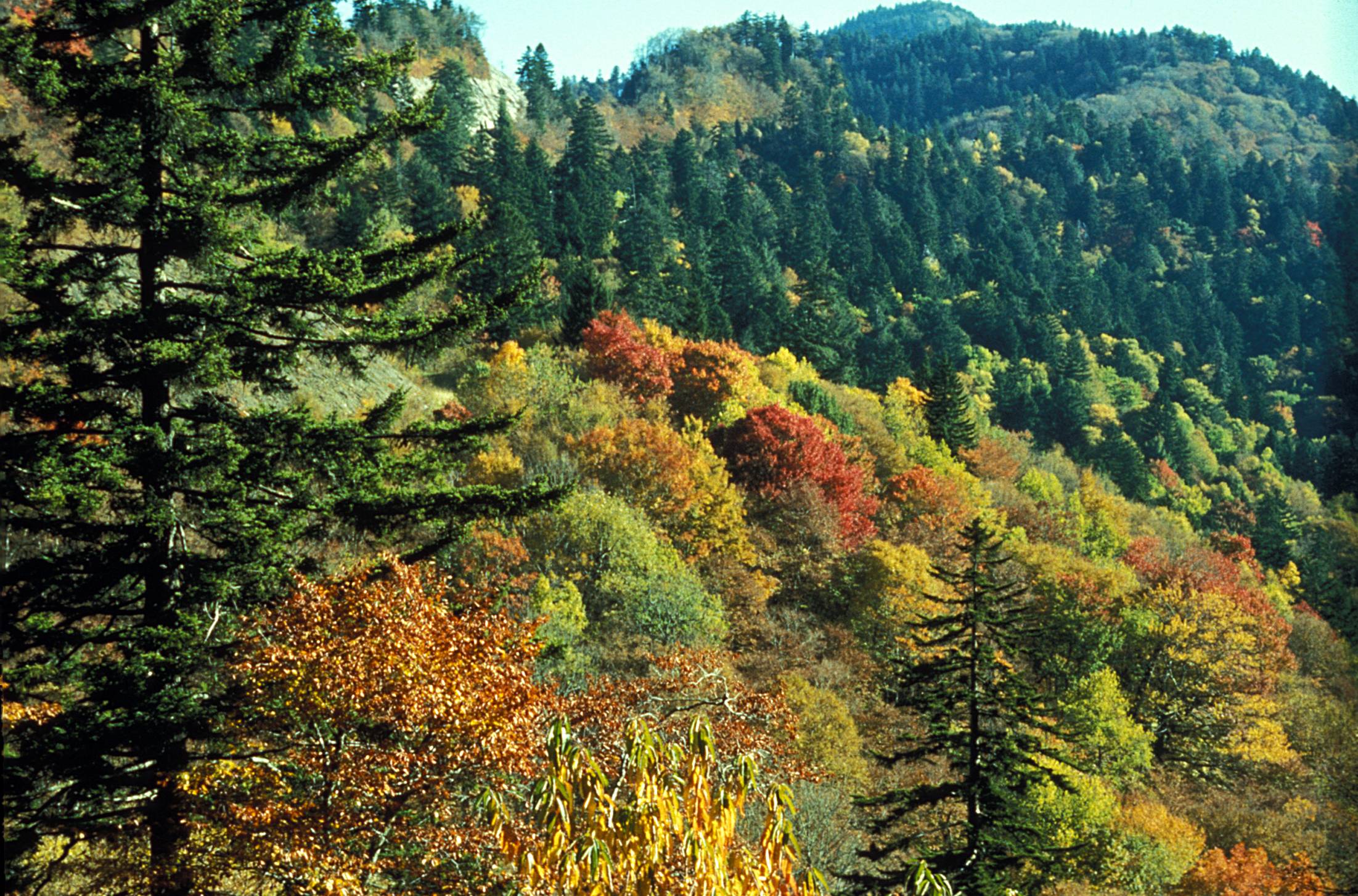
Fall color in Great Smoky Mountains National Park moves downhill by elevation over about a month. Above 4,000 feet — Clingmans Dome, Newfound Gap — color starts in late September and peaks by early-to-mid October. Mid-elevations (2,500–4,000 feet) typically peak mid-to-late October. The valley floor, including Gatlinburg, Pigeon Forge and Cades Cove, usually peaks last, from late October into early November. There is no single "peak weekend" for the whole park; there's a peak weekend for whatever elevation you plan to be at.
Every fall we get the same question from first-time guests: "When exactly is peak?" It's a reasonable question with an unsatisfying answer, because Great Smoky Mountains National Park doesn't have one peak — it has a peak that migrates. Color starts at the highest ridgelines in late September and takes roughly a month to work its way down to the valley floor where Pigeon Forge and Gatlinburg sit. If you plan your trip around a single calendar date, you're gambling. If you plan it around elevation, you're not.
This is the single most useful thing to understand before you book: the park's elevation runs from about 875 feet at the low end to 6,643 feet at Clingmans Dome, and that roughly 5,800-foot range is exactly why the color show lasts so long. Different tree species dominate at different elevations, and they turn on different clocks.
How fall color actually moves through the Smokies
According to the National Park Service, color develops first above 4,000 feet, where yellow birch, American beech, mountain maple, hobblebush and pin cherry begin turning as early as mid-to-late September. Mid-elevation forests — roughly 2,500 to 4,000 feet — typically reach peak color from mid-to-late October, with sugar maple, scarlet oak and hickories producing some of the most vivid combinations of the whole season. The lowest elevations, including the areas around Cades Cove, Gatlinburg, Pigeon Forge and Sevierville, usually peak last, typically from late October into early November, as sweetgum, red maple and yellow poplar finish out the display.
What this actually means for booking your trip
If your whole trip is built around "seeing peak color," the honest move is to pick what you want to see, not when the calendar says fall "peaks." Want the overlook photo from Clingmans Dome or Newfound Gap Road with the ridgelines lit up? Aim for the first two weeks of October. Want Cades Cove's valley floor — the fields, the historic cabins, the split-rail fences — framed in color? Plan for the back half of October into the first week or two of November. Trying to catch both on the same trip is realistic if you build in a week, moving from high-elevation drives early in the stay to low-elevation color later in it.
There isn't one peak weekend in the Smokies in the fall. There's a peak weekend for wherever you plan to stand.
How far ahead you actually need to book
Fall is, along with summer, the busiest season in the Smokies — Great Smoky Mountains National Park is already the most-visited national park in the country, and October adds leaf-peeping traffic on top of the normal load. Cabins near Pigeon Forge and Gatlinburg in the peak-color weeks routinely book out months in advance, especially for weekends. If you have a specific October weekend in mind, the realistic window to lock in lodging is spring to early summer of the same year, not September. By the time the first colorful ridge photo goes viral on social media, the best weekends in the best cabins are already gone.
- Weekends in the back half of October are the single hardest nights to book near Pigeon Forge — if your dates are flexible, a Sunday-to-Thursday stay gets you the same color with far less competition for cabins, restaurant tables and parking.
- Newfound Gap Road and the Clingmans Dome area get genuinely congested on clear October weekends — go early morning or on a weekday if the overlook photo matters to you.
- Cades Cove Loop Road is closed to vehicle traffic on certain Wednesdays in season for walkers and cyclists; if a quiet, car-free valley-floor fall photo is the goal, that's worth checking against the current schedule.
- A parking tag is required to park a vehicle anywhere in the park for more than 15 minutes, fall included — budget for it and display it before you start hiking or pull off at an overlook.
Staying somewhere that works for both elevations
This is part of why we like hosting guests on this side of Pigeon Forge. Pigeon Hills and Waters Edge Lodge both sit close enough to the Parkway for an easy drive to dinner, but far enough into the hills that your own property has real color on it in October — guests tell us the porch and firepit at both homes become the evening plan all on their own once the leaves turn. From either cabin, you're within about 20–30 minutes of the Gatlinburg entrance to the park, which is close enough to do a high-elevation morning at Newfound Gap and still be back for an afternoon at the cabin before an evening on the Parkway.
Waters Edge Lodge is also the one dog-friendly option between the two, with a seasonal fireplace that runs October through April — worth knowing if your fall trip includes a dog and you want the cabin itself to feel like part of the season, not just a place to sleep between hikes.
How to pace a few days around the color
A rhythm that works well for a 4–5 night fall stay: spend one morning early in the trip driving Newfound Gap Road up toward Clingmans Dome for the high-elevation view, before crowds build. Mid-trip, take a slower day — a short waterfall hike at mid-elevation, or a loop through town for cider, apple stands and the Parkway's seasonal attractions. Save Cades Cove for later in the stay, both because its color peaks later and because arriving early on a weekday beats fighting the loop road's one-way traffic on a weekend afternoon. If waterfalls are part of your plan either way, we broke down which hikes are worth the mileage in our guide to waterfall hikes in Great Smoky Mountains National Park, and the Cades Cove loop itself gets its own timing breakdown in our Cades Cove guide.
If a theme park day is also on the list, don't stack it onto a leaf-peeping day — Dollywood's fall festival runs through the same weeks and deserves its own full day. Our Dollywood planning guide covers how to structure that one without burning out a day that was supposed to be about the mountains.
Common questions about Smoky Mountains fall foliage
When is peak fall foliage in the Smoky Mountains?
There's no single date. Elevations above 4,000 feet — Clingmans Dome, Newfound Gap — typically peak in early-to-mid October. Mid-elevations (2,500–4,000 feet) peak mid-to-late October. The valley floor, including Pigeon Forge, Gatlinburg and Cades Cove, usually peaks last, from late October into early November.
How far ahead should I book a cabin for fall in Pigeon Forge?
For a specific weekend in the back half of October, book by spring or early summer of that year if possible. Fall is one of the two busiest seasons in the Smokies, and the best weekends at well-located cabins are typically gone well before Labor Day.
Is Cades Cove or Clingmans Dome better for fall color photos?
They peak at different times rather than one being "better." Clingmans Dome and the high ridges along Newfound Gap Road turn first, typically by early-to-mid October. Cades Cove sits at lower elevation and peaks later, typically late October into early November, with the added appeal of historic cabins and open fields framing the color.
Do I need a parking tag to see fall color in the park?
Yes. A parking tag is required to park a vehicle anywhere in Great Smoky Mountains National Park for more than 15 minutes, including at overlooks and trailheads during fall. There is no separate entrance fee, but the parking tag requirement applies year-round, fall included.
What's the least crowded way to see fall color in the Smokies?
Go on weekdays rather than weekends, arrive at popular overlooks and Cades Cove Loop Road early in the morning, and check the current schedule for Cades Cove's seasonal vehicle-free days if a quiet, car-free valley view is the priority. A Sunday-through-Thursday stay sees meaningfully lighter traffic than a weekend trip in late October.

Travel DRD - Free Land Vacations — IATA certified, IATAN and ASTA members, hosting families since 2007. We manage every home in this collection ourselves.
Last updated: October 2, 2026