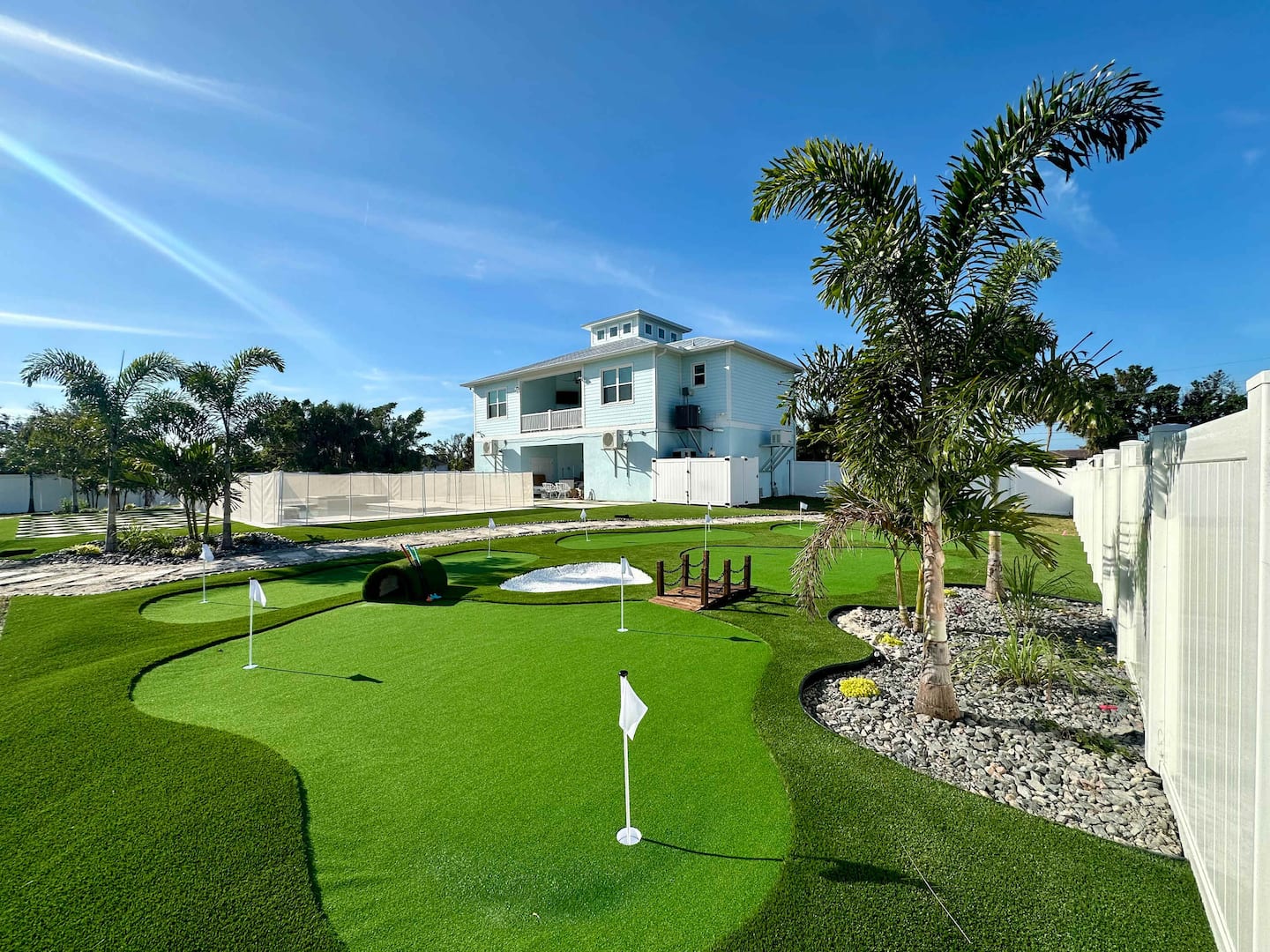
Seaside Boca sits in Cape Haze, on Florida’s Gulf coast, where tarpon season brings hundred-pound fish and the sunsets do most of the marketing. The house was designed to look and feel like Key West — high ceilings so the light pours in, coastal colours, original artwork on the walls.
The choice guests notice first is one they were never meant to notice at all: there are no televisions in the bedrooms. That was deliberate. As Nicolas puts it in the episode, the point is for people “to enjoy in family and gatherings” rather than scatter to separate screens. The kitchen is open for the same reason — so nobody is cooking alone in another room.
What replaces the screens is a genuinely absurd amount to do. A private miniature golf course. A pool and hot tub. A sauna. A volleyball court and a soccer field. And downstairs, a game room with skee-ball, foosball, air hockey and ping-pong — enough that Evan proposed “the Olympics of Seaside Boca.”
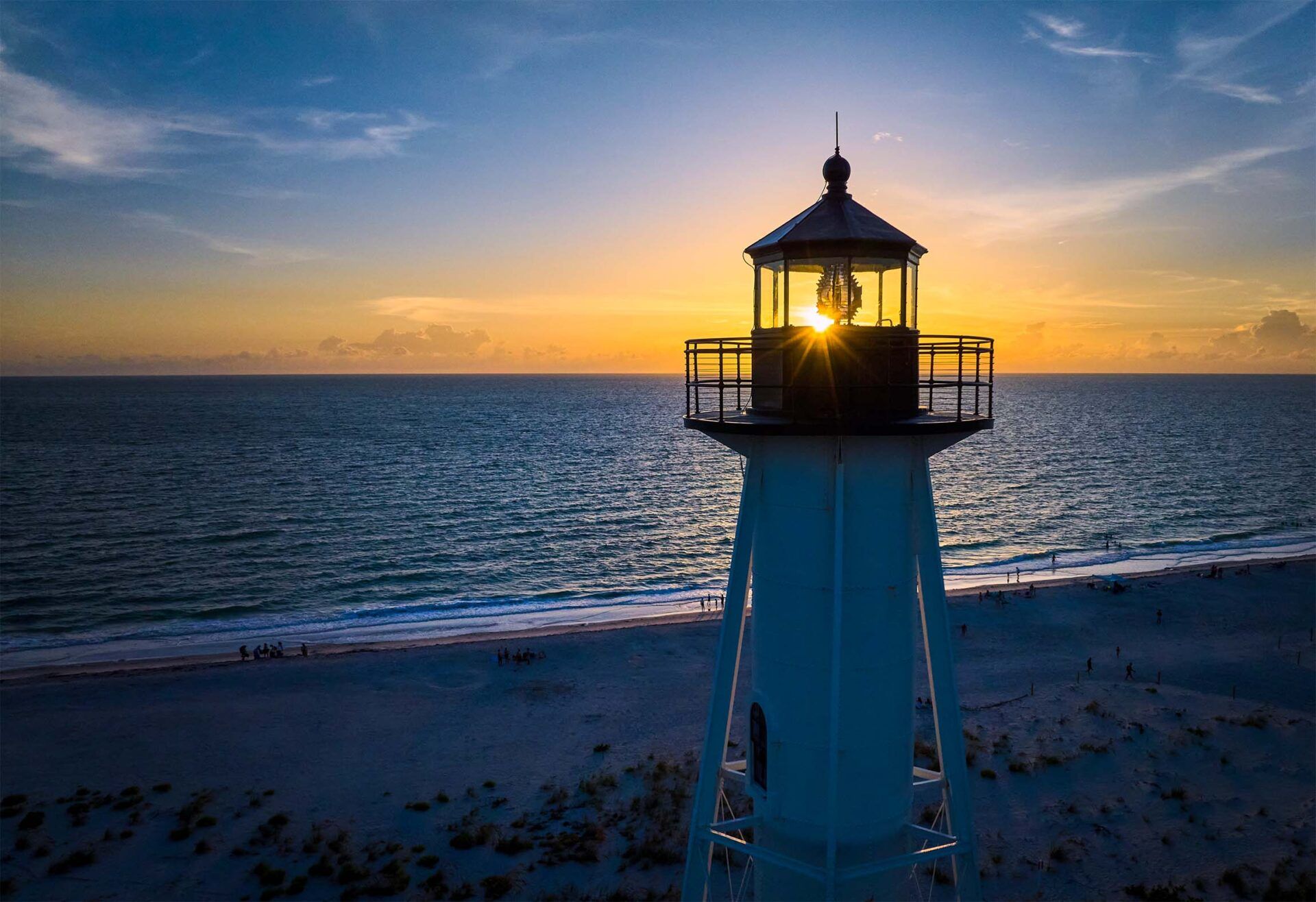
Why Cape Haze matters. This is old Florida, the part that never got paved over. You are minutes from Boca Grande and Gasparilla Island — a barrier island with a lighthouse that has stood since 1890, a village of banyan trees and clapboard storefronts, and the tarpon fishery that made it famous. There are no high-rises here. Travel DRD chose it on purpose: you come to Cape Haze to slow down, not to queue.
The episode closes where the island does: the historic Gasparilla Island Lighthouse at sunset, glasses raised “to the best of Florida, the best of friends, and to sun, sand, family and fun.”